
An employee advocacy program is a structured system where employees share company content, perspectives, and stories on their personal social channels, with the organization providing the content, training, and tools to make that sharing consistent and measurable. For B2B organizations, the verdict is clear: when built as an operating system rather than a one-time campaign, these programs reliably expand reach, build trust, and influence pipeline in ways paid media cannot replicate.
Three elements determine whether a program succeeds or stalls:
- Content + enablement + measurement. A content library employees can actually use, training that removes the “What do I say?” friction, and KPIs that prove value to leadership.
- Participation is the first challenge. Research from LinkedIn data shows only a small share of employees post organically at most companies, yet structured programs significantly increase participation.
- B2B marketing and employer brand teams should pilot first. A focused cohort of 10–25 advocates across sales, marketing, and leadership is enough to generate evidence before scaling.
Pro Tip: Before you send a single piece of content to employees, write three sample posts in their voice, not yours. The biggest drop-off in early programs happens when employees open a content suggestion and feel like they are reading a press release.
Key Takeaways
A structured employee advocacy program, built as an operating system with a content library, role-based delivery, and CRM attribution, consistently outperforms ad-hoc sharing and produces measurable pipeline and hiring outcomes within 12 weeks.
| Point | Details |
|---|---|
| Start with a small pilot | Run 10–25 advocates for 6–12 weeks before scaling to prove the model. |
| Format drives reach | Carousels lift LinkedIn reach by roughly 51%; outbound links cut it by about 13%. |
| Measure five KPI categories | Track activation rate, reach per post, engagement, engaged accounts, and leads influenced. |
| Compliance is non-negotiable | FTC disclosure rules and industry-specific requirements (FINRA) must be addressed before launch. |
| Magiclogix builds the system | Magiclogix designs pilot programs, content operations, and CRM attribution for B2B teams. |
Table of Contents
- What does an employee advocacy program actually mean?
- Why do companies and employees both benefit?
- What do successful programs always include?
- How do you run a 6- to 12-week pilot?
- How do you measure success and prove ROI?
- Which tools should you consider for your advocacy program?
- What do real-world advocacy programs look like?
- What governance and compliance guardrails do you need?
- The Magiclogix reusable employee advocacy pilot template
- How do you scale after a successful pilot?
- What clients actually ask, and where most programs go wrong
- Magiclogix can help you design and launch your program
- Sources
- FAQ
What does an employee advocacy program actually mean?
At its core, an employee advocacy program is the difference between hoping employees share company news and building a system that makes sharing easy, consistent, and worthwhile for everyone involved. It is a formal workplace advocacy initiative, distinct from ad-hoc sharing (which happens randomly and can’t be measured) and from influencer marketing (which involves paid third parties with no authentic organizational connection).
Programs typically fall into three models:
Distribution-only programs give employees pre-approved content to share with one click. The organization writes everything; employees choose what resonates and post it. This model is low-friction and easy to launch, but it produces a uniform voice across all advocates, which limits authenticity over time.
Creation + distribution programs combine a curated content library with employee-generated content (EGC). Employees share company assets AND write their own posts about their work, expertise, or culture. This model takes more enablement effort but produces significantly better reach and engagement because personal posts feel genuine.
Executive and leadership tracks treat senior leaders as a distinct advocate segment with dedicated content support, ghostwriting assistance, and a separate editorial calendar. LinkedIn’s algorithm rewards accounts with established authority, so a VP’s post on an industry trend often outperforms the same content from a company page.
Advocacy in the workplace typically happens across these channels and with these objectives:
- LinkedIn for B2B reach, thought leadership, and recruiting
- X (formerly Twitter) for industry conversations and event amplification
- Internal channels (Slack, Teams) for culture content and peer recognition
- Objectives: brand reach, talent pipeline, buyer trust, and organic search amplification
The key distinction from influencer marketing is authenticity and employment relationship. An employee advocate has a real stake in the company’s success, and audiences know it. That credibility is the program’s core asset.
Why do companies and employees both benefit?
A well-run staff advocacy program delivers measurable outcomes on both sides of the employment relationship. For the organization, the primary gains are reach, credibility, and hiring. For employees, the return is personal brand growth and career visibility. Both matter for sustaining voluntary participation.
Company and brand benefits:
- Organic reach that scales without paid media spend
- Content trusted more than brand-page posts, because personal accounts carry more credibility
- Pipeline influence: benchmark data shows advocacy-generated leads convert faster than leads from company channels
- Employer brand lift that shortens time-to-hire and improves candidate quality
- SEO amplification when employee posts drive traffic and backlinks to company content
Employee benefits:
- Personal brand development on LinkedIn and other platforms
- Visibility with leadership and industry peers
- Skill-building in content creation and social media strategy
- Recognition and rewards tied to participation milestones
- Career differentiation, especially for sales and marketing professionals
The concentration problem is worth understanding before you set expectations. That is not a failure; it is a starting point. A structured program’s job is to widen that base from one or two natural advocates to a reliable cohort of 15–25 active participants.
Pro Tip: Align incentives to intrinsic motivators, not just leaderboard points. Employees who share because it builds their own expertise and visibility sustain participation far longer than those chasing a gift card. Ask your pilot cohort what they want to be known for professionally, then build their content lane around that answer.
What do successful programs always include?
Every effective employee advocacy strategy shares the same structural DNA: a content system employees can trust, an enablement layer that removes friction, and an operating rhythm that keeps the program alive after launch week. Programs that skip any of these three elements tend to see participation drop within 60 days.
Core components:
- Content library with role-tagged posts (sales, engineering, HR, leadership) so each advocate sees content relevant to their audience
- Role-based feeds that surface the right content to the right person without requiring them to search
- One-click sharing with pre-written captions employees can edit or post as-is
- Social guidance covering what to say, what to avoid, and how to add a personal perspective
- Leader tracks with dedicated content and optional ghostwriting support
- Rewards and recognition tied to participation milestones, not just reach metrics
- Measurement layer connecting advocacy activity to CRM and marketing analytics
Content types that belong in every program:
AIHR’s collection of advocacy examples shows the formats that consistently perform: executive thought leadership posts, product milestone announcements, recruiting stories, customer success moments, event recaps, and behind-the-scenes culture content. The mix matters. A library stocked only with product announcements will feel like a PR feed; a library that includes personal career stories and industry commentary gives employees something worth sharing.
A practical weekly content queue looks like this:
- Monday: one thought leadership post (industry trend, no outbound link)
- Wednesday: one culture or team moment (photo, milestone, hiring win)
- Friday: one product or customer story (with a link, knowing it may reduce reach slightly)
Format signals matter here. LinkedIn data shows carousels lift reach by roughly 51%, while posts containing outbound links cut reach by about 13%. The median high-performing post runs around 183 words. Build your content library around those parameters, not around what is easiest to repurpose from your blog.
Roles and responsibilities need to be explicit from day one. Assign a program manager who owns the content calendar, a marketing contact who approves posts before they enter the library, and an HR liaison who handles policy questions. Moderation flows should be lightweight: a simple approval queue in your advocacy platform, not a multi-week review process that kills timeliness.
How do you run a 6- to 12-week pilot?
The recommended approach is a focused pilot with 10–25 advocates drawn from sales, marketing, and one or two other functions, run over 6–12 weeks before any decision to scale. Here is the step-by-step playbook:
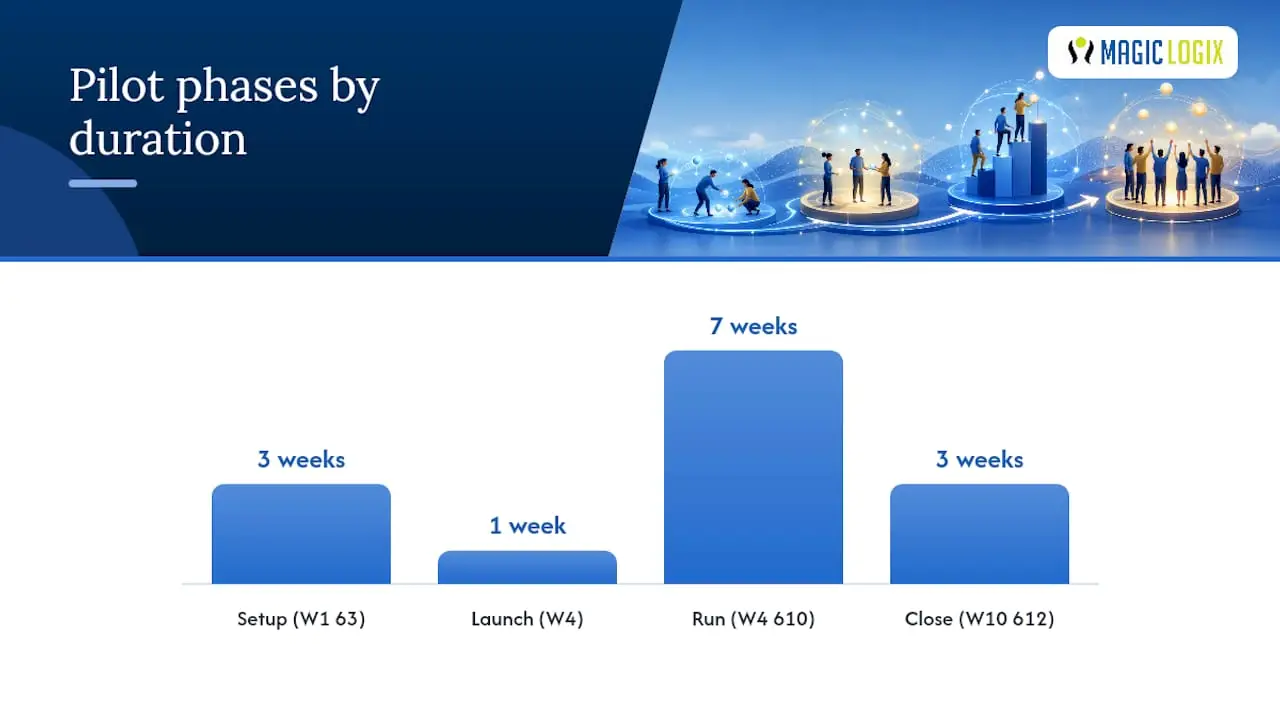
1. Set objectives and get executive buy-in (Week 1)
Define two or three measurable goals: reach growth, engagement rate, or leads influenced. Get a sponsor at the VP level or above. Without visible leadership support, participation stalls.
2. Run a compliance check (Week 1)
Review your social media policy, FTC disclosure requirements, and any industry-specific rules (FINRA for financial services, HIPAA-adjacent considerations for healthcare). Flag any content categories that need pre-approval.
3. Select your pilot cohort (Week 2)
Choose 10–25 employees who are already active on LinkedIn or who have expressed interest. Aim for a cross-functional mix: two or three from sales, two from marketing, one from HR, one from leadership. Avoid mandating participation.
4. Tag content by role and build the library (Weeks 2–3)
Create 20–30 pre-approved posts organized by role and topic. Include at least five posts per advocate type. Write them in a conversational tone, not corporate-speak.
5. Onboard advocates (Week 3)
Run a 45-minute onboarding session covering the platform, the content library, posting guidelines, and how to add a personal perspective to any post. Deliver content through Slack or Teams so advocates do not need to log into a separate tool to see what is available.
6. Launch week (Week 4)
Have leadership post first. A VP or CMO sharing the first piece of content signals that this program has organizational weight. Send advocates their first content suggestion with a personal note from the program manager.
7. Weekly cadence and coaching (Weeks 4–10)
Send one content suggestion per week through the existing workflow channel. Hold a 20-minute group check-in every two weeks to share what is working, answer questions, and collect post ideas from advocates.
8. Collect evidence for leadership (Weeks 10–12)
Pull reach, engagement, and any pipeline-influenced data. Compare advocate posts to company page benchmarks. Prepare a one-page summary showing participation rate, total reach generated, and at least one pipeline or hiring outcome.
Pilot timeline:
| Week | Activity | Owner |
|---|---|---|
| 1 | Set goals, get exec sponsor, compliance check | Program manager |
| 2 | Select cohort, build content library | Marketing + HR |
| 3 | Tag content by role, onboard advocates | Program manager |
| 4 | Launch week, leadership posts first | Leadership + PM |
| 5–25 | Weekly content drops, bi-weekly coaching | Program manager |
| 10–11 | Collect data, run debrief with cohort | Program manager |
| 12 | Present results to leadership, decide to scale | PM + exec sponsor |
If you hit two of three, scale. If you hit none, diagnose the content system before expanding.
Pro Tip: Write the first three posts for each advocate in their own voice, based on their LinkedIn bio and recent activity. Reducing the “blank page” problem in week one is the single highest-leverage action you can take to sustain early participation.
How do you measure success and prove ROI?
Track five categories: participation, reach, engagement, pipeline influence, and attribution. Each maps to a different stakeholder’s question, and you need all five to make a credible case to leadership.
Core KPIs with definitions:
- Activation rate: percentage of enrolled advocates who posted at least once in the measurement period. Formula: (active advocates / enrolled advocates) × 100.
- Average reach per post: total impressions from advocate posts divided by number of posts. Compare to your company page average to show the multiplier effect.
- Earned engagement rate: likes, comments, and shares on advocate posts divided by total impressions. Higher than company page benchmarks signals authentic content.
- Engaged accounts: number of unique companies whose employees interacted with advocate content. Critical for ABM programs.
- Leads influenced: contacts in your CRM who interacted with advocate content before converting. Requires UTM tagging and CRM integration.
- Hires sourced: candidates who cited an employee’s post as their first touchpoint. Collect this in your ATS intake form.
Attribution checklist:
- Add UTM parameters to every link in the content library (source: employee-advocacy, medium: social, campaign: pilot-q1).
- Tag advocate interactions in your CRM using a custom field or activity type (e.g., “touched by advocacy content”).
- Map those touchpoints to pipeline stages: awareness, consideration, and decision.
- In HubSpot, use the “original source” and “latest source” fields alongside a custom advocacy-touch property to track multi-touch influence.
- Pull a monthly report showing contacts who had an advocacy touchpoint and their pipeline velocity compared to contacts who did not.
Dashboard fields to include:
| Metric | Source | Reporting cadence |
|---|---|---|
| Activation rate | Advocacy platform | Weekly |
| Total reach generated | Advocacy platform | Weekly |
| Avg. reach per post vs. company page | Platform + LinkedIn analytics | Bi-weekly |
| Earned engagement rate | Advocacy platform | Bi-weekly |
| Leads influenced | CRM (HubSpot/Salesforce) | Monthly |
| Engaged accounts | CRM + advocacy platform | Monthly |
| Hires sourced | ATS intake data | Monthly |
For measuring digital marketing effectiveness across your full program, connect advocacy metrics to your broader marketing attribution model so leadership sees advocacy as a channel, not a side project.
Which tools should you consider for your advocacy program?
Choose a platform after you know whether you need distribution-only or creation plus distribution. Buying a full-featured platform before you have a content system is like buying a commercial kitchen before you have a menu.
Platform categories and what they do:
- Distribution-only platforms give employees a curated feed of pre-approved posts to share with one click. Low setup cost, fast to launch, limited personalization.
- Creation + distribution platforms add employee-generated content workflows, AI-assisted drafting, and approval queues. Higher setup investment, but better reach and authenticity at scale.
- Enterprise social suites (like Sprout Social) combine advocacy features with broader social media management, analytics, and team workflows. Useful when your social media manager is also running the advocacy program.
- Purpose-built advocacy tools (like Sociabble) focus specifically on employee sharing, gamification, and content curation. Stronger on engagement mechanics, weaker on broader social analytics.
Mandatory features to evaluate in any platform trial:
- Role-based content feeds (not a single undifferentiated library)
- One-click sharing to LinkedIn, X, and other channels
- Approval and moderation queue for compliance-sensitive content
- Analytics dashboard with reach, engagement, and sharing data
- CRM integration (HubSpot, Salesforce) for pipeline attribution
- Slack or Teams delivery so advocates do not need to log in separately
Platform selection criteria:
| Criterion | What to look for |
|---|---|
| CRM integration | Native connector to HubSpot or Salesforce; UTM auto-tagging |
| Compliance features | Approval workflows, content expiration, audit logs |
| Ease of use | Mobile app, one-click share, no separate login required |
| Content creation support | AI-assisted drafting that preserves personal voice |
| Analytics depth | Reach, engagement, activated accounts, pipeline influence |
| Pricing model | Per-seat vs. flat fee; trial period available |
LinkedIn is the primary channel for most B2B programs and deserves its own mention. LinkedIn’s algorithm rewards content from personal accounts over company pages, making it the highest-return channel for B2B advocacy. Any platform you choose should have a direct LinkedIn integration and respect LinkedIn’s API rate limits.
HubSpot users have a natural advantage for attribution. HubSpot’s contact timeline records social interactions when properly integrated, and its custom properties make it straightforward to tag advocacy-influenced contacts and map them to deal stages.
For teams managing distributed communities or multiple communication channels alongside advocacy, tools covered in resources like community management platform guides can help you think through how advocacy fits into a broader channel mix.
What do real-world advocacy programs look like?
A representative success story involves a measurable shift in two things: reach (how many people see the company’s message) and behavior (employees posting consistently, not just once). The before/after gap is usually wider than program owners expect.
Example 1: B2B SaaS company, sales team pilot
A 15-person sales team at a mid-market SaaS company enrolled in a 10-week pilot. Before the program, the company page averaged 800 impressions per post. After 10 weeks, the 15 advocates generated an average of 4,200 impressions per post combined, with three sales reps each reaching more than 1,000 unique connections per post. Two inbound leads cited a sales rep’s LinkedIn post as their first touchpoint. The lesson: sales reps with active networks are often the highest-return advocates, not marketing.
Example 2: Professional services firm, thought leadership track
A regional consulting firm built an executive track for its five partners. Each partner received two pre-written posts per week on industry regulatory changes, with a prompt to add one personal sentence before posting. Within eight weeks, one partner’s posts were generating more LinkedIn impressions than the firm’s company page. The firm received three unsolicited speaking invitations tied to that partner’s content. The lesson: a single sentence of personal perspective transforms a company post into a genuine thought leadership moment.
Example 3: Manufacturing company, recruiting focus
A manufacturer struggling with hourly worker recruiting asked plant managers to share “day in the life” posts and job openings. The posts used photos taken on-site (not stock images) and ran on LinkedIn and Facebook. Applications from employee-referred candidates increased, and time-to-fill for two open roles dropped. The lesson: authentic visual content from real workplaces outperforms polished brand photography for recruiting audiences.

Example 4: Content format experiment
One marketing team tested three post formats in the same week: a text-only post, a single image post, and a carousel. The carousel generated 51% more reach than the text post, consistent with LinkedIn benchmark data. The image post landed between the two. The lesson: format is a lever, not an afterthought.
Pro Tip: Engagement metrics (likes, comments, shares) typically move within the first two weeks of a pilot. Pipeline influence takes 60–90 days to show up in CRM data. Set that expectation with leadership before you launch so the program is not judged prematurely.
What governance and compliance guardrails do you need?
Compliance is manageable with clear guardrails and approval workflows in place before the first post goes out. The risk is not that employees will say something catastrophic; it is that without guidance, they will either say nothing (paralysis) or say something that creates a disclosure or legal issue.
Social media policy essentials for U.S. programs:
- Employees must identify their employer when posting about the company or its products (FTC endorsement disclosure rules apply when there is a material connection between the poster and the brand).
- Pre-approved content in the advocacy library is cleared for sharing as-is. Employees who modify content significantly should treat the modified version as a new post subject to the same guidelines.
- Employees should not share confidential information, unreleased product details, financial data, or customer information.
- Negative comments about competitors, customers, or colleagues are prohibited.
- Employees in regulated industries (financial services, healthcare, legal) must follow additional pre-approval requirements.
FTC disclosure reminder: The FTC’s endorsement guidelines require that employees disclose their employment relationship when posting about their employer’s products or services. A simple “I work at [Company]” in the bio or post is sufficient in most cases, but the disclosure must be clear and conspicuous, not buried in hashtags.
FINRA note for financial services teams: FINRA Rule 2210 governs communications with the public. Pre-approval and recordkeeping requirements apply to registered representatives sharing content about the firm’s products. If your advocacy program includes financial advisors or registered reps, build a separate approval workflow and retain post records for the required period. The AICPA’s social media guidance is a useful reference for accounting and finance professionals navigating disclosure obligations.
Red flags that signal a compliance problem:
- Mandatory participation (coercion undermines authenticity and may create legal exposure)
- No written social media policy shared with advocates before launch
- No approval workflow for regulated content categories
- No recordkeeping for industries with retention requirements
- AI-generated posts published without employee review (fully AI-generated posts also underperform on reach, per LinkedIn benchmark data)
Pro Tip: For sales teams and regulated industries, build a “pre-cleared library” of posts that have already passed legal review. Advocates in those roles should only post from the pre-cleared library, not from a general pool. This removes the compliance bottleneck without slowing the program.
The Magiclogix reusable employee advocacy pilot template
This blueprint is repeatable and designed for a 6- to 12-week pilot. It gives program managers, marketing teams, HR, and leadership a clear week-by-week structure with defined roles, measurement fields, and an onboarding workflow they can run immediately.
Week-by-week responsibilities:
| Week | Program manager | Marketing | HR | Leadership |
|---|---|---|---|---|
| 1 | Set goals, draft policy, identify exec sponsor | Audit existing content for library | Review policy for HR compliance | Confirm sponsorship, agree to post first |
| 2–3 | Select cohort, schedule onboarding | Build 20–30 tagged posts, set UTMs | Communicate program to cohort | Review and approve leader-track content |
| 4 | Run onboarding session, launch | Activate content library in platform | Support advocate questions | Post first piece of content publicly |
| 5–25 | Weekly content drops, bi-weekly coaching | Refresh library, add new content weekly | Monitor participation, flag concerns | Post 1–2 times per week from leader track |
| 10–12 | Collect data, run debrief, prep leadership report | Pull analytics, build attribution report | Gather advocate feedback | Review results, decide on scaling |
Onboarding checklist for advocates:
- Platform access confirmed and tested on mobile
- Social media policy reviewed and acknowledged
- First three content suggestions pre-loaded in their queue
- Personal LinkedIn profile reviewed for employer disclosure
- One-on-one 15-minute call with program manager to answer questions
- First post drafted (in their voice) and ready to publish on launch day
Content sourcing workflow:
Content enters the library from four sources: marketing blog posts (repurposed as short LinkedIn posts), HR culture moments (team milestones, new hires, events), sales team wins (anonymized customer stories, product use cases), and employee-generated ideas collected via a weekly Slack prompt (“What did you learn this week that your network would find useful?”).
Roles and responsibilities:
| Role | Responsibility |
|---|---|
| Program manager | Content calendar, advocate coaching, reporting |
| Marketing lead | Content creation, UTM setup, analytics |
| HR liaison | Policy compliance, advocate communications |
| Exec sponsor | Visibility, first posts, leadership track content |
| Advocates | Post 1–2 times per week, provide content ideas |
Measurement template fields to collect:
- Activation rate (weekly)
- Total posts published by advocates (weekly)
- Total reach generated (weekly)
- Average reach per post vs. company page baseline (bi-weekly)
- Earned engagement rate (bi-weekly)
- Leads influenced in CRM (monthly)
- Hires sourced from advocacy content (monthly)
Pair this template with a customer engagement strategy to connect advocacy outcomes to your broader marketing and customer acquisition goals. For teams running integrated marketing campaigns, advocacy works best when it is one distribution channel in a coordinated plan, not a standalone initiative.
How do you scale after a successful pilot?
Scale by segmenting advocates by role and region, automating content delivery, and shifting program ownership into a repeatable operational rhythm. The pilot proves the model; scaling is an operations problem, not a strategy problem.
Scaling checklist:
- Segment your content library by role (sales, engineering, HR, leadership, regional) so each advocate sees posts relevant to their specific audience
- Build a content refresh cadence: add at least five new posts per role per week to prevent library fatigue
- Add local language support if you have advocates in non-English-speaking markets
- Shift measurement from individual post metrics to account-level engagement (which companies are your advocates reaching?)
- Implement a governance review quarterly: audit the content library, update the social media policy, and review platform analytics for format and timing trends
- Assign regional program champions who own advocate coaching in their geography, reducing the central program manager’s load
Budget considerations at scale:
Platform licensing costs vary by seat count and feature tier. Content production (writing, design, video) is typically the larger ongoing cost. Personnel, specifically a dedicated program manager or content coordinator, is the highest-leverage investment for programs with more than 50 active advocates.
Retention tactics that work:
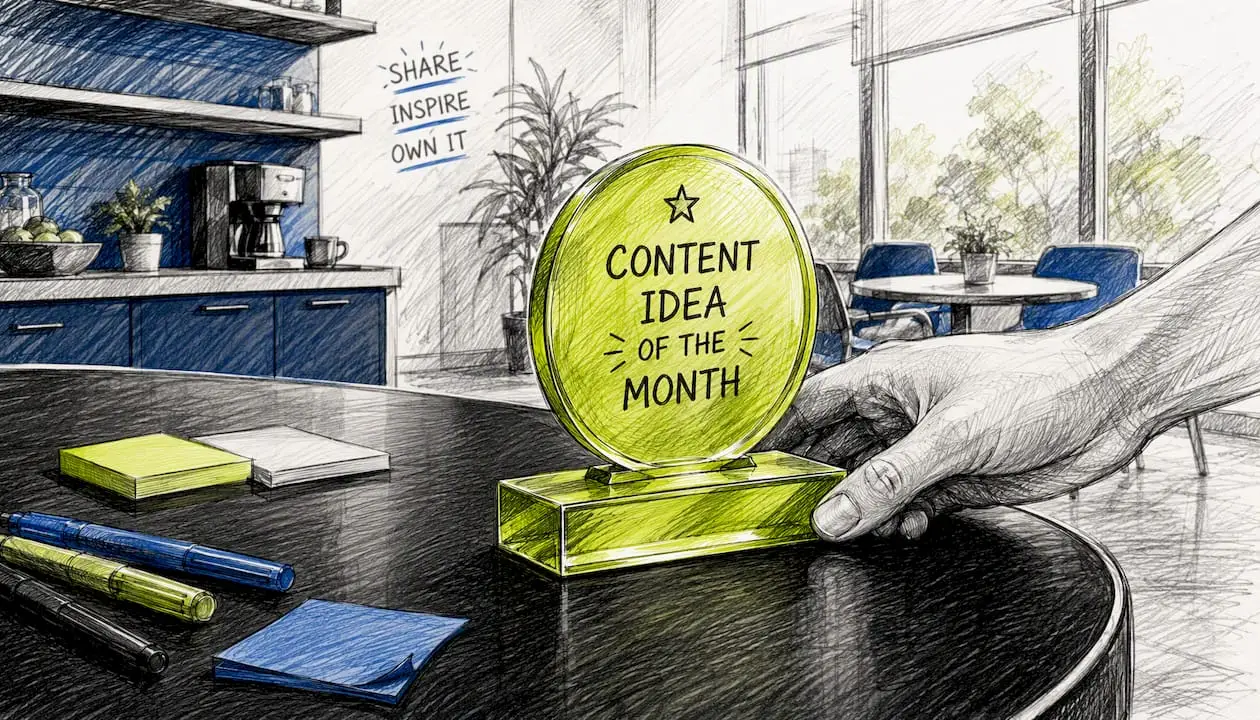
Leaderboards showing reach and engagement (not just post count) motivate advocates who care about impact. Monthly recognition in a company-wide Slack channel or all-hands meeting sustains participation better than quarterly prizes. A “content idea of the month” award, where an advocate’s suggestion becomes a featured post, keeps the content pipeline fresh and gives employees ownership of the program’s direction. Best practices from Oktopost’s research highlight retention loops like these as the difference between programs that sustain 20%+ participation and those that fade after 90 days.
What clients actually ask, and where most programs go wrong
The biggest mistake is building an employee advocacy program as a campaign rather than a system. A campaign has a launch date and an end date. A system has an operating rhythm, a content pipeline, and a feedback loop. Programs built as campaigns almost always see participation collapse within 60 days of launch.
The most common question clients ask is some version of: “We launched the program, sent out content for three weeks, and now nobody is posting. What happened?” The answer is almost always one of three things: the content stopped feeling relevant, the delivery friction increased (advocates had to log into a separate tool), or the program manager moved on to other priorities and the weekly cadence broke down.
The fix is structural, not motivational. Rebuilding a content library around role-specific topics, delivering content through Slack or Teams so it appears in the workflow employees already use, and assigning a dedicated program manager (even part-time) resolves the majority of participation problems. Research on common advocacy program failures confirms that structural gaps, not employee unwillingness, are the root cause in most cases.
A second recurring question is about authenticity: “Won’t it look fake if employees are all sharing the same content?” The answer is yes, if they share it verbatim. The solution is to treat every pre-written post as a starting point, not a final draft. Train advocates to add one sentence of personal perspective before posting. That single sentence changes the post from a company broadcast to a personal recommendation, and it is the difference between 200 impressions and 2,000.
Pro Tip: Put content in the workflow employees already use. If your team lives in Slack, deliver content suggestions in Slack. If they use Teams, use Teams. The moment an advocate has to open a separate app to find content, participation drops. Friction is the enemy of consistency.
Magiclogix can help you design and launch your program
Running a pilot is straightforward when you have the right structure. Scaling it, measuring it, and connecting it to pipeline is where most teams need support.
Magiclogix designs and launches employee advocacy programs as part of a broader digital marketing for business growth strategy, covering pilot design, content operations, measurement setup, and CRM attribution. Rather than handing you a platform login and a template, the team builds the content system, trains your advocates, and connects advocacy activity to the metrics your leadership actually cares about: reach, pipeline influence, and hiring outcomes. With over 35,000 completed projects across B2B and enterprise clients, Magiclogix brings the operational depth to turn a 12-week pilot into a program that runs quarter after quarter. To scope your pilot and get a clear picture of what a structured program looks like for your team size and goals, contact Magiclogix directly.
Sources
- Employee Advocacy Statistics 2026 (From LinkedIn Data)
- The Ultimate Guide To Employee Advocacy Programs 2026 | Vouch
- Employee advocacy program best practices | Oktopost
- Employee Advocacy Benchmark 2026
- 15 Employee Advocacy Examples To Guide Your Own …
FAQ
What is an employee advocacy program?
An employee advocacy program is a structured initiative where a company equips employees with content, training, and tools to share the organization’s message on their personal social channels. It differs from ad-hoc sharing by providing a content library, governance, and measurement.
What is an example of an employee advocacy program?
A B2B SaaS company enrolling 15 sales reps in a 10-week LinkedIn pilot, providing pre-written posts they can personalize, and tracking reach and pipeline-influenced leads is a representative example. AIHR’s collection of 15 advocacy examples covers additional formats including executive thought leadership tracks and recruiting-focused programs.
What are the 3 C’s of advocacy?
Definitions vary across frameworks, but a widely used version in employee advocacy practice covers Content (what employees share), Consistency (how regularly they share it), and Credibility (the authentic personal voice that makes employee posts trusted over brand-page posts). These three elements align with the core components every successful program requires.
What is the top-ranked employee advocacy platform?
No single platform holds a universally recognized top ranking, as the best fit depends on your program’s needs. Sprout Social and Sociabble are frequently cited for their advocacy features, while LinkedIn remains the primary channel for B2B programs. Magiclogix evaluates platform fit as part of pilot scoping, matching features to your content model and CRM stack rather than recommending a one-size-fits-all tool.