Most videos don’t fail because the idea was bad. They fail because the launch was weak.
That’s the part many overlook when they ask what makes a viral video. They focus on creativity after the fact. They study the punchline, the trend, the editing style, the thumbnail. Those matter. But the strongest evidence points to something more operational: the more shares a video generates during its first two days, the higher its viral peak and total share volume according to a Harvard Business Review analysis.
That changes the conversation. Viral performance isn’t just about making something people like. It’s about building something people feel compelled to share, then giving it enough early momentum for platforms to treat it as worth distributing.
In practice, virality sits at the intersection of psychology and systems. People share content that helps them express identity, emotion, taste, or usefulness. Algorithms amplify content that holds attention and generates strong behavioral signals. Brands that understand both stop treating video like a lottery ticket and start treating it like a launch sequence.
The Myth of Viral Luck
The popular version of virality is simple: someone posts a clip, the internet randomly falls in love with it, and millions of views appear out of nowhere.
That story is convenient. It’s also incomplete.
A viral hit usually looks spontaneous from the outside because viewers only see the content after it starts moving. They don’t see the decisions behind it: the hook testing, the editing cuts, the timing, the audience targeting, the first wave of distribution, and the platform fit. Those details are rarely glamorous, but they’re often what separate a breakout video from a forgotten one.
A stronger way to think about virality is this: videos spread when human sharing behavior and platform distribution logic align at the same time. If one side is missing, the result is usually mediocre. A clever concept with poor retention stalls. A technically polished video with no emotional charge gets watched and ignored. A funny clip posted to the wrong audience at the wrong time never gets enough lift to matter.
That’s why “post and pray” underperforms so often.
The creators and brands that repeat success don’t rely on luck. They build for shareability, then they launch for momentum. They know the first reaction matters more than later admiration. They design the opening seconds with intent. They study platform patterns rather than treating all short-form video as interchangeable. If you want a narrower breakdown of one ecosystem, this guide on what makes a TikTok video go viral is useful because it shows how virality changes when the platform’s recommendation engine drives discovery.
Viral growth looks accidental to outsiders. Inside the campaign, it usually looks like disciplined preparation.
For businesses, that shift matters. Once virality is framed as an engineered outcome, video stops being a vanity experiment and becomes a serious growth channel.
Understanding the Psychology of Mass Sharing
People don’t share videos just because they watched them. They share videos because the content says something about them.
That’s the primary engine underneath mass distribution.
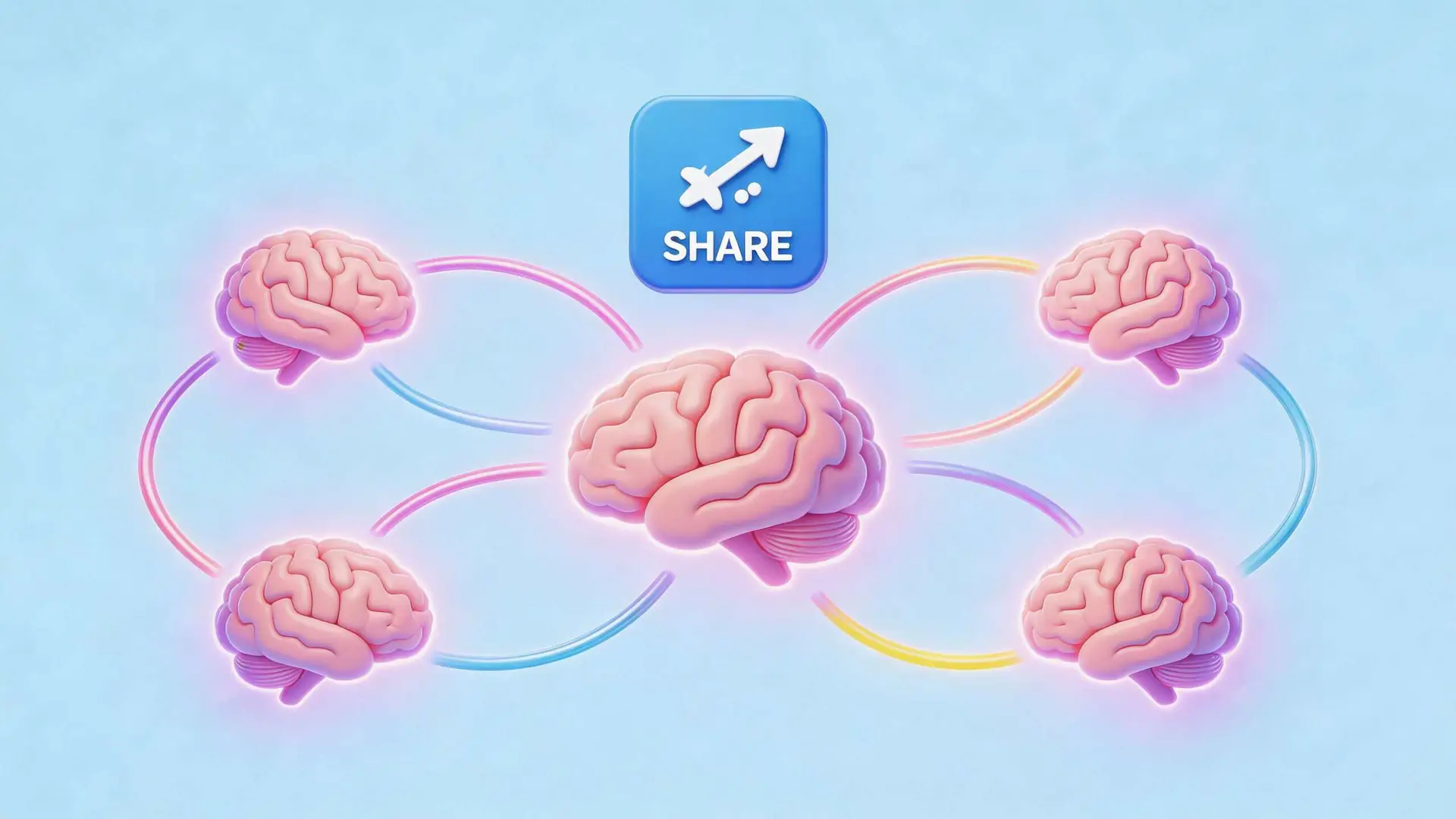
High-arousal emotion travels faster
Not all emotional reactions lead to sharing. Low-energy reactions often stop at private consumption. A viewer feels something, nods, and moves on.
High-arousal emotion behaves differently. Videos that evoke joy, awe, or surprise are shared 2-3 times more than neutral content according to Brandefy’s analysis of what makes a video go viral. That’s a practical creative rule, not an abstract theory.
If a concept triggers one of those reactions, people don’t just consume it. They pass it on because the content gives them social energy. It makes them look funny, observant, in-the-know, emotionally tuned in, or culturally current.
That’s why simple clips can outperform polished brand work. A video doesn’t need cinematic production to spread. It needs a reaction strong enough to make forwarding feel natural.
Relatability turns viewers into distributors
Relatability is often misunderstood as “make something broad.” That usually produces bland content.
Real relatability is more specific. It captures a recognizable human moment with enough precision that viewers instantly map themselves onto it. The sibling dynamic in “Charlie Bit My Finger”, which reached over 880 million views before removal, worked because people recognized the unscripted family humor. “David After Dentist” spread for a similar reason. The surprise was memorable, but the authenticity made it portable.
A brand can use that same principle without imitating old internet culture.
Instead of asking, “Will everyone get this?” ask:
- What shared tension does this video capture
- What reaction will viewers want to send to a friend
- What identity does sharing this signal
That third question is where many campaigns get sharper.
Social currency matters more than most brands admit
People share things that make them look good to other people. Sometimes “good” means funny. Sometimes it means useful. Sometimes it means early, smart, tasteful, or emotionally aware.
Jonah Berger’s STEPPS framework remains useful for this reason. Social currency, triggers, emotion, public visibility, practical value, and stories all map to real sharing behavior. Newsflare’s discussion of that framework points to examples like life hacks and the “Jet2 holiday sound” trend, which earned nearly 9 million views by tapping cultural familiarity and humor.
For brand teams, this has a direct implication. Your video can’t only communicate your message. It has to give the viewer a reason to attach their name to the share.
A few practical routes work well:
- Useful content: A shortcut, hack, or insight that helps the viewer look informed.
- Identity content: A joke or observation that signals membership in a group, profession, or subculture.
- Reaction content: Something surprising enough that viewers want others to experience it too.
- Story content: A compact narrative with a payoff that makes retelling easy.
A lot of this overlaps with interface design and message framing. The same principles that shape attention and emotional response in visual systems also apply to shareability. That’s why understanding psychology in design isn’t a side topic. It’s part of the core job.
If viewers won’t gain status, connection, or usefulness from sharing the clip, they’ll keep scrolling no matter how polished it looks.
How to Structure a Video for Virality
A viral video rarely feels slow at the start. It earns attention immediately, creates tension quickly, and pays off before the viewer has a reason to leave.
That’s a structural discipline.
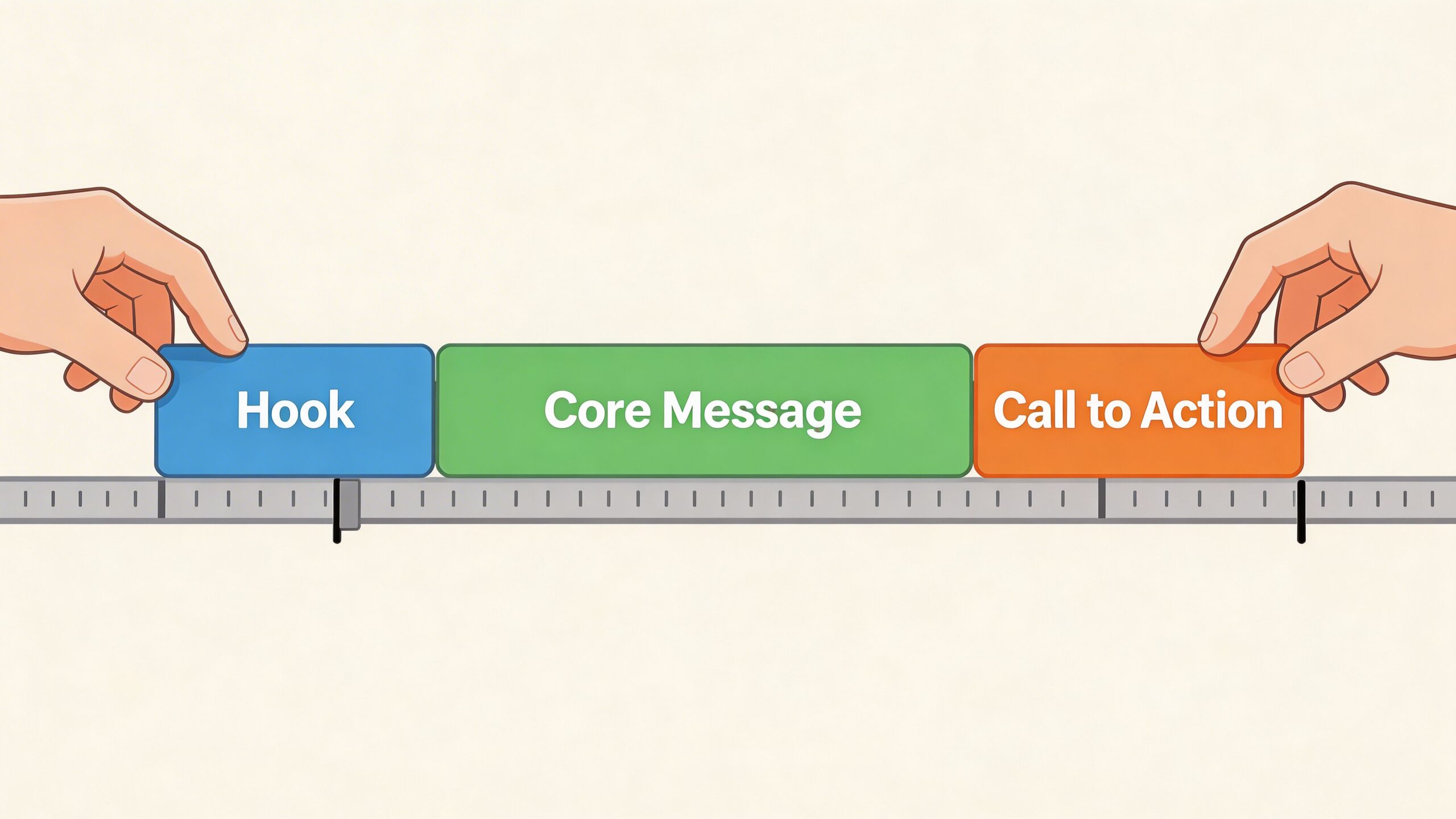
Open with a hook that creates unfinished business
The first few seconds decide whether the rest of the video gets a chance.
A good hook doesn’t just announce the topic. It creates a reason to stay. That reason can be curiosity, visual novelty, contradiction, tension, or a promise of payoff. Viewers need to sense that something unresolved is happening and that the answer is close.
In practical terms, effective hooks often do one of these things:
- State an unexpected result: The outcome appears before the explanation.
- Interrupt a pattern: The opening frame doesn’t look like standard feed content.
- Pose an implied question: The viewer wants to know what happens next.
- Start mid-action: The video begins after the setup, not before it.
Many brand videos lose momentum at this stage. They spend the opening on logos, context, scene-setting, or a soft intro. That may work in long-form storytelling. It usually weakens short-form performance.
Use a compact tension-payoff arc
Even very short videos benefit from narrative shape. A useful working model is hook, tension, payoff.
Here’s what that looks like in practice:
| Structure | What it does | Typical mistake |
|---|---|---|
| Hook | Stops the scroll and raises a question | Starts too slowly |
| Tension | Builds anticipation or conflict | Repeats the setup without escalation |
| Payoff | Resolves the curiosity gap | Delivers too late or too weakly |
You can apply that to a product video, a founder clip, a demo, a behind-the-scenes piece, or a trend adaptation. The structure doesn’t need to feel scripted. It just needs to move.
A lot of teams also ignore practical fit. Video should be edited for the platform, not just exported to it. Vertical framing, readable captions, and mobile-first composition all affect how the story lands. If you’re planning a broader rollout, this resource on platform-specific video length limits is a good reminder that the same concept often needs different packaging across channels.
Reverse-engineer hooks instead of inventing from scratch
One of the most useful tactics in short-form right now is hook mining. Instead of brainstorming in a vacuum, creators search high-view videos on TikTok and YouTube, study the exact opening lines, and adapt those patterns to their own audience and offer. According to the cited playbook, this approach can increase effectiveness three times through multiple hook tests when creators adapt proven openings rather than relying on a single original guess (YouTube reference).
That doesn’t mean copying. It means extracting structure.
A hook like “I thought this was a gimmick until…” can be adapted across categories because the underlying mechanism is skepticism turning into discovery. The format is proven. The content changes.
For brands, this often works better than trying to force “originality” into the first line. Originality matters. But in short-form, familiarity plus a fresh angle often beats novelty with weak framing.
One useful production habit is to script several openings for the same video, then cut alternate versions before publishing. That gives the campaign more than one chance to find a fit.
A lot of teams improve their on-camera pacing by planning the shot list around social capture, not around traditional commercial production. A disciplined social media photoshoot process helps in this situation. You’re not just gathering assets. You’re capturing raw material for multiple hooks, re-edits, and platform-native variants.
A short breakdown helps make the point clearer:
Practical rule: Don’t ask whether the video is good. Ask whether the first line earns the next second.
Winning the Game of Algorithmic Distribution
Virality scales when distribution systems see low risk and high upside in your video.
That decision happens fast. Recommendation engines test a piece with a small audience, read the response, and decide whether it deserves more impressions. In practice, strong creative opens the door, but distribution depends on whether the platform sees repeatable watch behavior, efficient clicks, and low-friction viewing.
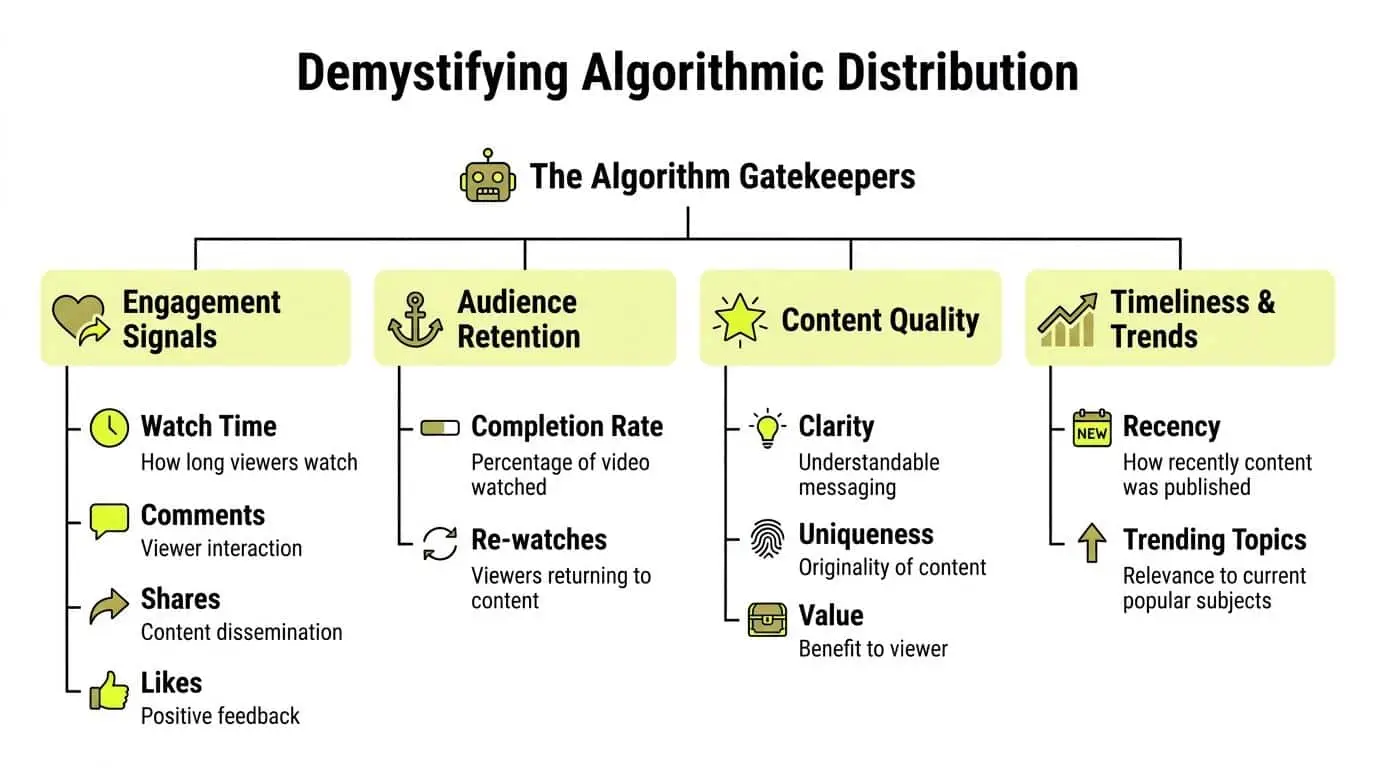
Completion rate filters who gets expanded reach
Visible engagement can mislead teams. Likes look impressive in a report. Distribution systems care more about whether viewers stay, finish, and rewatch.
On TikTok and other short-form platforms, completion rate acts as an early filter for broader testing, as explained in Disrupt Marketing’s analysis of viral content mechanics. That changes editing decisions. Videos that hold attention usually arrive at the point fast, remove wasted words, and keep visual motion active enough to prevent drop-off.
Replay behavior matters too. A hook built around curiosity, tension, or a missing piece often earns a second watch, and that gives the platform another strong retention signal. I usually treat that as an editing brief, not a creative afterthought. If the payoff is clear but not fully absorbed on first watch, the video has a better chance of triggering another loop.
Technical choices shape behavior
Production quality matters because it changes what the viewer does next.
A vertical frame fills the screen and reduces friction. Captions help silent viewers stay oriented. Clear audio keeps the message from feeling disposable. Titles, thumbnails, and descriptions influence whether the viewing session starts at all. Even before a platform has enough watch data, packaging affects click-through and early audience fit.
The structure matters here as well. Videos distributed widely tend to introduce the premise quickly, create a clear progression, and resolve with a payoff the audience can recognize without effort. That pattern is less glamorous than “be creative,” but it is far more usable.
Distribution starts before the recommendation engine touches the file
Platforms evaluate more than the clip itself. Shared previews, embedded links, and metadata affect who clicks, how the content appears off-platform, and whether the first traffic batch arrives qualified.
For brands publishing across owned channels, details like Open Graph protocol setup for stronger social previews can improve the quality of those first clicks. I have seen good videos lose momentum because the shared preview looked broken, generic, or mismatched to the promise of the post. That is not a creative failure. It is a distribution setup failure.
A useful operating model is to separate the variables your team can control:
| Area | What to optimize | Why it matters |
|---|---|---|
| Viewer behavior | Hook, pacing, payoff | Improves watch time, completion, and replay potential |
| Content packaging | Captions, title, thumbnail, metadata | Improves click-through and message clarity |
| Technical format | Vertical framing, visual clarity, resolution | Reduces mobile friction and abandonment |
| Audience fit | Trend alignment, timing, familiar context | Improves initial response quality |
No platform publishes a full scoring model. Teams still do not need perfect transparency to improve outcomes. The repeatable win is to design for measurable signals before launch, so the algorithm receives clean evidence that the video deserves a larger test.
Strategic Seeding for Your First 5000 Views
A lot of marketers lose the viral game before the algorithm even has enough data to judge the content.
That’s because early distribution is often treated as an afterthought. The team makes the video, posts it, and waits for “organic” performance to reveal whether it was good. In reality, that approach gives the platform almost no reason to keep testing the asset.
Early views create relevance signals
One of the most overlooked truths in short-form marketing is that securing the first 1,000-5,000 views through deliberate nurturing is critical. The research behind music video launch strategy argues that videos with early views appear relevant and gain momentum, while videos without that initial lift remain invisible. It also points to tactics such as targeted ads and fan seeding as part of that pre-work (Easy Reader News).
This isn’t just a music problem. It’s a distribution problem.
Social proof affects both humans and machines. People are more likely to watch what already appears active. Platforms are more willing to continue testing what already shows signs of response. Early traction creates a perception of relevance from both directions.
A practical launch model beats post and pray
A better launch plan starts before the upload. The team should know exactly who will see the content first and why those viewers are likely to respond.
That usually means coordinating several channels at once:
- Warm audience activation: Email lists, customer communities, employee advocacy, and existing followers who are most likely to engage quickly.
- Niche community seeding: Relevant Reddit communities, private groups, Discord servers, or industry spaces where the topic already has context.
- Creator support: Micro-influencers, partners, or collaborators who can repost or react early.
- Paid ignition: Small, tightly targeted spend to place the content in front of the audience segment most likely to complete and share.
The mistake is trying to buy broad awareness too early. Broad awareness is expensive and often low intent. Early seeding works best when the first audience is highly aligned with the content angle.
A launch doesn’t fail because nobody could have liked the video. It fails because the right viewers never saw it early enough to validate it.
Pre-work is where engineering shows up
This is the part of virality that feels least romantic and most repeatable.
Before publishing, teams should answer a few operational questions:
- Who are the first viewers
- What channels will deliver them within the opening window
- What message will be used to prompt sharing
- What alternate edits are ready if the first version underperforms
- Who owns response monitoring during launch
Many brands also benefit from pairing organic seeding with creator relationships. A useful starting point is studying real influencer marketing campaign examples because early momentum often comes from niche voices with concentrated trust, not celebrity-scale reach.
This is also the one place where a platform like Magic Logix can fit operationally. For teams running multi-channel launches, tools that combine predictive analytics, social intelligence, and campaign orchestration can help identify receptive audience segments, time distribution windows, and monitor momentum signals without relying on guesswork.
A viral video launch should feel more like a product release than a casual post. The content matters. The first wave matters just as much.
Learning from Real-World Viral Case Studies
Viral case studies matter because they show a repeatable pattern. The videos that break out usually combine one clear emotional trigger, one low-friction share reason, and one format that travels beyond the original post.
That combination is measurable. Teams can examine whether a video is easy to understand in the first seconds, easy to reference in conversation, and easy to repost in another context. The old breakout hits still teach those rules well.
Charlie Bit My Finger and the power of immediate emotional clarity
“Charlie Bit My Finger” spread because the joke landed fast. Viewers saw the relationship, the conflict, and the reaction almost instantly. No setup was required, and no cultural knowledge was needed.
That matters more than production quality.
The video also gave people a clean social object to share. Sending it to a friend communicated something specific: this is funny, this feels real, and you’ll get it right away. That kind of low-explanation share behavior still drives distribution now, even though the platforms are different.
For brands, the lesson is straightforward. If the audience needs too much context before the payoff, distribution slows. If the premise is visible on first watch, completion and sharing both get easier.
David After Dentist and the value of quotable reactions
“David After Dentist” worked on a second mechanism. The video did not stay confined to the original clip. It escaped into language.
“Is this real life?” became the transport layer. People repeated it in texts, captions, jokes, and later memes. That is one of the strongest signals in any viral analysis. A video has more room to spread when it produces a phrase, sound, frame, or reaction that people can reuse without reposting the full asset.
This is a practical creative test. Ask whether the video contains a portable unit. It could be a line, a facial reaction, a reveal, or a repeatable sound cue. If nothing from the video can survive outside the video, the ceiling is usually lower.
The Jet2 holiday sound trend and format portability
The “Jet2 holiday sound” trend is useful for a different reason. It shows how a familiar audio cue can become a reusable format, not just a single successful post. Newsflare’s coverage of the trend highlights how the sound paired well with fail clips, awkward travel moments, and everyday holiday footage because the contrast was easy to reproduce.
That is what brand teams should study. Not only whether a video performs, but whether the structure invites imitation.
A format with viral upside usually has three properties. It is recognizable within a second or two. It is flexible enough for many creators to adapt. It gets funnier, sharper, or more interesting when placed in a new setting. Once that happens, the original asset stops being the whole story. The format starts doing distribution work on its own across multiple feeds and platforms, as noted earlier.
Here is the practical breakdown:
| Video example | Primary trigger | Why it traveled |
|---|---|---|
| Charlie Bit My Finger | Relatable humor | Instant comprehension and authentic family dynamic |
| David After Dentist | Surprise and confusion | Quotable reaction that carried into culture |
| Jet2 holiday sound trend | Familiar audio plus contrast | Reusable format built for remix and reposting |
The lesson from these examples is not to copy legacy viral hits. It is to identify the transport mechanism inside them. Strong viral videos give viewers something easy to feel, easy to repeat, and easy to redistribute. That is where creative instinct meets engineered reach.
An Actionable Checklist for Engineered Virality
Virality is usually decided before the post goes live.
Teams that treat launch as an afterthought force the algorithm to guess. Teams that plan for early velocity give the platform clearer evidence to distribute. As noted earlier, the first two days matter disproportionately, which is why pre-launch seeding belongs in the same conversation as concept, scripting, and editing.
A usable checklist should reduce guesswork at each stage. It should also reflect the trade-off every brand faces. Creative that feels fresh often carries more execution risk. Creative that looks familiar is easier for audiences and algorithms to process, but easier to ignore if the hook is weak.
Pre-production decisions
Start with the share mechanism, not the shoot plan.
Ask:
- What specific emotion should make someone send this to another person
- Which audience identity should recognize themselves in it right away
- What unresolved question, contrast, or tension appears in the first seconds
- What proven format can be adapted without making the video feel copied
- Which platform should shape the first cut, pacing, framing, and length
- Who will help create the first wave of distribution before publishing
That last question gets skipped too often. If the distribution path is unclear before production, the launch usually depends on hope.
Production and edit standards
Editing decisions affect reach. Platforms reward videos that create fast comprehension, sustained watch time, and response signals.
Use these standards:
- Remove slow setup: Brand context comes after attention is earned.
- Build several hook options: Different openings give the team room to test.
- Frame for mobile first: Vertical composition, readable captions, and one clear focal point.
- Cut filler language: Every extra second lowers the chance of a complete view.
- Signal the payoff early: Viewers stay longer when they know a result is coming.
- Design for muted viewing: The visual story should still work without sound.
One simple test works well in practice. Watch the first five seconds with the audio off. If the clip still creates curiosity, the opening has a better chance of surviving the scroll.
Launch and measurement checklist
Publishing is the start of distribution engineering.
The first audience should be selected before the post is scheduled. That audience can include loyal followers, employee advocacy groups, creator partners, customers, niche communities, and paid traffic segments that match the intended viewer profile. Each source sends a different quality of signal. Broad paid traffic can inflate views but weaken retention. Smaller, high-fit audiences often create stronger comments, shares, and rewatches, which are more useful in the first testing window.
The Engineered Virality Checklist
| Phase | Action Item | Key Objective |
|---|---|---|
| Pre-Production | Define the core sharing trigger | Increase send and share intent |
| Pre-Production | Choose a clear audience identity or subculture | Improve immediate relevance |
| Pre-Production | Study proven hooks and repeatable formats | Reduce concept risk |
| Pre-Production | Pick the primary platform and native cut | Match platform behavior |
| Pre-Production | Map the first distribution circle | Create launch velocity |
| Production | Build a sharp opening sequence | Stop the scroll fast |
| Production | Keep the tension and payoff inside a compact arc | Hold attention longer |
| Production | Add captions and mobile-first framing | Lower viewing friction |
| Production | Prepare multiple opening variants | Support rapid testing |
| Post-Production | Assign launch owners across channels | Keep execution fast |
| Post-Production | Seed through warm communities, creators, or partners | Generate early qualified engagement |
| Post-Production | Use paid support selectively | Reinforce momentum without distorting signals |
| Post-Production | Track retention, shares, saves, comments, and completion patterns | Judge distribution potential |
| Post-Production | Replace weak hooks or thumbnails quickly | Extend the testing window |
Ownership matters here. One person should own creative variants. One should own distribution. One should watch comments, saves, share patterns, and drop-off points in real time. Campaigns lose momentum when those jobs sit with everyone and no one.
Good creative gets attention. A controlled launch process gives that creative a real chance to compound.
If your team wants to turn video from a speculative content exercise into a measurable growth channel, Magic Logix helps brands connect creative strategy with predictive analytics, social intelligence, and launch execution so campaigns are built for momentum from the start.