
Virtual event marketing is the practice of promoting and running online sessions, webinars, and conferences to generate awareness, leads, and revenue. The approach that consistently pays off treats every event as a content engine built around your ideal customer profile, not a one-off broadcast. Growth teams now use signals like emoji reactions, chat sentiment, and dwell time to judge who is actually interested, and it changes how they plan, run, and follow up on every session.
TL;DR:
- Tracking dwell time and chat sentiment provides better insight into lead quality and engagement than registration numbers alone.
- Choosing the appropriate virtual event format, such as webinars or summits, depends on your specific goal to avoid low engagement and wasted promotion.
- Pre- and post-event campaigns must be tailored to different audience segments with multi-touch email sequences and segmented follow-up to maximize attendance and conversions.
- Interactive tools like polls, breakout rooms, and real-time moderation significantly improve session retention and attendee participation.
- Integrating event content into a longer content and pipeline system, known as Event-Led Growth, amplifies long-term value and ROI.
Table of Contents
- Types of virtual events and when to use each
- Marketing strategy: before, during, and after
- Engagement mechanics: interactive tools, incentives, and moderation
- Turn events into a content engine with Event-Led Growth
- Measurement and KPIs that matter
- Tech and vendor selection: evaluation checklist
- Budgeting, sponsorship, and monetization
- Execution checklist and 8 to 12 week launch timeline
- Legal and privacy considerations in virtual event marketing
- Audience segmentation and targeted promotion strategies
- Pre-event email marketing and communication best practices
- Post-event follow-up nurturing tactics and lead conversion
- What most teams get wrong about virtual events
- How Magic Logix supports virtual event marketing
- Sources
- FAQ
Types of virtual events and when to use each
Not every business goal calls for the same event format. Picking the right one first saves you from months of low engagement and wasted promotion.
- Webinar: A single-session, 30 to 60 minute presentation best suited to lead generation and product education; keep it tight and interactive rather than a long slide read.
- Virtual conference: A multi-track, multi-day event for thought leadership and community building; program at least one keynote that works as a standalone highlight reel.
- Summit: A themed, multi-speaker event usually built around co-marketing with partners; invite each partner to promote to their own list so reach compounds.
- Workshop: A hands-on, smaller-group session for training or onboarding; cap attendance so breakout exercises stay manageable.
- Product launch: A focused announcement event tied to awareness and demand generation; time it to a specific release date and back it with a paid push.
- On-demand hub: A gated library of past sessions that keeps working after the live date; refresh it monthly so it never looks stale.
- Hybrid event: A physical event streamed to a remote audience, useful when you want in-person energy plus a wider digital reach; give remote attendees their own chat channel so they are not just watching a room.
Match the format to the goal before you touch a marketing plan. A summit aimed at brand awareness with no gated content behind it wastes the reach it generates, and a workshop treated like a webinar loses the hands-on value that made it worth attending in the first place.
Marketing strategy: before, during, and after
A virtual event lives in three distinct phases, and each one needs its own plan rather than a single generic checklist.
- Before: Define the objective and ideal customer profile first, then build a landing page that speaks directly to that audience. Layer in a multi-touch email sequence, recruit co-marketing partners to widen reach, and set up paid amplification with UTM tracking so you know exactly which channel drove each registration.
- During: Design a session architecture with clear time blocks for content, live Q&A, and breaks. Give your emcee or moderator a script for calling out live CTAs, and assign someone to amplify highlights on social media in real time while chat moderators nurture questions as they come in.
- After: Send a follow-up cadence within 24 hours, separating attendees from no-shows since they need different messages. Decide whether replays are gated or earned through participation, repurpose the recording into shorter assets, and hand qualified leads to sales with the engagement data attached.
Each phase feeds the next. A landing page built around a specific ICP makes the live Q&A sharper because the right people showed up asking the right questions, and a session designed for clean audio and clear segments makes repurposing after the event far less painful.
Co-marketing and partner amplification tend to scale registration efficiently when partner KPIs are agreed on ahead of time rather than left informal. On the paid side, tracking registration to attendance conversion against industry benchmarks helps you spot a weak landing page before the event even happens, since a big gap between the two numbers almost always points to unclear messaging or a poor time slot. If your team already uses a framework for developing marketing strategy, the event plan should slot directly into it rather than run as a separate initiative.
Engagement mechanics: interactive tools, incentives, and moderation
Attendees drop off fast when a session turns into a one-way broadcast. The fix is building interaction into the structure, not bolting it on as an afterthought.
- Polls and live Q&A give you a real-time read on interest and double as content for a highlight clip afterward.
- Breakout rooms work well for workshops and summits where smaller group discussion adds more value than another slide.
- Chat and emoji reactions are worth watching closely: emotional signal analysis using reactions and sentiment is now part of how growth teams qualify leads in real time.
- Dwell time matters more than headcount. Teams that track percent of session watched against a 50% threshold get a better read on lead quality than raw registration numbers ever give them.
On incentives, earned on-demand access (where a replay unlocks only after a poll response or a short survey) tends to push more people to stay live rather than register and vanish. Limited-time replay windows and light gamification, like a leaderboard for live Q&A participation, work the same way: they reward attention instead of just attendance.
Pro Tip: Brief your emcee to call attendees by name when reading their questions live. It costs nothing and it is the fastest way to make a 500-person webinar feel like a room of ten.
Moderation is the part teams skip and then regret. A good moderator keeps pace, redirects a rambling question back to something useful, and knows when to cut a tangent short so the session stays on schedule. Operational examples from large-scale virtual events show that tighter session lengths and confident moderation consistently keep attention higher than a loosely run, open-ended format.
Turn events into a content engine with Event-Led Growth
Event-Led Growth treats a single session as raw material for weeks of downstream content rather than a one-time performance. The framing comes from Event-Led Growth strategy, which positions events as a go-to-market channel with a defined repurposing workflow behind it, not just a calendar item.
The workflow itself is simple once you set it up:
- Capture raw video and transcripts during the live session so nothing has to be recreated later.
- Tag each clip and quote by topic and ICP so your team can find the right asset months later.
- Edit short highlight clips for social and pull out strong quotes for a follow-up blog post or a whitepaper.
- Distribute the repurposed pieces across email, social, and your website over several weeks rather than all at once.
- Measure which assets drive replies, clicks, or meeting requests, then feed that back into your CRM and marketing automation so sales sees the full picture.
Designing for content longevity from the start changes what a “good” session looks like. Planning an event to generate months of serialized content is a different exercise than planning it to look good for sixty live minutes, and it is the difference that determines whether the event pays off long after the registration page comes down. A related discussion on long-form content strategy covers how to plan distribution windows so a single event does not get dumped into the market all at once. Tools like content strategy platforms can help plan the repurposing calendar so nothing sits unused in a shared drive.
Measurement and KPIs that matter
Registration counts alone tell you almost nothing about whether an event worked. The KPI set that actually matters starts with the funnel and ends with pipeline.
- Registration to attendance rate shows whether your promotion attracted the right audience or just easy sign-ups.
- Dwell time, especially against a 50% watched threshold, is a stronger predictor of lead quality than headcount.
- Engagement rate (polls answered, questions submitted, reactions given) tells you who was actually paying attention.
- Pipeline per attendee connects the event directly to revenue instead of stopping at a vanity metric.
- ICP match rate flags whether your targeting worked or whether you filled seats with the wrong audience.
- Conversion to meetings or demos is the number that finally answers whether the event was worth running again.
Instrumenting this requires UTM parameters on every promotional link, a CRM integration that captures attendance and engagement data against each contact record, and platform analytics that go beyond attendee counts. A lead-scoring model that weights dwell time and poll responses, similar to the behavioral triggers described in AI-driven event ROI analysis, gives sales a ranked list instead of a flat spreadsheet. For a broader look at tying campaign data back to revenue, a guide on measuring digital marketing effectiveness walks through the same CRM and analytics setup applied across channels, not just events.
Report these numbers to stakeholders as a short funnel, registration through attendance through pipeline, rather than a long list of platform metrics. Executives care about the last number far more than the first.
Tech and vendor selection: evaluation checklist
The platform you choose shapes what kind of engagement is even possible, so pick it based on the event format, not habit.
- Reliable streaming with low latency is non-negotiable for anything live; a laggy feed kills engagement faster than weak content does.
- Chat and interactive tools (polling, Q&A, breakout rooms) need to work without a plugin install or a confusing second login.
- Analytics depth matters more than a flashy dashboard: you need dwell time, poll responses, and attendance data exportable to your CRM.
- API and CRM sync should be confirmed before you sign a contract, not discovered the week before launch.
- Accessibility features, including live captioning and screen-reader compatibility, are worth confirming directly rather than assuming.
Budget and scale trade off directly against each other. A 200-person webinar rarely needs the same platform as a 5,000-person conference, and paying for enterprise features you will not use is money better spent on promotion. Confirm data privacy practices and security certifications before the event, since attendee data collected through registration forms carries the same obligations as any other customer data you hold.
Budgeting, sponsorship, and monetization
A realistic budget splits across a handful of categories: production and platform fees, talent (speakers, moderators), marketing and paid promotion, and internal staff time. Skipping the staff time line is the most common budgeting mistake, since someone still has to run registration support and moderate chat.
- Production and tech cover the platform license, streaming setup, and any recording or editing costs.
- Talent includes speaker fees, an outside emcee if you use one, and any panel honorariums.
- Marketing covers paid amplification, email tools, and landing page design or updates.
- Staff time covers moderation, technical support, and post-event follow-up work that does not disappear once the event ends.
Sponsorship packages sell best when they map to a measurable deliverable: logo placement on the landing page, a dedicated speaking slot, or a post-event attendee list segmented by engagement level. Sponsors care about pipeline contribution more than impressions, so build reporting into the package from the start rather than promising it after the fact. Charging attendees directly works for premium, credentialed training content; sponsor-funded models work better for broader awareness events where a paywall would cut attendance before it starts.
Execution checklist and 8 to 12 week launch timeline
A realistic build runs eight to twelve weeks depending on the event’s scale and speaker count.
- Weeks 1 to 2: Lock the objective, ICP, and format, then draft the landing page.
- Weeks 3 to 5: Build content and confirm speakers, running at least one rehearsal per speaker.
- Weeks 6 to 8: Ramp marketing, including email sequences, paid amplification, and partner promotion.
- Weeks 9 to 10: Run a full technical rehearsal covering audio, streaming, and the moderation script.
- Launch week: Execute the live event with a run sheet covering every session transition and backup plan.
- Post-event: Send follow-up within 24 hours, then begin content repurposing and sales handoff.
On the day, confirm backup internet and a co-host who can take over if the primary presenter drops. A simple run sheet, shared with production or an outside agency ahead of time, prevents the small failures that derail an otherwise well-planned session.
Legal and privacy considerations in virtual event marketing
Registration forms collect personal data, and that puts you squarely inside data privacy rules the moment someone signs up. If any portion of your audience is in the European Union or European Economic Area, GDPR requires clear consent for how you collect, store, and use that data, along with an easy way for people to opt out later. Similar principles apply under state-level privacy laws in the United States, which increasingly require disclosure of what data is collected and how it is used.
Practical steps matter more than legal boilerplate here. Say clearly on the registration page what attendee data will be used for, whether that is follow-up email, retargeting ads, or sharing with a co-marketing partner. If a partner will receive attendee contact information, disclose that plainly rather than burying it in fine print, since undisclosed data sharing is one of the fastest ways to damage trust with a prospective customer.
Recording consent is its own issue. If a session records audience video or names participants in a Q&A transcript that gets published later, say so before the event starts, not in a footnote after the fact. None of this is a substitute for legal advice specific to your jurisdiction and audience, but building consent language and data handling into your registration flow from the beginning avoids the scramble of fixing it after a complaint.
Audience segmentation and targeted promotion strategies
Promoting a virtual event to everyone on your list is the fastest way to get a room full of the wrong people. Segmentation starts with your ideal customer profile: industry, company size, role, and where each contact sits in the buying cycle.
A cold list needs different messaging than an existing customer base. Prospects who have never heard of your company need context and a clear reason to attend, while current customers might respond better to an invitation framed around a specific feature update or a peer case study. Splitting email and paid promotion by these segments, rather than sending one generic message to the whole database, consistently produces better registration to attendance conversion because the people who show up already know why they are there.
Paid promotion should mirror the same logic. A LinkedIn campaign targeted at a specific job title and industry combination will cost more per click than a broad campaign, but it fills the room with people who match your ICP instead of people who clicked because the ad looked interesting. Retargeting past webinar attendees or website visitors who match your segment criteria also tends to convert better than cold prospecting, since they already have some familiarity with your brand.
Pre-event email marketing and communication best practices
Email remains the backbone of registration and attendance for most virtual events, and a single confirmation message is not enough. A multi-touch sequence, typically three to five emails spread across the weeks before the event, keeps the session on a registrant’s radar without becoming annoying if the cadence is spaced out and each message adds something new.
The first email should confirm registration and set expectations: what the session covers, how long it runs, and what the registrant will walk away with. A middle email works well as a value-add, sharing a related resource or a preview of what a speaker will cover, rather than just repeating the registration confirmation. The final reminder, sent the morning of the event, should include the direct join link and a note on what to do if there is a technical issue.
Segment reminder emails by whether someone has opened previous messages. A registrant who has ignored every email so far may need a subject line change or a different incentive to show up, while an engaged registrant just needs the practical join details.
Post-event follow-up nurturing tactics and lead conversion
The follow-up window closes fast. Sending a thank-you email within 24 hours, while the session is still fresh, consistently performs better than waiting several days to compile a “proper” recap.
Separate the follow-up by behavior rather than sending one email to everyone who registered. Attendees who stayed for most of the session and answered a poll or asked a question deserve a more direct message, potentially including a meeting request, than no-shows who simply get a replay link and a lighter nurture sequence.
Repurposed content extends the nurture well past the first week. A short clip addressing one specific question from the live Q&A, sent to attendees who asked something similar, feels personal in a way a generic recap never does. Handing sales a ranked list, built from attendance data and engagement scores rather than a flat spreadsheet of names, shortens the time between event and first meaningful sales conversation.
What most teams get wrong about virtual events
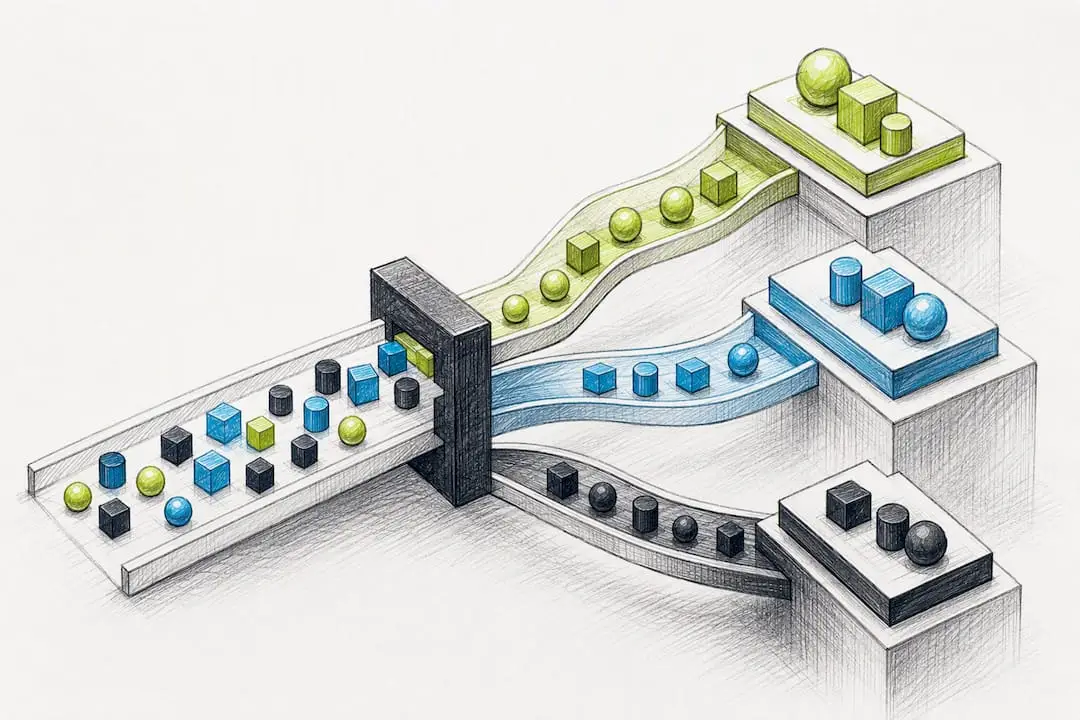
Most teams treat a virtual event as a single deliverable: plan it, run it, move on. That mindset caps its value at whatever happened in the live session, and it is why so many webinars generate a spike of registrations and then disappear from anyone’s memory a week later.
The stronger approach treats the event as the starting point of a content and pipeline cycle, not the finish line. A 45-minute session, planned correctly, can produce a dozen social clips, a whitepaper, and three months of email content, while also feeding a lead-scoring model that tells sales exactly who to call first. The teams that get real value from virtual events are not necessarily running better slides. They are running a better system around the event, from capture through distribution through follow-up, and that system is what actually compounds over time.
— Hassan
How Magic Logix supports virtual event marketing
Running a virtual event well means juggling landing pages, email sequences, paid promotion, and analytics all at once, and most internal marketing teams are stretched thin trying to do all of it alongside their regular workload. A provider can build and manage the pieces that make an event strategy work end to end.
- Web Development for registration pages and on-demand content hubs that stay live long after the event ends, detailed on the web development page.
- Digital Marketing and Marketing Automation to run pre-event email sequences, paid amplification, and post-event nurture without manual handoffs, covered on the digital marketing page.
- Predictive Analytics and Business Intelligence to connect attendance and engagement data back to your CRM, outlined on the capabilities page.
If your next event needs a real strategy behind it rather than another rushed webinar, visit Magic Logix to talk through what a full event marketing setup would look like for your team.
Sources
- Launching an ELG Strategy (American Marketing Association)
- AI & IRL: How growth teams are rethinking event ROI in 2025 (HubSpot / Unbound)
FAQ
What is the biggest mistake in virtual event marketing?
The most common mistake is treating the live session as the entire deliverable instead of designing it to produce weeks of repurposed content and a clear pipeline signal. Events planned this way, following an Event-Led Growth approach, consistently generate more value than one-off webinars.
How do you increase virtual event engagement?
Build interactive elements like polls, live Q&A, and breakout rooms directly into the session structure rather than adding them as an afterthought. Watching signals like dwell time and chat sentiment during the event also helps you spot and re-engage attendees who are losing interest.
What KPIs matter most for virtual events?
Dwell time in particular tends to predict lead quality better than raw attendance numbers.
Should virtual event replays be gated or open?
Both models work depending on your goal: gating replays behind a short survey or poll response tends to increase live attendance since people do not want to wait for access, while open replays maximize reach for brand awareness. Many teams use an earned-on-demand model, unlocking the replay only after some participation, to balance the two.
Does Magic Logix help with virtual event marketing?
Specialized services can support the marketing and technical pieces around virtual events, including registration page development, email and paid promotion sequences, and analytics integration with a CRM. These services are detailed on the digital marketing and capabilities pages.