
B2B influencer marketing means partnering with subject-matter experts, practitioners, or executive voices to lend third-party credibility to your brand’s message. The biggest payoff is trust: buyers weighing a complex, multi-stakeholder purchase lean on outside voices to validate a vendor’s claims. It works best for B2B brands selling considered purchases where no single decision-maker signs off alone.
TL;DR:
- B2B influencer marketing relies on trusted analysts, practitioners, or executives who provide depth, credibility, and access to high-intent professional audiences.
- Channels like LinkedIn, YouTube, and podcasts outperform Instagram and TikTok for building long-term relationships with targeted buyer groups.
- Effective programs focus on measurable outcomes such as pipeline influence and lead quality, emphasizing ongoing engagement over one-off campaigns.
- Successful influencer discovery incorporates both AI tools and human judgment to select partners with relevant content, engaged audiences, and genuine expertise.
- Clear disclosure of material connections is required by the FTC, with both brand and influencer responsible for transparent, visible endorsements.
Table of Contents
- What sets B2B influencer marketing apart from B2C
- Why B2B influencer marketing works
- Where B2B influencer content performs best
- Building a B2B influencer strategy that ties to business outcomes
- Finding and vetting the right B2B influencers
- Running the campaign: contracts, compensation, and disclosure
- Measuring ROI and the KPIs that actually matter
- What successful B2B influencer programs actually look like
- Why this guidance holds up
- Where B2B influence programs are headed
- How Magic Logix supports B2B influencer programs
- FAQ
- Sources
What sets B2B influencer marketing apart from B2C
In B2C, influencers sell lifestyle and impulse. In B2B, the job is different: you need someone a buying committee already respects to explain why a solution works, not just that it looks good. The influencers that matter here are often analysts, practitioners, or executives with a track record, not creators with the biggest follower count.
That changes almost everything about how a program runs.
- Buyer intent is research-driven, so content needs depth, not just polish.
- Sales cycles stretch over months, so a single campaign rarely closes a deal on its own.
- Success is measured in pipeline influence and lead quality, not likes or shares.
- Channels skew toward LinkedIn, YouTube, and podcasts rather than Instagram or TikTok.
A B2C partnership might be a 15 second video. A B2B equivalent is more likely a 40 minute webinar or a detailed LinkedIn post breaking down a technical decision.
Why B2B influencer marketing works
The core benefit is borrowed trust. Edelman’s research on thought leadership found that 73% of B2B buyers trust thought leadership over traditional marketing materials when judging whether a company actually knows what it’s doing. That is a meaningful edge for brands competing on expertise rather than price.
Beyond trust, influencer partnerships give you access to audiences you could not reach through paid media alone, and they generate content you can reuse across sales decks, email nurtures, and social feeds for months.
- Third-party validation shortens the credibility gap for unfamiliar brands.
- Niche creators bring access to tightly defined professional audiences.
- Co-created content extends the life and reach of thought leadership.
Gartner’s 2023 buyer survey found that B2B buyers value third-party interactions 1.4 times more than direct supplier interactions. That gap is the reason influencer credibility matters more as deal size and risk increase. Just don’t expect overnight results: trust compounds over repeated exposure, not a single post.
Where B2B influencer content performs best
Not every platform earns its place in a B2B program. Gartner’s survey also flagged YouTube as the top social channel for shaping recent B2B purchase decisions, ahead of other social platforms, which should reset how marketers allocate budget.
- LinkedIn works for executive commentary, practitioner breakdowns, and community discussion.
- YouTube suits demo videos, product walkthroughs, and longer explainer content.
- Podcasts and newsletters build familiarity over time with niche, high-intent audiences.
- Events and webinars convert attention into direct conversation with buying committees.
Favor influencer-owned channels early, when you’re borrowing their audience and credibility. Shift toward brand-owned distribution once the content proves useful, so it keeps working in your own funnel.
Building a B2B influencer strategy that ties to business outcomes
A strategy without a goal is just outreach. Start by deciding what you are actually trying to move: brand awareness, marketing-qualified leads influenced, or pipeline contribution. Each goal points to a different influencer type and cadence.
- Set one primary KPI per program, whether that’s brand lift, MQLs influenced, or pipeline value touched.
- Map your buying committee: who researches, who recommends, and who signs.
- Match influencer types to the job: subject-matter experts for credibility content, practitioners for demos, executives for advocacy and events.
- Choose cadence deliberately: always-on relationships build trust over a sales cycle; campaigns work as short-term catalysts.
MarketingProfs’ research on program effectiveness found that programs rated very effective are more likely to run always-on engagement rather than one-off campaigns, and more likely to outsource execution and use AI for identification and tracking.
Pro Tip: Pick one KPI before you pick an influencer; the metric should decide the partner, not the other way around.
Finding and vetting the right B2B influencers
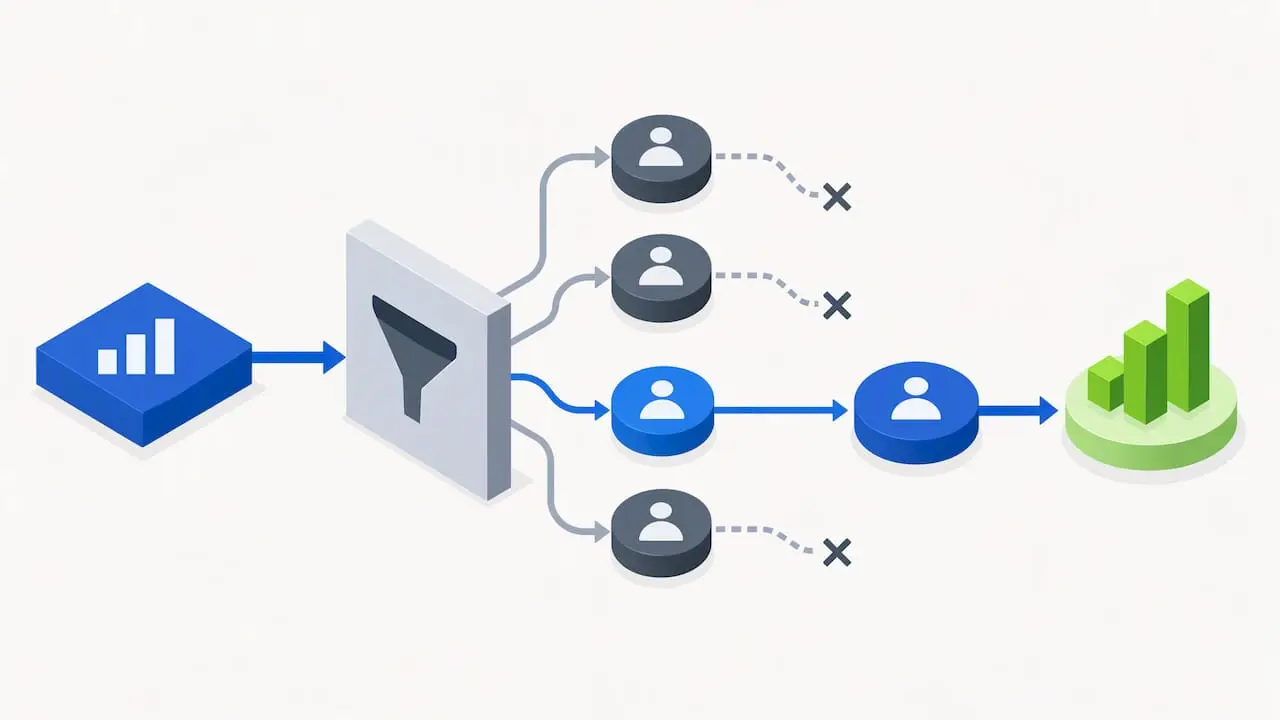
Good influencer discovery mixes tools with judgment. Platform search, social listening, referrals, and event speaker lists all surface candidates, and AI tools can speed up the first pass by scanning engagement patterns and topical focus at scale. Human review still has to make the final call, because audience fit and tone are hard to automate.
- Check topical alignment: does their recent content match your buyers’ actual questions?
- Look at the job-title mix of their engaged audience, not just follower count.
- Assess engagement quality: comments from practitioners carry more weight than generic likes.
- Watch for repeat themes that show genuine expertise rather than one-off opinions.
Red flags include low engagement relative to audience size, heavy promotional ties to direct competitors, and content that drifts far from your category. A partner who covers everything tends to carry authority on nothing.
Running the campaign: contracts, compensation, and disclosure
Execution details decide whether a partnership feels authentic or forced. Most B2B collaborations fall into a few models: co-created long-form content, paid speaking or webinar appearances, sponsored newsletter mentions, or ongoing advisory relationships. Compensation ranges from flat fees to retainers, and some practitioners prefer visibility or early product access over cash.
- Put usage rights, approval steps, and timelines in writing before production starts.
- Clarify whether content can be repurposed across your own channels after publication.
- Negotiate scope explicitly: one post looks very different from a quarterly series.
Disclosure isn’t optional. The FTC’s guidance for influencer disclosures requires that any material connection between a brand and an influencer be disclosed clearly and placed with the endorsement itself, not buried in a bio or hidden behind a “more” link. Both the brand and the influencer share responsibility for getting this right.
Measuring ROI and the KPIs that actually matter
Reach and impressions tell you a post was seen, not whether it moved a buyer — understanding practical customer success metrics helps connect influencer efforts to real outcomes. For B2B programs, the metrics worth tracking are quality engagement, content assists along the funnel, MQLs influenced, and pipeline value touched by influencer content.
- Use UTM-tagged links to trace which influencer content touches which accounts.
- Build assisted-conversion views in your CRM so influencer touches show up alongside other channels.
- Survey new leads on how they heard about you to catch attribution gaps automated tracking misses.
- Resist over-indexing on vanity metrics like follower counts or raw impressions.
Our guide to measuring digital marketing effectiveness breaks down attribution models in more depth, and our performance metrics guide covers how to set up reporting that connects content to revenue instead of just activity.
What successful B2B influencer programs actually look like
Three formats consistently deliver for B2B brands. A webinar co-hosted with a respected practitioner tends to generate strong MQL volume within weeks. A demo series featuring a hands-on expert builds product credibility over a quarter. An executive thought-leadership series, published steadily over six months or more, compounds trust gradually rather than spiking it.
- Webinar co-host: fast lead generation, measured in weeks.
- Demo series: builds product trust, measured in a quarter.
- Executive series: slow build, compounds credibility over six months or longer.
Our roundup of influencer marketing campaign examples walks through templates for each format. Always-on programs tend to outperform one-off campaigns precisely because credibility accumulates with repeated, consistent exposure.
Why this guidance holds up
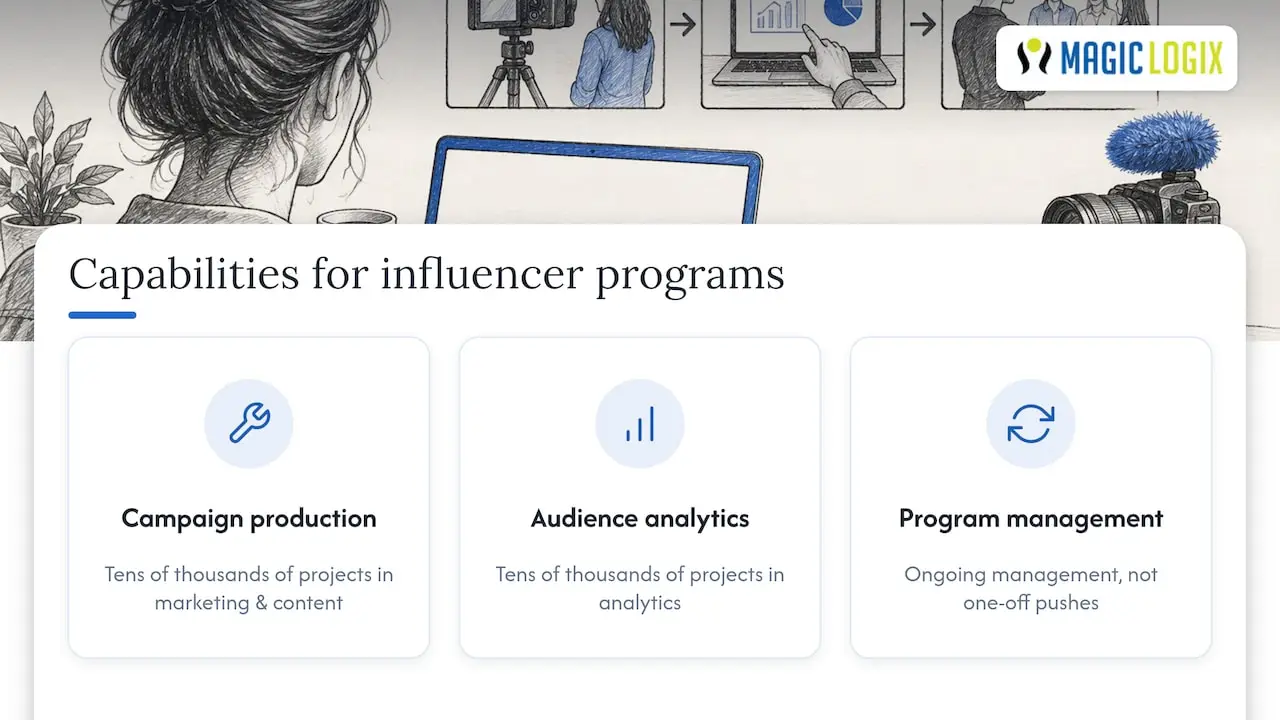
A digital marketing company has experience running tens of thousands of projects across digital marketing, content, and analytics for businesses ranging from small teams to large enterprises. That work spans the same disciplines a B2B influencer program depends on: campaign production, audience analytics, and ongoing program management rather than one-off pushes. The capability page for digital marketing and marketing automation outlines how these pieces fit together.
Where B2B influence programs are headed
AI will keep getting better at surfacing candidates and tracking performance at scale, but the relationship work, negotiating terms, earning trust, keeping partners engaged, still needs a person behind it. My recommendation for senior marketers: budget for always-on engagement and measurement infrastructure now, not after the first campaign proves the concept. Treat influencer relationships like a channel, not a one-time tactic.
— Hassan
How Magic Logix supports B2B influencer programs
Running a B2B influencer program well means juggling content production, audience analytics, and campaign management at the same time, and most internal teams are stretched too thin to do all three consistently. Magic Logix handles this through digital marketing and marketing automation services built around measurable outcomes, alongside social media marketing support for the platform-specific execution these programs need.
If you’re weighing whether to build a program in-house or bring in outside support, a conversation about your current content, goals, and audience is the fastest way to find out. You can review our digital marketing services and request a consultation directly through the page.
FAQ
What is B2B influencer marketing?
B2B influencer marketing is a partnership between a business and a subject-matter expert, practitioner, or executive whose credibility helps validate the brand’s message to other businesses. It differs from consumer influencer marketing because the goal is trust and informed decision-making rather than impulse purchases.
What are the four types of B2B marketing?
Common categories include content marketing, account-based marketing, inbound marketing, and partnership or influencer marketing, though definitions vary across sources. Most B2B strategies blend several of these rather than relying on just one.
What is the ROI of B2B influencer marketing?
ROI depends on the program’s goal, but the strongest signal comes from pipeline value and quality engagement rather than reach alone. MarketingProfs’ research found that programs rated very effective tend to run always-on rather than one-off, which suggests ROI builds over sustained relationships rather than single campaigns.
What are the three R’s of influencer marketing?
Definitions vary, but a common version refers to relevance, reach, and resonance: whether the influencer’s focus matches your category, how many of the right people they reach, and how much their audience actually engages with what they share.
Do B2B influencer partnerships need FTC disclosure?
Yes. The FTC requires clear disclosure of any material connection between a brand and an influencer, placed directly with the endorsement itself. Both the brand and the influencer are responsible for making sure the disclosure is visible and unambiguous.
Sources
- Disclosures 101 for Social Media Influencers | Federal Trade Commission
- Thought leadership gets B2B buyers back into the game | Edelman
- What Makes B2B Influencer Marketing Programs Successful | Study