
A retargeting strategy is a plan for showing ads to people who already engaged with your brand, on your site, app, or through email, to bring them back and finish what they started. Done well, it lifts conversions and ROAS because you’re spending on warm traffic instead of cold clicks. Guidance from the IAB on measurement and Google’s consent tools now shape how that plan gets built and tested.
TL;DR:
- Retargeting relies on first-party data and shifting from ID-based to cohort-based targeting due to increased privacy restrictions and cookie limitations.
- Audience segmentation should prioritize signals like page views, cart events, dwell time, and visit recurrence, with exclusion lists to avoid wasting ad spend.
- Campaign duration and frequency caps must align with identifier lifetimes and purchase cycles to prevent audience decay and ad fatigue.
- Incrementality testing, especially controlled trials or geo holdouts, is essential to accurately measure true campaign impact beyond platform-reported conversions.
- Proper implementation, including tag testing, consent flows, and exclusion rules, is the most common reason retargeting efforts fail and must be regularly checked.
Table of Contents
- What retargeting means and how it plays out in practice
- How retargeting works today, from pixels to ID-less approaches
- Types of retargeting strategies and when each one fits
- Building smarter audiences through segmentation
- Sequencing creative and capping frequency without wearing people out
- Proving real impact with incrementality testing
- A step-by-step checklist to launch compliant retargeting
- Lessons from the field: what actually breaks and what fixes it
- Where retargeting fits in a privacy-first marketing stack
- How Magic Logix can help you build and scale retargeting
- Sources
- FAQ
What retargeting means and how it plays out in practice
Retargeting means serving ads to people who already interacted with your business, whether that’s a site visit, an app open, or an email click, instead of chasing strangers. The goal is simple: remind someone who showed interest to come back and act.
Three situations show how this works day to day:
- A shopper views a product page, leaves without buying, and later sees that same product in a banner ad on another site.
- Someone adds items to a cart, abandons the checkout, and gets a reminder ad with the exact items still waiting.
- A dormant customer on your CRM list, someone who bought once and vanished, sees an ad tied to a win-back offer.
People often use “retargeting” and “remarketing” interchangeably, and for most small business purposes that’s fine. Historically, remarketing leaned toward email-based reactivation while retargeting meant ad-based pixel tracking, but platforms like Google Ads now blend both under one umbrella. What matters more than the label is matching the tactic to where the person dropped off, which is what the rest of this guide walks through.
How retargeting works today, from pixels to ID-less approaches
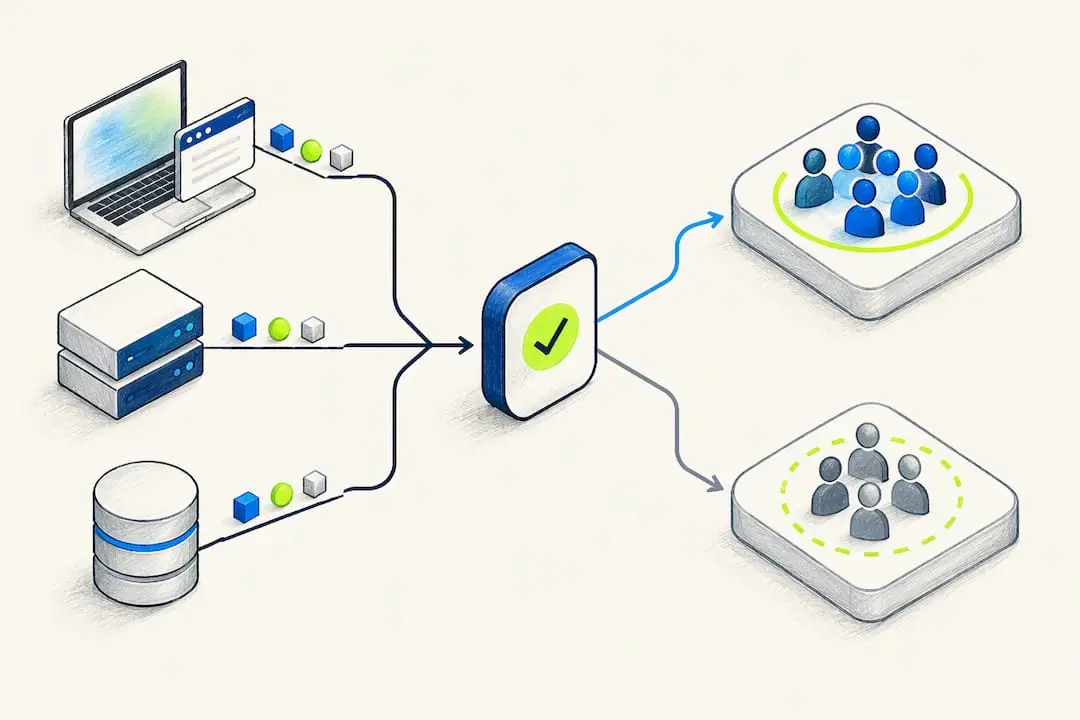
Retargeting has always relied on tracking who visited what. A pixel or tag fires when someone loads a page, adds a signal to a segment, and that segment becomes your audience. Server-side event collection now does much of that same work behind the scenes, sending data straight from your server to the ad platform instead of relying only on a browser-based tag. First-party data collection, your own site visits, purchase history, and email lists, feeds these segments too, and it’s become the most durable source as third-party cookies fade.
The bigger shift is the move from ID-based targeting to ID-less, cohort-based approaches. ID-based retargeting tracks individual users and can retarget them precisely, but it depends on identifiers that browsers and platforms increasingly restrict. ID-less methods group people into cohorts based on shared behavior instead of tracking a single identity, which changes what you can expect from frequency capping and reporting. The IAB Tech Lab’s ID-Less Solutions Guidance explains that cohort-level reporting is often delayed or noised compared to individual-level data, and that identifier lifetimes directly affect how long a campaign can realistically run before the audience decays.
A few practical differences show up fast once you’re in an ID-less environment:
- Frequency caps become harder to enforce precisely, since you’re capping exposure to a cohort rather than a person.
- Reporting lag increases, so daily optimization decisions need more caution.
- Campaign duration should match how long your identifiers persist, shorter in mobile cookie environments, longer where server-side IDs or customer lists hold up.
One structural fact worth planning around: IAB Tech Lab’s guidance notes that cohort expiry and identifier lifetimes shape how long a retargeting audience remains usable, which means campaigns built on short-lived identifiers need refresh cycles baked into the plan from the start.
Consent adds another layer. Google Ads lets you send signals through parameters like allow_ad_personalization_signals and restricted_data_processing, which control whether a user’s data can be used for personalized ads and whether it falls under restricted processing rules in applicable jurisdictions. Google’s documentation recommends testing these flows directly rather than assuming they work, since a misconfigured signal can quietly shrink your remarketing pool without any obvious error message.
Types of retargeting strategies and when each one fits
Not every retargeting tactic suits every business. The right choice depends on your product, your sales cycle, and how much first-party data you actually have.
- Site retargeting and dynamic product ads work best for e-commerce with a catalog, showing the exact items a visitor viewed or abandoned in their cart.
- Search retargeting targets people based on search behavior even before they visit your site, useful for extending reach to intent-driven audiences who haven’t engaged yet.
- Social retargeting rebuilds engagement on platforms like Meta or LinkedIn, and works best when creative and messaging stay consistent with what ran on-site to avoid a disjointed experience.
- CRM and customer-list retargeting uses your own contact data to reach past buyers or leads, a strong fit for subscription businesses or long sales cycles.
- Account-based retargeting applies CRM logic at the company level for B2B, targeting decision-makers within a named account rather than individual anonymous visitors.
The decision often comes down to three questions: how expensive is what you sell, how often do people buy it, and how much reliable first-party data do you have. A high ticket item with a long consideration window, think enterprise software or custom furniture, tends to reward CRM and account-based approaches because the buying committee is small and identifiable. A low-cost, high-frequency product, like a subscription box or everyday apparel, usually does better with dynamic site retargeting because volume and speed matter more than precision targeting one account.
Building smarter audiences through segmentation
Good retargeting starts with knowing which signals actually predict a return visit or a purchase. Page views matter, but so do cart events, dwell time, and how many times someone has come back without converting.
A practical segmentation approach captures these signals:
- Page and product views, especially repeat visits to the same item.
- Cart or checkout events, which usually indicate higher purchase intent than a page view alone.
- Dwell time, since a visitor who spent four minutes on a page behaves differently than one who bounced in five seconds.
- Repeat visit frequency, which often separates a curious browser from someone close to buying.
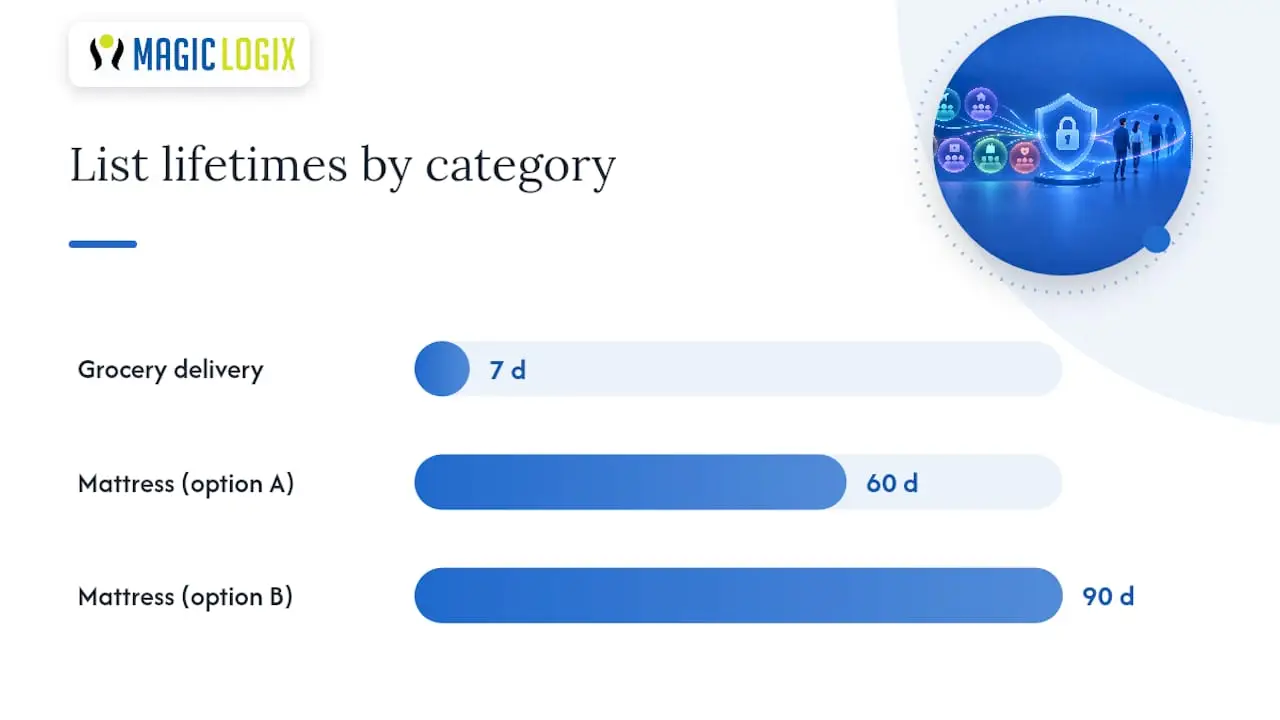
List lifetime should track how people actually shop your category. A grocery delivery app might set a seven-day window because purchase cycles are short, while a mattress retailer might extend to sixty or ninety days given how long people research before buying. When individual-level identity is limited, cohort and propensity-based segmentation fill the gap, grouping visitors by shared behavior patterns instead of a single tracked identity.
Exclusion lists deserve just as much attention as the audiences you build. Recent converters, unsubscribed contacts, and existing customers on a different product line should all be pulled out before a campaign launches, or you’ll waste spend chasing people who already said yes.
Pro Tip: Set list lifetimes by category first, then refine with actual conversion-lag data from your own analytics rather than copying a generic industry number.
Sequencing creative and capping frequency without wearing people out
The order in which someone sees your ads matters almost as much as the ads themselves. A common sequence starts with a soft reminder, no discount, just the product or offer restated clearly. If that doesn’t convert within a few days, a second ad might introduce a specific benefit or social proof. Only in the final stage does an incentive, a discount code or free shipping, typically appear, reserved for the audience most likely to need that extra push rather than offered to everyone upfront.
Dynamic creative personalization lets you swap in the exact product, price, or headline based on what the viewer looked at, and testing two or three creative variants against each other, as covered in structured creative testing approaches, helps you find which message actually earns the click.
Frequency caps prevent the fatigue that turns a helpful reminder into an annoyance. A starting point of six to eight impressions per week per user is reasonable for most campaigns, but platform guidance warns that privacy budgets and ID-less serving can under-report actual delivery, so validate what’s really being shown rather than trusting the dashboard number alone.
- Start with a low frequency cap and increase only after confirming delivered frequency matches what’s reported.
- Coordinate caps across channels, since a user hit on Facebook, Google, and email simultaneously experiences that as one overwhelming barrage, not three separate campaigns.
Pro Tip: Check delivered frequency weekly during the first month of any new campaign; reported caps and actual exposure often drift apart once cohort-based serving is involved.
Proving real impact with incrementality testing
Platform dashboards will almost always show retargeting converting well, because you’re advertising to people already inclined to buy. The real question is how many of those conversions would have happened anyway. That’s what incrementality testing answers, and it’s the difference between a campaign that looks good and one that’s actually adding revenue.
The core KPIs to track are incremental conversions, incremental revenue, and ROAS calculated against a proper baseline rather than raw platform-reported numbers. Three experiment designs get you there:
- Randomized controlled trials (RCTs) split your audience into a group that sees retargeting ads and a holdout group that doesn’t, then compare conversion rates directly.
- Geo holdouts withhold retargeting in specific regions while running it elsewhere, useful when individual-level holdouts aren’t feasible.
- Platform holdouts, built into tools like Google Ads and Meta, automate a version of the same test but with less control over methodology.
- Synthetic controls model what a holdout group would likely have done using historical data, a reasonable substitute when a true holdout isn’t practical.
IAB’s guidelines for incremental measurement recommend matching the method to the stakes of the decision: use RCTs or holdouts for major budget allocation calls, and faster proxy metrics for day-to-day optimization where speed matters more than precision. That guidance also flags a common bias worth watching for, platform-reported lift often overstates true incrementality because it counts conversions that would have happened without the ad, simply attributing them to the last touch a retargeting pixel happened to catch.
One number that frames the opportunity here: Statista tracks a consistently high global rate of shopping cart abandonment, underscoring how much recoverable demand exists for a retargeting program to capture, provided the measurement behind it holds up to scrutiny.
The practical approach for most small and mid-size teams is a hybrid: run lightweight proxy metrics, like a simple pre/post comparison, for weekly budget pacing, but validate quarterly with a real holdout or geo test before making a larger allocation decision. Reading more on measurement frameworks that prove ROI can help formalize this rhythm across your broader marketing mix, not just retargeting.
A step-by-step checklist to launch compliant retargeting
Getting the technical and compliance pieces right before launch saves weeks of cleanup later. Work through these steps in order:
- Install and test tags or server-side events on every key page, confirming they fire correctly using a browser debugging tool before any spend goes live.
- Exclude recent converters from retargeting audiences so you’re not paying to advertise to people who already bought.
- Implement a consent banner and confirm it actually blocks tracking for users who decline, not just visually but in the underlying data flow.
- Send consent signals to ad platforms, using parameters like
allow_ad_personalization_signalsandrestricted_data_processingas documented by Google, and verify the signal reaches the platform correctly. - Set list lifetimes, frequency caps, and exclusion rules based on your category’s purchase cycle, not a generic default.
- Run sample checks on a small budget for a few days before scaling spend, watching for tag errors, audience size anomalies, or unexpected costs.
- Launch a small A/B or holdout test alongside the main campaign so you have incrementality data from day one instead of guessing after the fact.
A clear grasp of conversion tracking fundamentals makes steps one and two considerably easier to execute correctly the first time.
Lessons from the field: what actually breaks and what fixes it
Across client work, the most common retargeting failure isn’t strategy, it’s implementation. Tags fire inconsistently across page templates, or a consent signal gets configured once and never re-tested after a site update breaks it silently.
Audience splits that work well in practice tend to separate by intent stage rather than by demographic: cart abandoners get one sequence, product-page browsers get a lighter one, and dormant customers get a distinct win-back track entirely. Server-side event routing, sending conversion data straight from the server rather than relying solely on browser pixels, has consistently reduced the data gaps that show up when browser tracking gets blocked.
The fix for most stalled campaigns is boring but effective: re-test the tag, re-check the consent flow, and confirm exclusion lists are still current before assuming the creative or targeting is the problem.
Where retargeting fits in a privacy-first marketing stack
Retargeting isn’t a replacement for acquisition or personalization, it’s the layer that makes both pay off by catching interest that would otherwise evaporate. As identity signals keep shrinking, the practitioners who stay effective are the ones who invest early in cohort-based strategies and take measurement rigor seriously instead of trusting dashboard lift numbers at face value.
If you’re deciding where to start, test your consent signal flow first. Nothing else in this guide matters if half your audience never legally enters the segment.
— Hassan
How Magic Logix can help you build and scale retargeting
Setting up retargeting correctly, tags, consent signals, exclusion lists, and a real measurement plan, takes more hands-on attention than most small teams have time for. Specialized agencies work directly with business owners and marketing teams to handle that setup and keep it running cleanly as platforms change their rules.
Services relevant to getting this right include:
- Google Ads Marketing management, covering campaign setup, consent configuration, and ongoing optimization.
- Digital Marketing and marketing automation support for building segmentation and sequencing across channels.
- Analytics and measurement support to help you tell the difference between a retargeting campaign that looks good and one that’s actually adding revenue.
If your retargeting setup needs a second look or a full build from scratch, request an audit through our Google Ads Marketing page and we’ll walk through what’s working and what isn’t.
Sources
- Disable the collection of personalized advertising data – Google Ads Help
- ID‑Less Solutions Guidance 1.0 FINAL
- Guidelines for Incremental Measurement in Commerce Media
- Shopping cart abandonment rate worldwide – Statista
FAQ
Is retargeting still effective?
Retargeting remains effective when paired with proper measurement, since cart abandonment rates tracked globally by Statista show substantial recoverable demand still going unclaimed. Its effectiveness now depends more on consent compliance and cohort-based targeting than it once did under simpler cookie tracking.
Can you give me an example of retargeting?
A common example is a shopper who views a product page, leaves without buying, and later sees an ad for that exact product on a different website or app. Cart abandonment reminders and CRM-based win-back ads to lapsed customers are two other frequently used examples.
What does retargeting mean in marketing?
Retargeting means showing ads specifically to people who already engaged with your business, whether through a site visit, an app interaction, or an email click, rather than targeting new, unfamiliar audiences. The goal is bringing warm prospects back to complete an action they started.
What are the downsides of using retargeting ads?
Retargeting can feel intrusive if frequency caps aren’t managed carefully, leading to ad fatigue and wasted spend on people who won’t convert regardless of exposure. Privacy restrictions and consent requirements have also made precise, individual-level retargeting harder to sustain, pushing many campaigns toward less precise cohort-based approaches.