
A consistent pattern shows up in many of the best integrated marketing campaign examples. The campaigns people remember most did not win because they were everywhere. They won because every touchpoint reinforced the same idea.
That distinction matters. A brand can post on social media, run paid search, send email, and launch a TV spot without integrating anything. Integration happens when each channel plays a specific role inside one coordinated customer journey. When that works, the payoff can be dramatic. Multi-channel campaigns using four or more channels can outperform others by up to 300%, according to Gartner data cited in the Digital Marketing Institute’s integrated campaign roundup.
The strongest examples also show something else. Great integrated campaigns are rarely creative exercises. They are operating systems. They connect media, product, community, timing, data, and response workflows. That is why some campaigns become cultural reference points while others fade after a short spike in attention.
This article goes past the highlight reel. Instead of treating famous campaigns as untouchable one-offs, it reverse-engineers them into practical frameworks. You will see how personalization drove sharing, how brand ecosystems turned content into retention, how user-generated content reduced the distance between brand and buyer, and how real-time response made audiences feel part of the campaign rather than targeted by it.
Several of these are iconic. Some are less famous but highly instructive. All of them offer lessons that marketers can apply with the right planning, analytics, and execution support. A partner like Magic Logix fits well here, especially for brands trying to unify strategy across search, social, web, paid media, and customer intelligence.
If you are looking for integrated marketing campaign examples that do more than inspire, start here.
1. Coca-Cola's Share a Coke Campaign
Personalization gets talked about so often that it can sound generic. Coca-Cola made it tangible. Putting names on bottles turned a mass-market product into something people wanted to find, photograph, gift, and share.
Why the mechanics worked
The campaign combined packaging, retail, outdoor, social media, and events into one idea. The bottle was not just the product. It became the media unit.
Coca-Cola sold over 250 million named bottles in Australia alone, and sales rose 2 to 7% in key markets like the U.S. and U.K., as noted in Theory House’s review of integrated campaign examples. Those results mattered because they came from coordinated touchpoints, not from packaging alone.
In-store discovery triggered purchase. Social sharing extended reach. Hashtags and user photos created proof that the campaign was happening everywhere. Outdoor and television kept the idea in public view. Each channel amplified the others.
The playbook to borrow
For most brands, the lesson is not “print names on products.” The lesson is to create a portable expression of your campaign idea that people can encounter offline and continue online.
That could mean:
- Packaging as media: Put the campaign message on the product, shipping box, insert, or receipt.
- Retail as activation: Give buyers a reason to look for a version tied to them, their city, or their preferences.
- Social as proof: Design the experience so customers naturally document it.
A useful starting point is a clear marketing campaign planning template that defines the role of each channel before launch. In integrated campaigns, the sequence matters as much as the creative.
Strong integration often starts with one simple question. What physical or digital object will carry the campaign idea from one channel to the next?
2. Nike's Just Do It Integrated Ecosystem Campaign
Nike is not best understood as a collection of ads. It is better understood as a brand ecosystem built around identity, performance, and participation.
That is what makes it one of the most useful integrated marketing campaign examples for marketers. Nike does not repeat a slogan across channels. It connects sponsorships, athlete storytelling, retail, apps, events, and product launches so the customer experiences one brand in many formats.
What professionals should notice
A customer might see an athlete in a major campaign, watch related video content, train through Nike Run Club or Nike Training Club, browse product recommendations, and later encounter the same brand voice in-store. That is convergence at work. Media, commerce, and utility are fused.
Nike’s approach is especially instructive because the channels do different jobs. Brand campaigns create emotional pull. Apps create habit. Athlete partnerships provide credibility. Retail and ecommerce convert interest into purchase.
That structure is more advanced than a standard “same message everywhere” model. It is closer to coordinated orchestration, which is why understanding what convergence in media means for modern campaigns is useful when planning integrated work at scale.
The playbook to borrow
Mid-market and enterprise brands can apply Nike’s model without Nike’s budget.
Start with three layers:
- Identity layer: A clear message that expresses what the brand stands for.
- Utility layer: An app, tool, resource center, calculator, portal, or loyalty experience that keeps people engaged between purchases.
- Conversion layer: Paid search, email, remarketing, sales enablement, and landing pages that turn intent into revenue.
The important move is linking those layers operationally. Your CRM, analytics, audience segmentation, and creative production need to work together. Otherwise, the campaign becomes fragmented fast.
Nike’s lesson is simple. Integration becomes durable when a campaign is attached to a usable ecosystem, not just a media burst.
3. Red Bull's Experiential and Content Marketing Integration
Red Bull built one of the clearest examples of a brand acting like a media company. That phrase gets overused, but in this case it fits.
The brand did not rely on traditional product-first advertising to carry the load. It built attention through sports, events, video, editorial content, and community affiliation. The drink remained present, but the larger story was energy, risk, and performance.
Why this model is powerful
Red Bull’s integrated strength comes from owned experiences. Sponsorships and stunts create cultural moments. Video extends those moments. Social clips distribute them natively. Editorial content deepens the brand world. Events give fans a live relationship with the brand.
Each asset can be repurposed without feeling repetitive. A single event can fuel short-form video, long-form recap content, behind-the-scenes material, athlete interviews, social snippets, email storytelling, and retail tie-ins.
For brands trying to compete in crowded markets, this is a strong reminder that integrated marketing often works best when the campaign creates something worth watching, attending, or sharing before it asks people to buy.
The playbook to borrow
You do not need an extreme sports budget to use this model. You need a brand territory and a content engine.
Choose a territory your audience already cares about. Then build around it:
- Own a recurring moment: A live event, webinar series, challenge, community gathering, or annual release.
- Capture more than the headline: Record interviews, process footage, audience reactions, and expert commentary.
- Distribute by native format: Short clips for social, deeper stories for your site, and sales-ready summaries for internal teams.
The strategic question is not “What content should we make?” It is “What repeatable experience can generate content across channels?”
Brands that answer that well stop chasing attention one post at a time.
4. Airbnb's Belong Anywhere Global Campaign
Airbnb’s brand story worked because it did not lead with lodging inventory. It led with belonging.
That shift is strategically important. Features can be copied. A human-centered narrative that customers participate in is harder to replicate.
How the integration worked
Airbnb’s campaign logic connected host stories, guest experiences, digital content, social media, and broader brand storytelling into one emotional promise. The company used real people and real places to make the brand feel personal at global scale.
This is one of the most instructive integrated marketing campaign examples for businesses operating across regions or audience segments. Airbnb showed how a global message can remain consistent while local stories do the heavy lifting. The master brand says one thing. The market-level content proves it in context.
That approach is especially relevant for multi-location businesses, franchises, hospitality brands, healthcare groups, and enterprise organizations with regional teams. The central challenge is always the same. Keep the campaign coherent without making it rigid.
The playbook to borrow
Airbnb’s model suggests a practical framework:
- Set one emotional promise: Something broad enough to travel across channels.
- Collect market-specific proof: Customer stories, testimonials, photos, partner content, and community moments.
- Create governance, not control: Give regional teams clear creative rules and room to adapt.
A lot of integrated campaigns fail because headquarters over-standardizes execution. Others fail because local teams improvise too much. Airbnb points to the middle ground. Build a strong narrative spine, then let the proof come from the field.
If your campaign cannot survive adaptation across teams, it is not integrated. It is centralized creative with weak distribution.
5. Dove's Real Beauty Multi-Decade Campaign
Few integrated marketing campaign examples prove a harder point than Dove. A campaign can drive attention for a quarter. A brand position can shape demand for years. Dove built the second kind.
Starting in 2004, Dove used television, print, digital, and social channels to challenge narrow beauty standards with a message that stayed recognizable across formats. Over time, the campaign became more than a creative platform. It became the logic behind how the brand spoke, what it endorsed, and why audiences remembered it.
That distinction matters.
Many brands coordinate channels. Far fewer coordinate meaning. Dove’s strength came from treating every channel like an instrument in the same score. TV gave the campaign scale. Print slowed the viewer down and reinforced the visual argument. Digital and social invited response, debate, and participation. The message did not change as the medium changed. The proof and format changed.
What made the campaign durable
The campaign lasted because Dove tied communications to brand identity, not to a short-term promotion. That is the strategic lesson marketers should reverse-engineer.
A seasonal campaign works like a burst of fuel. A position-led campaign works like an engine. It keeps producing value because each new execution strengthens the same core belief instead of replacing it.
Dove also understood a difficult truth about integrated campaigns. Repetition alone does not build equity. Repetition with a clear point of view does. Audiences could recognize the brand’s message in different places because the underlying belief stayed consistent.
That consistency influenced the category itself. Competitors had to respond to the conversation Dove helped normalize, which is often the clearest sign that a campaign moved beyond media performance and into market positioning.
The playbook to borrow
For teams building with a partner like Magic Logix, Dove offers a practical framework for long-horizon integration:
- Start with a defensible brand belief: Choose a message tied to the company’s values, product story, and customer experience.
- Assign each channel a job: Awareness, explanation, participation, conversion, or retention. Integration gets stronger when channels complement each other instead of repeating the same execution.
- Create message rules before creative variations: Define what must stay constant, what can adapt by audience, and what proof points support the claim.
- Track resonance, not just reach: Use social listening, engagement patterns, and conversion behavior to see whether the message is earning trust over time.
A useful test is simple. Can the idea survive new formats, new audiences, and new campaign cycles without losing its meaning? If not, the campaign may attract attention without building brand memory.
Dove worked because consistency was strategic, visible, and sustained. That is the playbook. Build a message with enough conviction to travel, then use each channel to prove a different part of the same promise.
6. Starbucks' Mobile-First Integrated Campaign
Some integrated campaigns are built around a message. Others are built around convenience. Starbucks is a useful example of the second model.
Its mobile-first approach connects loyalty, ordering, payment, seasonal promotion, and in-store experience into one system. Customers do not think about those as separate channels. They experience them as one brand journey.
Why this matters for marketers
A mobile-led campaign changes the center of gravity. Instead of pushing people from channel to channel, the brand creates one account-based hub where behavior becomes visible and repeatable.
That makes campaign planning sharper. Seasonal offers can appear in-app, in email, in-store, and through digital ads with shared audience logic. The creative feels integrated because the customer relationship is integrated.
This is one of the most practical integrated marketing campaign examples for retail, restaurant, hospitality, and service brands. When a customer can browse, decide, order, pay, and redeem within one connected environment, media becomes more measurable and retention becomes easier to influence.
The playbook to borrow
Starbucks points toward a strong modern framework:
- Build a central account layer: App, portal, loyalty login, or customer dashboard.
- Tie campaigns to behavior: Purchase history, browsing patterns, location context, or loyalty status.
- Link digital and physical moments: The offer seen in email should be redeemable in store without friction.
If your business does not have an app, the same principle can apply through a logged-in ecommerce experience, SMS plus loyalty integration, or a customer portal. The key is not the technology format. The key is unifying identity, transaction, and communication.
When brands do this well, campaigns stop feeling like bursts of promotion and start functioning like customer journey design.
7. GoPro's User-Generated Content and Community Campaign
GoPro built its brand by turning customers into the storytellers. That move changed the economics and the credibility of its marketing.
Instead of trying to outproduce every competitor through polished brand films alone, GoPro let users demonstrate the product in action. The campaign idea was embedded in the behavior of the customer.
Why community became the channel
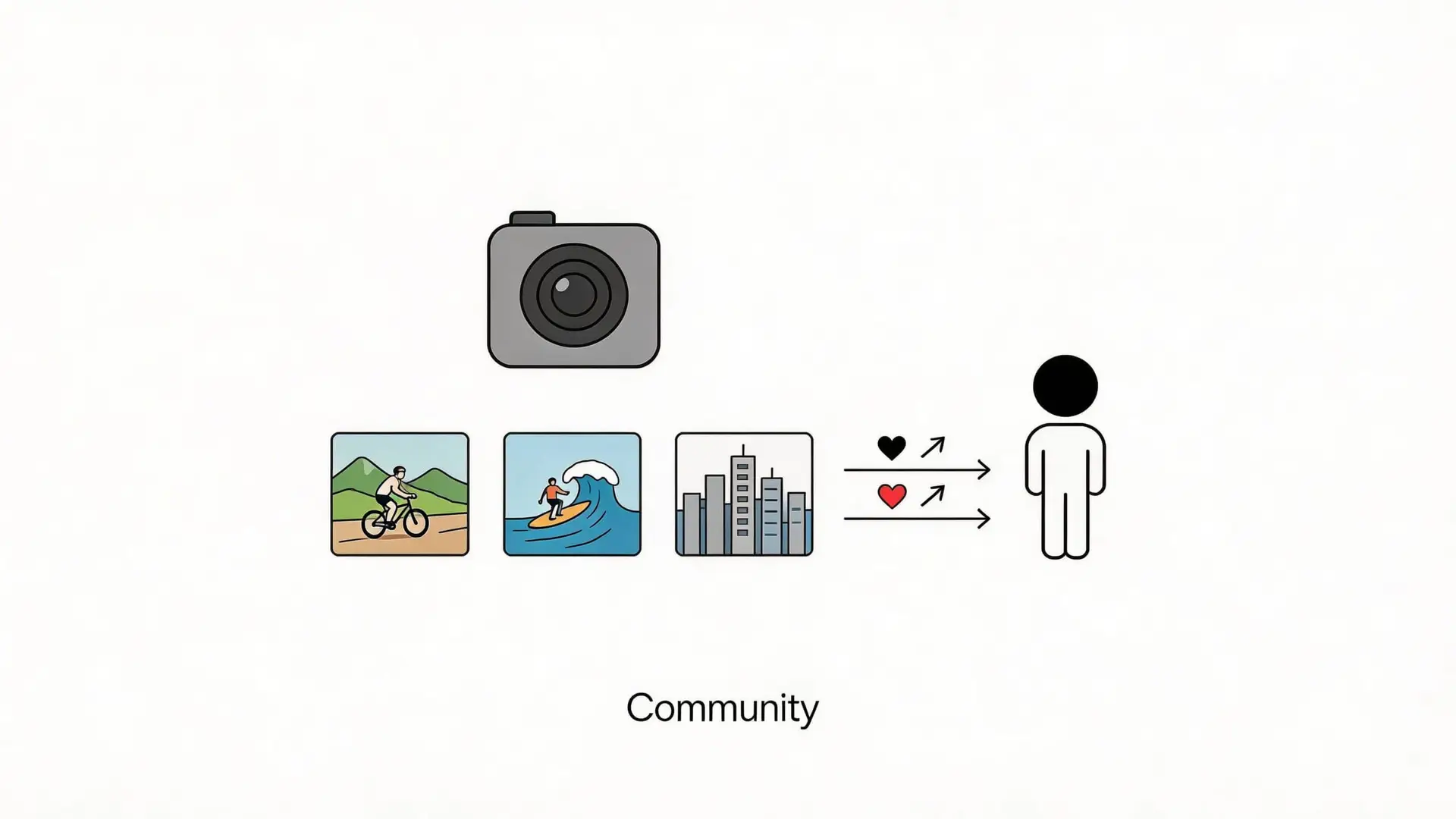
This is one of the clearest integrated marketing campaign examples because content moved across many surfaces naturally. A customer records footage. GoPro features it on social platforms, video channels, retail screens, and broader campaign creative. The audience sees proof from real users, not only from the brand.
That loop creates three advantages. It lowers content production pressure, increases authenticity, and gives customers an incentive to participate in the brand story.
For teams building creator or community-led programs, this overlaps heavily with modern influencer marketing campaign examples and with broader principles of UGC marketing. The difference is that GoPro treated UGC as strategic infrastructure, not as an occasional social tactic.
The playbook to borrow
To apply this model, brands need more than a hashtag. They need a submission and amplification system.
- Define the creative brief: Tell customers what kind of content to capture and why it matters.
- Set usage rules early: Permissions, rights management, and brand safety cannot be afterthoughts.
- Reward participation visibly: Featuring creators often matters as much as financial incentive.
Community-led campaigns work best when customers know exactly how to contribute, what “good” looks like, and where their work might appear next.
GoPro’s deeper lesson is that integration can come from content flow, not just message consistency. When customer stories can travel from social feed to paid ad to product page, the campaign becomes self-reinforcing.
8. Old Spice's The Man Your Man Could Smell Like Viral Campaign
Old Spice proved a campaign can gain force after launch, not only during the media buy. That is the part many teams miss.
The famous TV spot gave the brand a sharp character, a distinct voice, and a format people wanted to repeat. A significant strategic win emerged from what happened next. Old Spice turned audience attention into an operating system for content, with social teams, creative production, and distribution working in sync across TV, YouTube, Twitter, and the web.
That shift matters because integrated marketing is not only about putting the same message on several channels. It is about keeping one idea alive as people respond to it.
Why the response engine mattered more than the ad
The campaign’s personalized video replies changed the mechanics of the program. Instead of treating social as a place to repost the commercial, Old Spice used it as a live extension of the creative concept. Fans, celebrities, and influencers received custom responses that stayed in character, which made every interaction feel like part of the campaign rather than post-campaign community management.
A good analogy is live theater built on top of a Super Bowl-style ad. The scripted performance gets attention. The improvisation keeps the room engaged.
That approach created three practical advantages. It stretched the lifespan of the hero asset. It gave media outlets and social users fresh material to share. It connected brand awareness to ongoing participation, which is where many viral campaigns stall.
For marketers studying iconic viral marketing campaigns, Old Spice remains a useful case because the lesson is not “make something funny and hope it spreads.” The lesson is to prepare the brand to answer attention at the same speed it earns it.
The playbook to borrow
Brands can reverse-engineer this model into a clear sequence:
- Build one unmistakable creative premise: A strong character, point of view, or recurring format gives every channel the same center of gravity.
- Plan the response layer before launch: Scripts, approval paths, production resources, and publishing workflows need to be ready in advance.
- Choose where real-time interaction will happen: Not every platform deserves the same treatment. Pick the channels where audience response is visible and fast.
- Use audience signals to guide follow-up content: Stronger data-driven customer insights help teams decide which comments, communities, and conversation threads deserve a rapid creative response.
- Protect tonal consistency: Fast content fails when legal, social, and creative teams interpret the brand voice differently.
This is the framework a partner like Magic Logix can help operationalize. The campaign idea gets attention, but the infrastructure determines whether that attention compounds into reach, engagement, and sales.
Old Spice’s deeper lesson is simple. Virality is the spark. Integration is the engine.
9. Spotify's Data-Driven Personalized Campaign Strategy
Spotify proved a powerful point: customer data becomes stronger marketing when it is translated into identity, emotion, and shareable creative.
That is why this campaign matters. It is not merely a personalization example. It is a repeatable system for turning first-party behavior into content people actively distribute for you.
What the strategy gets right
Spotify connects several layers that many brands keep separate. Product usage creates the raw material. Creative teams convert that material into simple, memorable takeaways. The app delivers the experience, social channels extend it, and broader brand media keeps the campaign visible at the cultural level.
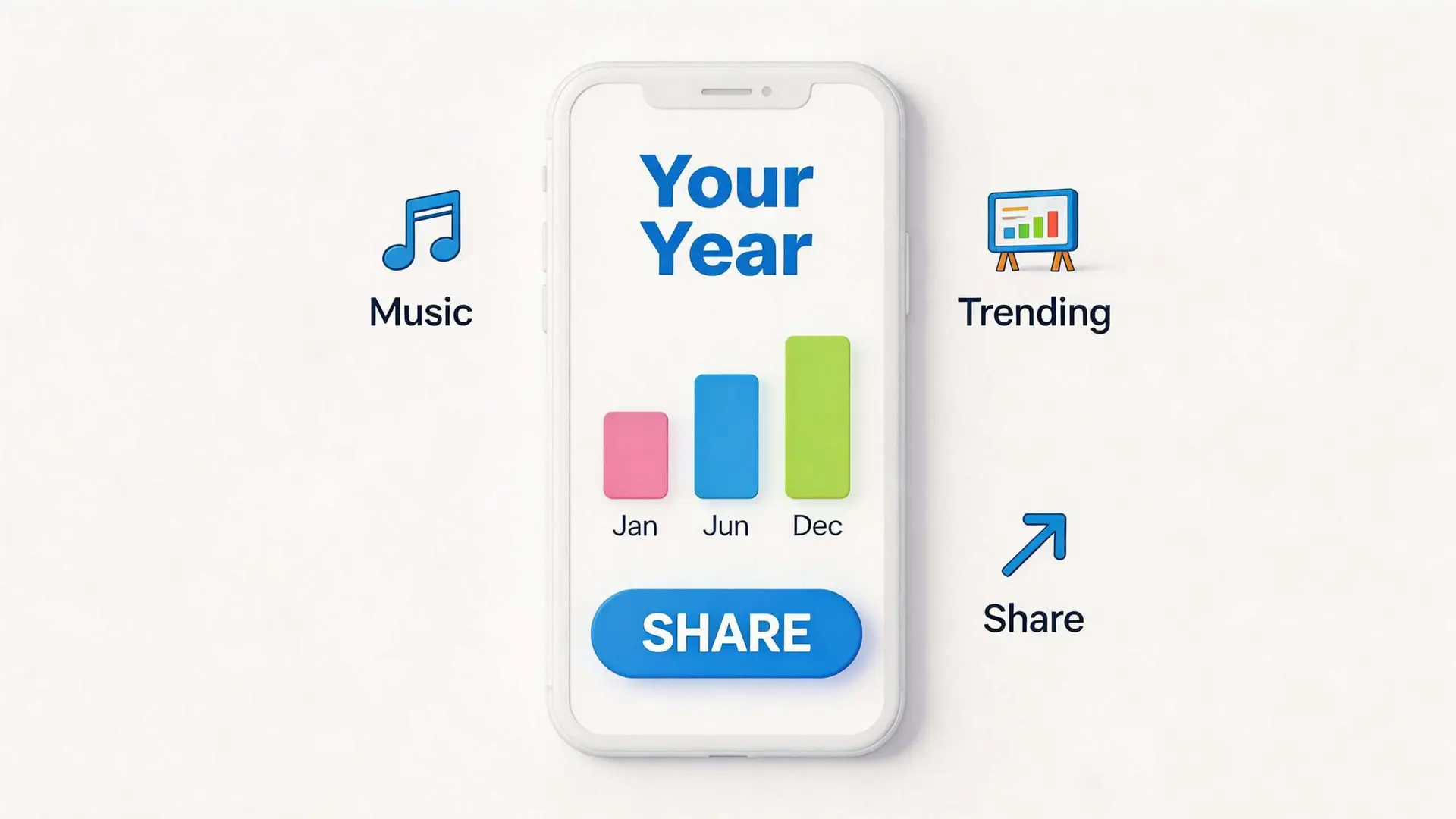
The mechanics are worth studying closely. A listening pattern inside the product is just behavioral information. Spotify turns that pattern into a story about the user. That shift matters because people do not share data points. They share self-expression.
This is also where data-driven customer insights help marketers make better creative decisions. The goal is not to collect more information. The goal is to identify which behaviors can be translated into messages that feel flattering, surprising, or recognizable.
Personalization works like a mirror. If the reflection feels accurate and interesting, people show it to others.
The playbook to borrow
A useful way to reverse-engineer Spotify’s model is to follow the sequence below:
- Capture meaningful first-party behavior: Start with signals tied to preference, habit, frequency, or loyalty. Vanity metrics rarely produce memorable creative.
- Convert behavior into a human insight: Move from “user streamed this category often” to “this was your year of late-night jazz” or another phrase that sounds like a story, not a report.
- Package the insight visually: The design needs to be recognizable in one glance and easy to post without extra explanation.
- Build for sharing inside the experience: Do not treat social distribution as an afterthought. The handoff from personalized content to public sharing should feel immediate.
- Extend the best themes across channels: Once patterns emerge, owned media, paid placements, email, and even out-of-home can reinforce the same campaign idea.
The strategic lesson for brands is clear. Integration happens before launch, not after. Analytics, product, creative, paid media, CRM, and social teams need one shared plan for how customer behavior becomes campaign material.
That is the part many companies miss.
A B2B firm can apply this model through quarterly account recaps, maturity snapshots, or usage summaries that help clients see progress. A retailer can create seasonal style profiles or purchase recaps. A service brand can highlight milestones, habits, or outcomes that make the customer feel recognized.
A partner like Magic Logix can help build that operating system. The campaign asset gets the attention, but the core advantage stems from the workflow behind it: what data is collected, how it is interpreted, how the story is framed, and where it is distributed.
Spotify’s larger lesson is simple. Personalized campaigns perform best when the customer sees meaning, not monitoring.
10. Adobe's Thought Leadership and Content Marketing Integrated Campaign
Not every integrated campaign needs a consumer spectacle. Adobe shows how integration can build authority in a B2B environment where the buying cycle is longer and trust matters more than novelty.
This model works by connecting research, expert content, webinars, product narratives, social distribution, executive visibility, and event presence into one ongoing market position. The campaign is less about one viral moment and more about repeated proof.
Why B2B teams should pay attention
Adobe’s thought leadership approach is effective because it gives different stakeholders different entry points. Practitioners may engage with tactical content. Executives may respond to market perspective. Buyers later encounter a product story that already sits inside a framework of credibility.
That is integrated marketing in a B2B form. Awareness, education, and consideration are connected instead of handled by separate teams with separate narratives.
A short example is useful here. A software company can release original research, host a webinar on the findings, arm sales with key points, publish executive commentary on LinkedIn, and run paid promotion to high-value accounts. Each asset says something slightly different, but all reinforce the same strategic position.
Here is a relevant creative example in video format:
The playbook to borrow
For B2B marketers, Adobe’s model suggests a durable engine:
- Anchor the campaign in original thinking: Research, analysis, customer pattern recognition, or strong practitioner insight.
- Repurpose by stakeholder: Executive summary, webinar, blog post, social series, sales deck, email nurture.
- Connect content to revenue motion: Make sure marketing, sales, and customer success all use the same narrative.
The payoff is not just lead generation. It is category authority. And category authority makes every later campaign easier to launch.
10 Integrated Marketing Campaigns Compared
| Campaign | 🔄 Implementation Complexity | ⚡ Resource Requirements | 📊 Expected Outcomes | 💡 Ideal Use Cases | ⭐ Key Advantages |
|---|---|---|---|---|---|
| Coca-Cola: "Share a Coke" | High: multi-channel coordination + personalization logistics | Moderate–High: printing, data infra, social monitoring | High engagement & UGC (500k+ IG posts); sales lift (~+2% first year) | Brands seeking omnichannel personalization with viral social hooks | ⭐⭐⭐⭐ Emotional engagement, strong ROI on modest production |
| Nike: "Just Do It" Ecosystem | Very high: decade-long ecosystem across apps, sponsorships, retail | Very high: sustained budgets, tech, partnerships, content teams | Top-tier brand recognition, deep customer relationships via apps | Enterprises building long-term brand ecosystems and athlete storytelling | ⭐⭐⭐⭐⭐ Unmatched brand equity; scalable personalization |
| Red Bull: Experiential & Content | High: event production + owned media distribution | High: content infrastructure, event ops, creative talent | Strong lifestyle positioning, earned media, community growth | Lifestyle brands prioritizing original content and live experiences | ⭐⭐⭐⭐ Authentic owned media; efficient community acquisition |
| Airbnb: "Belong Anywhere" | Medium: global narrative with local adaptation and UGC curation | Moderate: community managers, influencer coordination, curation tools | High emotional engagement; cost-effective content sourcing via community | Global brands aiming for locally adapted human storytelling | ⭐⭐⭐⭐ Authentic storytelling; scalable global reach |
| Dove: "Real Beauty" | High: multi-decade consistency, research and CSR integration | High: research investment, NGO partnerships, sustained content | Long-term perception shifts, earned media, strong advocacy | Brands pursuing values-driven positioning and social impact | ⭐⭐⭐⭐ Emotional resonance; credibility from research backing |
| Starbucks: Mobile-First Ecosystem | High: app, loyalty, in-store and partner integrations | Very high: mobile infrastructure, data security, personalization tech | Increased repeat purchases, rich first-party data, reduced friction | Retailers prioritizing mobile loyalty and real-time personalization | ⭐⭐⭐⭐⭐ Exceptional first-party data; loyalty-driven revenue uplift |
| GoPro: UGC & Community | Medium: UGC pipelines, contests, creator programs | Moderate: platform management, creator incentives, moderation | High authenticity, viral content potential, community advocacy | Product brands with experiential content and creator communities | ⭐⭐⭐⭐ Cost-effective scalable UGC storytelling |
| Old Spice: Viral Creative | Medium: high-production creative + agile social response | Moderate–High: video production, talent, real-time social team | Strong earned media and younger demo reach; notable sales growth (+27%) | Brands seeking viral reach through humor and personality | ⭐⭐⭐⭐ Highly shareable creative; rapid earned reach |
| Spotify: Data-Driven Personalization | High: complex data pipelines and cross-channel activation | High: data engineering, privacy governance, analytics teams | Viral shareable moments (Wrapped); high engagement and brand affinity | Data-rich platforms delivering personalized mass experiences | ⭐⭐⭐⭐⭐ Powerful first-party data enabling viral personalization |
| Adobe: Thought Leadership & Content | High but structured: research, events, executive positioning | High: research teams, content production, event investment | Authority building, high-quality lead generation, SEO uplift | B2B firms targeting consideration and long sales cycles | ⭐⭐⭐⭐ Long-term lead value and market credibility |
Orchestrating Your Next Integrated Masterpiece
The campaigns above look different on the surface. Coca-Cola made packaging social. Nike built an ecosystem. Red Bull turned experiences into media. Airbnb unified a global story through local proof. Dove tied brand growth to a long-term message. Starbucks centered convenience. GoPro activated community. Old Spice mastered rapid response. Spotify turned data into identity. Adobe translated authority into pipeline support.
Underneath, they share the same structural logic.
First, each campaign has a clear organizing idea. Not a slogan. Not a design theme. A strategic idea strong enough to survive across channels. That idea gives every team a common reference point. Paid media knows what to amplify. Social knows what to humanize. CRM knows what to personalize. Sales knows what to reinforce.
Second, each campaign assigns jobs to channels. Many brands fall short here. They duplicate content instead of orchestrating it. Real integration means television creates mass awareness, social extends the conversation, email deepens the relationship, search captures demand, landing pages convert intent, and in-store or product experience closes the loop. Different channels should support one another, not compete for ownership.
Third, the strongest examples connect campaign execution to infrastructure. That means data systems, creative operations, approval workflows, analytics, audience segmentation, and content production are aligned before launch. Old Spice could not have moved in real time without response processes. Spotify could not personalize at scale without first-party behavioral data. Starbucks could not unify promotion and convenience without an account-based ecosystem.
Many businesses need more than inspiration here. They need a central nervous system for marketing.
That central nervous system combines audience intelligence, campaign planning, content operations, channel execution, and measurement. It helps teams answer practical questions that determine results. Which audience should see which message first? Which channel should introduce the campaign? Which behavior signals sales readiness? Which creative themes deserve more budget? Which customer segments need a different path?
For growing SMBs, that may mean building a tighter planning and reporting framework so marketing stops operating as separate tactics. For enterprise teams, it usually means integrating business intelligence, media performance, social listening, and automation so every channel contributes to one measurable outcome.
A partner like Magic Logix provides particular value here. The company’s work at the intersection of predictive analytics, automated immersion marketing, social intelligence, and business intelligence aligns well with what these examples demand. Integrated campaigns are not sustained by creative alone. They need systems that help marketers detect patterns, personalize responsibly, adapt quickly, and keep the brand experience coherent from first touch to conversion.
If you study these integrated marketing campaign examples as a strategist instead of a spectator, the lesson is encouraging. You do not need to copy a global brand’s exact tactics. You need to understand the architecture behind the result.
Start with one strong idea. Define the role of each channel. Build the data and workflow foundation before launch. Create assets that can travel. Design for participation. Measure behavior, not just reach. Then keep optimizing until the campaign feels less like separate activities and more like one connected experience.
That is when integrated marketing stops being buzzword compliance and starts becoming a growth system.
If your team is ready to build integrated campaigns with stronger planning, sharper audience intelligence, and better cross-channel execution, Magic Logix can help turn that strategy into a measurable program. From predictive analytics to automated marketing and social intelligence, they bring the operational structure that modern integrated campaigns require.