Media planning is more than just allocating budgets; it's the strategic backbone of every successful marketing campaign. Knowing where, when, and how to reach your audience is the difference between shouting into the void and starting a meaningful conversation. Yet, many marketers struggle to translate abstract goals into a concrete, measurable plan that delivers real results.
This article moves beyond theory, providing 10 real-world media planning examples from iconic brands and disruptive startups. We will dissect the strategies, channels, budgets, and KPIs behind their success, offering replicable frameworks you can adapt for your own campaigns. These deep dives are not just success stories; they are functional blueprints designed to be broken down and applied. For those working with specialized teams, understanding the full scope of implementation is crucial. You can learn more about the broader spectrum of ad agency services, including media planning, to see how these complex strategies are put into practice by professionals.
Whether your objective is a major product launch, building local brand awareness, or generating high-quality B2B leads, these examples offer the specific tactical insights needed to craft a high-impact media plan. You will find actionable takeaways from each case study, covering everything from channel mix and targeting to creative concepts and measurement. Let’s get straight to the examples and see how these strategies work in action.
1. Coca-Cola's Integrated Omnichannel Media Plan
Coca-Cola's approach to media planning is a masterclass in building an integrated, omnichannel strategy. This method focuses on creating a single, cohesive brand message that is consistently delivered across a wide array of audience touchpoints, from traditional television to dynamic social media platforms. The core idea is to make the customer's journey feel seamless, reinforcing the brand's identity whether they see a commercial during the Super Bowl, a sponsored post on Instagram, or an interactive kiosk at a live event. It's one of the best media planning examples for large enterprises aiming for total brand immersion.
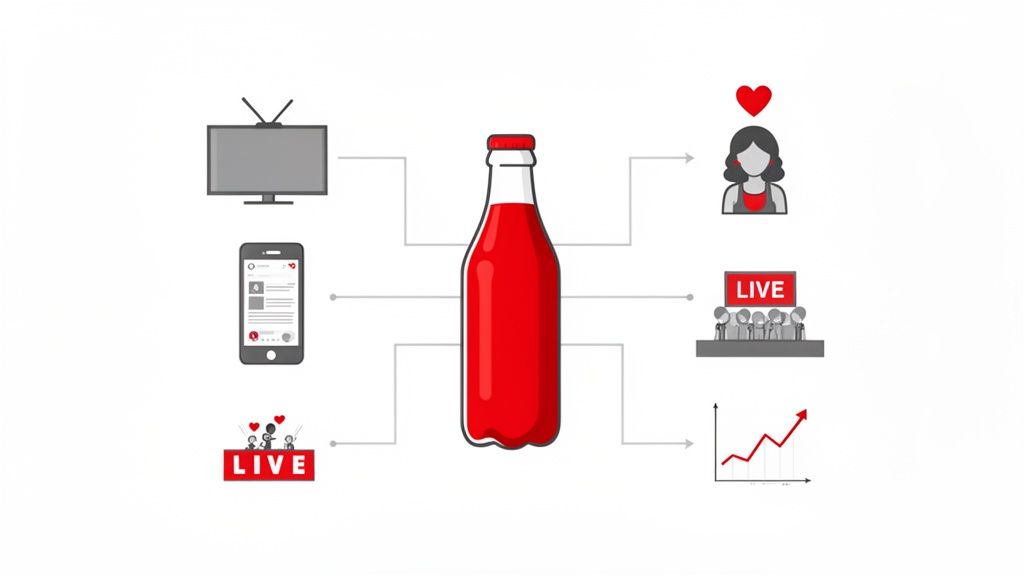
This strategy works by treating each channel not as a silo but as part of a larger ecosystem. The message is adapted to fit the format and audience of each platform while retaining the central campaign theme.
Strategic Breakdown and Analysis
Coca-Cola's "Taste the Feeling" campaign perfectly illustrates this integration. The campaign launched with a series of high-production-value TV commercials that established the core emotional message: connecting Coca-Cola with everyday moments of happiness.
- Broadcast TV: Served as the initial, wide-reaching awareness driver.
- Digital & Social Media: The campaign was extended online with short-form videos, GIFs, and interactive social media filters that encouraged user-generated content.
- Influencer Partnerships: Collaborated with creators to produce authentic content that showed them enjoying Coca-Cola in their own unique moments, echoing the campaign's theme.
- Experiential Marketing: Pop-up events and sampling stations allowed consumers to physically experience the brand, often with shareable photo opportunities that fed back into the social media component.
This approach demonstrates a powerful use of media convergence, where different communication channels work together to create a more impactful whole. You can discover more about the theories of media convergence to apply these ideas to your own plans.
Actionable Takeaways for Marketers
The goal is not just to be on every channel, but to have every channel tell a piece of the same story. Data is the thread that ties the story together.
To replicate this strategy, start by defining a single, powerful core message for your campaign. Then, map out how that message can be uniquely expressed on different channels.
- Establish Unified KPIs: Define clear success metrics for each channel (e.g., reach for TV, engagement for social) that also roll up to an overall campaign goal, like brand lift or purchase intent.
- Use Data to Segment: Apply customer data to create distinct audience segments. Tailor creative and messaging for each segment across all channels to increase relevance.
- Create Adaptable Content: Develop a "content toolkit" with core creative assets that can be easily modified for different formats, from a 30-second TV spot to a 6-second TikTok video.
2. Dollar Shave Club's Viral Content Media Strategy
Dollar Shave Club disrupted the men's grooming industry with a media plan that prioritized low-cost, high-impact digital content over traditional advertising. This strategy demonstrates how a startup can achieve massive brand awareness and customer acquisition by focusing on authentic, humorous storytelling that resonates with a specific audience. The core of their approach was a viral video that was simple in production but brilliant in its execution, proving that a strong creative concept can outperform a massive budget. This is one of the most effective media planning examples for SMBs and challenger brands.
This strategy works by creating content that is inherently shareable, relying on the audience to become a distribution channel. Instead of paying for reach through expensive ad buys, the investment is made upfront in creative development designed to spark conversation and organic spread across social platforms.
Strategic Breakdown and Analysis
The brand's launch video, "Our Blades Are F***ing Great," is a legendary piece of content marketing. Created with a reported budget of just $4,500, it generated millions of views and tens of thousands of orders within days of its release. This set the tone for the company’s entire media approach.
- Viral Video (YouTube): The initial video served as the primary awareness and acquisition driver. Its deadpan humor, direct-to-camera address from the CEO, and clear value proposition made it instantly memorable and shareable.
- Social Media Community: Following the video's success, the brand built an engaged community on platforms like Facebook and Twitter. They continued the witty, no-nonsense brand voice, fostering two-way communication rather than just broadcasting messages.
- Content-Driven PR: The viral success of the video generated enormous organic media coverage and PR, amplifying their reach far beyond what a paid media budget could have accomplished.
- Email Marketing: They captured leads from the initial viral wave and nurtured them with equally personality-driven email content, converting interest into loyal, subscription-based customers.
This approach highlights the power of a content-first mindset, where the marketing asset itself is the primary vehicle for growth. You can explore a detailed social media marketing strategy for a small business to apply similar principles.
Actionable Takeaways for Marketers
In a crowded market, a unique voice is more valuable than a huge budget. Authenticity and humor are powerful currencies for building a brand from the ground up.
To replicate this strategy, focus on developing a strong, authentic brand voice and a bold creative idea that can break through the noise.
- Prioritize the "Big Idea": Invest time and resources in brainstorming a core creative concept that is genuinely entertaining or useful, rather than purely promotional.
- Embrace Lo-Fi Production: High production value is not a prerequisite for success. Focus on clear messaging, creativity, and authenticity, which can often be more impactful.
- Build a Distribution Plan: Don't just post and pray. Identify key communities, influencers, and media outlets that might be interested in your content and conduct targeted outreach to kickstart the sharing process.
3. Nike's Performance-Based Digital Media Plan
Nike's media strategy is a premier example of blending brand building with sharp performance marketing. Their approach uses advanced analytics to guide the customer journey from initial awareness to the final purchase, demonstrating how to balance brand-focused activities with direct-response channels. This model is one of the most effective media planning examples for enterprise brands in competitive markets that need to maintain market presence while driving measurable sales.
The strategy works by creating a feedback loop where brand campaigns generate initial interest, and performance data from those campaigns informs real-time budget and creative optimizations. This ensures that every dollar spent is accountable, whether it's on a high-production brand video or a targeted product ad.
Strategic Breakdown and Analysis
Nike's campaigns for new product launches, like a new Air Jordan release, showcase this dual approach perfectly. They create massive hype through brand storytelling while simultaneously running highly targeted ads to drive pre-orders and sales.
- Brand Storytelling: High-impact video content and athlete collaborations are pushed across YouTube, Instagram, and TikTok to build emotional connection and cultural relevance.
- Performance Marketing: Data from initial brand engagement is used to create lookalike audiences for direct-response ads on platforms like Meta and Google. These ads feature clear calls-to-action, such as "Shop Now" or "Sign Up for Release Info."
- Regional Optimization: The media mix is continuously adjusted based on real-time conversion data. If a specific ad creative performs exceptionally well in one city, the budget is shifted to maximize its impact in that region.
- Attribution Modeling: Nike uses multi-touch attribution to understand how different channels contribute to a sale, moving beyond last-click attribution to value the entire customer journey.
This method shows a mature use of data to connect aspirational branding with concrete business outcomes. You can explore a variety of digital marketing performance metrics to build a similar framework.
Actionable Takeaways for Marketers
The modern media plan must be an ambidextrous one, building brand equity with one hand while driving direct sales with the other. Data is the brain coordinating both movements.
To apply this strategy, marketers must invest in the infrastructure to connect brand metrics with performance data. This begins with a commitment to a test-and-learn culture.
- Integrate Creative and Performance: Establish regular feedback loops where performance data (like click-through rates and conversion rates) is shared directly with creative teams to inform future asset development.
- Balance Your KPIs: Develop a scorecard that tracks both brand metrics (e.g., brand lift, share of voice) and performance metrics (e.g., ROAS, CPA).
- Test and Scale: Start with small, incremental tests on new channels or with new audience segments. Once a test proves successful, scale the budget and roll it out more broadly.
4. Airbnb's Community-Driven Localized Media Plan
Airbnb's media planning model excels by focusing on local community engagement and user-generated content to build trust and authenticity. This strategy allows a global enterprise to execute hyper-localized campaigns that connect with regional audiences on a personal level, all while preserving a consistent worldwide brand identity. It's one of the strongest media planning examples for businesses entering new markets or aiming for deeper cultural integration.
This approach works by decentralizing content creation and promotion, empowering local hosts and guests to become the brand's primary storytellers. The message feels genuine and community-endorsed because it originates from the community itself, rather than from a central corporate office.
Strategic Breakdown and Analysis
The "Belong Anywhere" campaign is a prime illustration of this localized strategy. Instead of a single global ad, Airbnb invested in telling the unique stories of its hosts and showcasing distinct experiences available only in specific cities.
- User-Generated Content (UGC): The brand heavily features guest photos and host stories on its social media channels, website, and in digital ads, providing authentic social proof.
- City-Specific Campaigns: Airbnb creates content dedicated to individual cities, like "Live There" which featured guides and experiences curated by local experts and hosts. This content was promoted through targeted social media and local digital publications.
- Influencer & Ambassador Programs: The company collaborates with local creators and passionate hosts, turning them into brand ambassadors who generate credible, region-specific content.
- Community Events: In key markets, Airbnb has sponsored local festivals and hosted meetups for hosts, strengthening community ties and generating positive local media coverage.
This method proves that a brand can achieve global scale while feeling distinctly local, building a strong emotional connection with consumers city by city.
Actionable Takeaways for Marketers
The most powerful media is not what you buy; it's what your community creates and shares on your behalf. Empower them with a platform and a clear brand framework.
To apply this strategy, shift focus from broad messaging to enabling local storytelling. Your role becomes that of a curator and amplifier, not just a creator.
- Build a Local Content Engine: Develop clear guidelines that give local teams or brand ambassadors the flexibility to create content that reflects regional culture and language, all within the main brand framework.
- Leverage Local Voices: Actively seek out and feature customer testimonials, stories, and images in your local marketing efforts. Use social listening to identify trending conversations and engaged users in specific areas.
- Invest in Community, Not Just Ads: Allocate a portion of your media budget to sponsoring local events, partnering with neighborhood businesses, or hosting community-building activities that generate organic buzz and content.
5. HubSpot's Inbound Marketing Media Strategy
HubSpot built its brand not by interrupting potential customers with ads, but by attracting them with valuable content. Their media strategy is centered on the inbound methodology, which prioritizes creating helpful resources that address the pain points of their target audience. This model is a prime example of a media plan that builds a sustainable pipeline of qualified leads by becoming a go-to educational resource.
This approach flips the traditional media planning script. Instead of paying for placement to push a message, the budget is invested in creating content assets that pull customers in organically. It's one of the most effective media planning examples for B2B companies looking to establish authority and generate leads over the long term.
Strategic Breakdown and Analysis
HubSpot’s media channels are its own content platforms. They create a powerful, self-sustaining ecosystem where one piece of content fuels engagement on another, nurturing leads from initial awareness to sales readiness.
- Content Marketing & SEO: The HubSpot Blog is a massive traffic driver, attracting millions of visitors monthly through search engine optimization. Each article is engineered to rank for specific keywords that their ideal customers are searching for.
- Lead Generation Magnets: Free tools like their CRM, along with extensive certification programs, draw users into their ecosystem. These high-value offerings act as the ultimate lead magnet, converting traffic into tangible user data.
- Webinars & Events: Live and on-demand webinars address specific industry challenges, attracting highly qualified professionals who are actively seeking solutions. These events serve as a direct bridge between marketing and sales.
- Marketing Automation: Email and automation workflows are used to nurture leads based on their behavior, delivering relevant content at each stage of the buyer's journey and effectively segmenting audiences for targeted communication.
Actionable Takeaways for Marketers
True inbound media is not about buying attention; it's about earning it by becoming the best answer to your audience's most pressing questions.
To implement an inbound-focused media plan, you must shift your mindset from campaign-based thinking to creating an evergreen content engine that provides continuous value.
- Map Content to the Customer Journey: Develop a content calendar that addresses audience needs at every stage, from awareness (blog posts) and consideration (e-books, webinars) to decision (case studies, demos).
- Optimize Everything for Search: Treat search engine optimization as a core media function. All content, from blog articles to landing pages, should be optimized for user intent and relevant keywords.
- Create Gated Value Exchanges: Offer your most valuable resources, like original research or in-depth guides, in exchange for contact information. This creates a fair exchange and qualifies your leads.
- Repurpose Content Relentlessly: Turn one major piece of content (like a research report) into multiple smaller assets, such as blog posts, social media updates, infographics, and video clips, to maximize reach and efficiency. You can find more information about their strategy on the HubSpot website.
6. Glossier's Social Commerce Integrated Media Plan
Glossier's strategy masterfully blurs the lines between social media, community building, and e-commerce. The brand treats its social platforms not just as marketing channels for awareness, but as primary points of sale and customer interaction. This direct-to-consumer (DTC) model creates a unified customer experience where authentic storytelling and user-generated content directly fuel sales, making it a stellar media planning example for brands aiming to build a deeply engaged community.
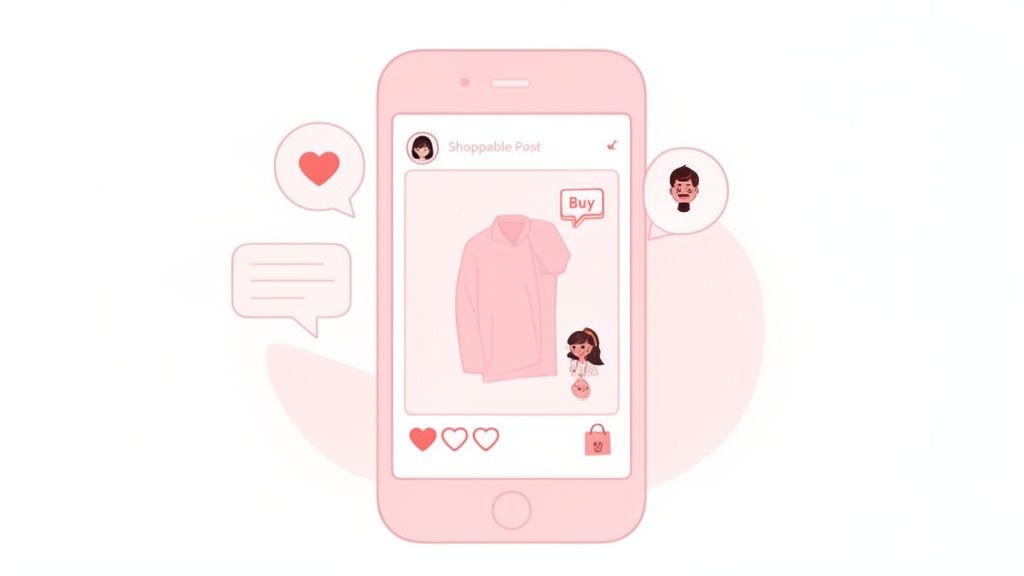
This approach works by fostering an environment where customers feel like part of an exclusive club. The content entertains and informs, prioritizing community credibility over aggressive selling, which paradoxically drives stronger conversion by minimizing friction in the purchase journey.
Strategic Breakdown and Analysis
Glossier's rise was powered by its ability to turn its customer base into its most effective marketing force. The media plan is built around this core principle, using social platforms to both broadcast and listen.
- Social Channels as a Hub: Glossier's Instagram feed acts as its primary brand communication channel. It features a mix of product shots, tutorials, and reposted customer photos, creating a visually consistent and community-centric aesthetic.
- User-Generated Content (UGC): The #GlossierGirl hashtag campaign encouraged customers to share their own photos, providing a constant stream of authentic social proof that built immense brand credibility and trust.
- Influencer Relationships: The brand partners with micro- and macro-influencers who genuinely align with its minimalist, "skin first" ethos. These are often presented as authentic relationships rather than transactional advertisements.
- Direct Social Commerce: By integrating shoppable posts and stories on platforms like Instagram, Glossier allows users to purchase products directly from the content they are engaging with, creating a seamless path from discovery to conversion.
This plan demonstrates how to build a brand from the community up, using media not just to speak to customers, but to empower them to speak for the brand.
Actionable Takeaways for Marketers
The goal is to make your social media feed feel less like an advertisement and more like a conversation with trusted friends. Authenticity is your most valuable currency.
To apply this social commerce model, focus on building community and reducing the steps between inspiration and purchase.
- Prioritize Community Engagement: Dedicate resources to actively respond to comments and direct messages. Use social listening to understand what your audience wants and reflect that in your content and product development.
- Build a UGC Engine: Create a branded hashtag and actively encourage, curate, and feature customer content. Always ask for permission and give credit to build goodwill and foster a collaborative spirit.
- Enable Shoppable Content: Integrate your e-commerce platform with social media channels to tag products directly in your posts and stories. This removes friction and captures purchase intent in the moment.
7. IBM's Thought Leadership and B2B Media Plan
IBM's approach to B2B media planning centers on establishing and promoting deep industry expertise, shifting the focus from direct product selling to long-term relationship building through thought leadership. This method is designed to position the company as an indispensable authority and trusted advisor for business decision-makers. The core idea is that by providing high-value, educational content, IBM builds credibility and influences its target audience long before a purchase decision is made. This makes it one of the premier media planning examples for enterprise B2B companies.
This strategy operates by creating and distributing content that addresses the most significant challenges and opportunities within their clients' industries. The message is one of partnership and foresight, delivered through channels where senior leaders seek strategic insights.
Strategic Breakdown and Analysis
IBM's promotion of its annual AI and technology research reports demonstrates this strategy perfectly. These reports are not sales brochures; they are data-rich assets that provide genuine industry value, establishing IBM as a key voice in technological progression.
- Primary Research: The strategy begins with a significant investment in creating original, data-backed reports on topics like AI adoption, cybersecurity threats, and quantum computing.
- Executive Amplification: C-suite executives, including the CEO, share and discuss the report's findings through their personal LinkedIn profiles and by participating in major industry conferences like Davos and CES. This authenticates the expertise.
- PR and Earned Media: The research findings are pitched to major business and technology publications, generating earned media coverage that amplifies the message and provides third-party validation.
- Gated Content and Nurturing: The full reports are often gated on IBM's website, capturing leads that can then be nurtured with related content, webinars, and targeted follow-ups. You can see how platforms like LinkedIn are crucial for this B2B strategy and its lead-capture mechanisms.
This multi-pronged approach ensures the thought leadership content reaches the target audience through various credible touchpoints, reinforcing IBM's authority.
Actionable Takeaways for Marketers
True thought leadership isn't about having an opinion; it's about backing that opinion with proprietary data and making it accessible to those who need it most.
To build a similar plan, focus on creating genuine expertise rather than just content. Identify a niche where your company can become the definitive source of information.
- Invest in Original Research: Conduct surveys, analyze proprietary data, or interview experts to create content that can't be found elsewhere. This becomes your foundational asset.
- Position Executives as Leaders: Create a content plan for your executives on platforms like LinkedIn. Help them build a personal brand by sharing insights, not just company news.
- Measure Pipeline Influence: Shift KPIs away from immediate conversions. Instead, track metrics like lead quality, asset downloads by target accounts, and the content's influence on deals in your pipeline.
8. Spotify's Data-Driven Music Marketing and Audio Advertising Plan
Spotify’s media strategy is a premier example of using first-party data to create deeply personal and effective marketing. The platform turns its massive collection of user listening habits, playlist creations, and behavioral signals into a powerful engine for hyper-targeted audio advertising. The core principle is to move beyond broad demographics and connect with users based on their real-time moods, moments, and interests, making it a benchmark for data-centric media planning examples.
This model allows brands and music labels to deliver messages with exceptional relevance. Instead of just buying ad space, they are buying access to specific contexts, like a user listening to a "Workout" playlist or a "Focus" mix. This turns advertising from an interruption into a complementary part of the user's audio experience.
Strategic Breakdown and Analysis
Spotify's effectiveness is rooted in its ability to translate raw data into actionable advertising opportunities. From promoting new album releases to placing brand messages in podcasts, every ad is informed by listener behavior.
- Personalized Artist Promotions: When a new album drops, Spotify uses listening data to target ads directly to fans of similar artists or those who have previously engaged with the artist's music, driving streams and saves.
- Contextual Audio Advertising: A brand like a running shoe company can place ads exclusively within workout or running-themed playlists, reaching an audience that is actively engaged in a relevant activity.
- Podcast Sponsorships: Spotify connects brands with podcasts whose listener profiles align with the brand’s target customer. Host-read ads provide an authentic endorsement within a trusted environment.
- Data-Driven Insights: The platform provides "Spotify for Artists" and advertising partners with reports that analyze listener demographics and engagement, helping them refine future campaigns.
Actionable Takeaways for Marketers
The future of advertising is not just about reaching people, but about reaching them in the right moment. Audio provides a unique gateway to these moments.
To apply Spotify's data-first audio strategy, focus on understanding your audience's context and mindset. The goal is to make your ad a welcome addition to their listening session, not a jarring disruption.
- Segment by Behavior, Not Just Demographics: Use behavioral data to group audiences. Target users based on their listening habits (e.g., genre preferences, podcast topics) and moments (e.g., "Commute," "Chill").
- Develop Audio-First Creative: Design ads specifically for an audio format where there are no visuals. Use strong voiceovers, sound effects, and music to tell a story and capture attention.
- Test and Measure Audio Performance: Monitor metrics like listen-through rate, skip rate, and subsequent user actions (like clicks or brand searches). A/B test different ad creatives to see what resonates.
9. Amazon's Omnichannel Retail Media Strategy
Amazon’s approach to media planning isn't just about selling ads; it's about creating a fully integrated retail media ecosystem. The strategy masterfully combines marketplace advertising, its owned retail channels, and deep logistics data to construct a unified customer journey from discovery to purchase. This method is one of the most powerful media planning examples for e-commerce brands, as it turns a retail platform into a comprehensive advertising and sales engine.
This strategy works by treating the Amazon platform as a self-contained universe where every interaction is a data point and a potential marketing touchpoint. The message is customized based on user search behavior, purchase history, and browsing patterns, ensuring high relevance and driving conversions directly at the point of sale.
Strategic Breakdown and Analysis
Amazon's media plan thrives during high-traffic events like Prime Day and the holiday season, where it fully activates its entire ecosystem. During these periods, brands can participate in a coordinated advertising blitz that targets shoppers with high purchase intent.
- Sponsored Products & Brands: These ad formats place products at the top of search results and on competitor pages, capturing attention at the exact moment a customer is looking to buy.
- Brand Storefronts: Custom, multi-page stores allow brands to create a dedicated shopping experience within Amazon, telling their story and showcasing their full product line away from the clutter of search results.
- Email Campaigns: Amazon uses its vast customer database to send targeted emails promoting deals and products, driving repeat traffic and purchases from its loyal customer base.
- A+ Content: Enhanced product detail pages with rich media, comparison charts, and brand stories help increase conversion rates by providing shoppers with the detailed information needed to make a confident purchase.
This integrated model demonstrates how to build a media plan where advertising spend directly fuels sales within the same platform. For a deeper dive into the specific elements of building a robust Amazon media plan, understanding a winning Amazon advertising strategy is crucial.
Actionable Takeaways for Marketers
The goal is to own the digital shelf. Use every tool Amazon provides not just to advertise, but to build a brand presence that dominates your category.
To replicate this strategy, brands must treat Amazon as more than a sales channel; it's a media environment. Start by optimizing your presence for organic discovery before layering on paid media.
- Optimize for Discoverability: Begin by optimizing product listings with relevant keywords to improve organic search ranking. Strong organic visibility is the foundation of any successful Amazon ad campaign.
- Build Social Proof: Actively work to build positive reviews and ratings. This social proof is a major factor in both organic ranking and conversion rates for paid traffic.
- Test and Monitor: Continuously test different ad placements (e.g., top-of-search vs. product page), creative variations, and keyword targets. Use Amazon's analytics to monitor competitor activity and adjust your pricing and bidding strategies accordingly.
10. Unilever's Sustainability-Focused Purpose-Driven Media Plan
Unilever's media strategy is a premier example of how to build a brand identity centered on social and environmental purpose. This approach moves beyond traditional advertising by embedding sustainability and ethical responsibility into the core of its brand messaging. The strategy focuses on demonstrating authentic commitment to positive change, which resonates deeply with modern consumers who prioritize brands that align with their values. This is one of the most effective media planning examples for enterprises looking to build lasting customer loyalty through genuine brand differentiation.

This method works by making purpose the central theme of a campaign, not just an afterthought. Each channel is chosen to reinforce the brand's commitment, from high-profile campaigns promoting social good to transparent reporting on sustainability goals.
Strategic Breakdown and Analysis
Unilever has successfully applied this strategy across its portfolio of "Sustainable Living Brands," which are proven to grow faster than its other brands. The iconic Dove "Real Beauty" campaign is a standout case, challenging narrow beauty standards and promoting self-esteem for over a decade.
- Campaign Focus: Instead of focusing on product features, the campaign centers on a social mission: to make beauty a source of confidence, not anxiety.
- Channel Mix: The message is spread through a combination of emotional video content, workshops, educational resources, and powerful social media movements like the #ShowUs project.
- Partnerships: Collaborations with organizations like the World Association of Girl Guides and Girl Scouts and Getty Images add credibility and extend the campaign's reach and impact.
- Transparent Reporting: Unilever regularly publishes its progress toward its sustainability goals, backing its purpose-driven messaging with verifiable data and actions.
This approach proves that media planning can be a vehicle for both business growth and meaningful social impact when authenticity is the foundation.
Actionable Takeaways for Marketers
True purpose-driven marketing isn't about what you say, it's about what you do. Your media plan should be the platform you use to show, not just tell, your commitment.
To build a similar strategy, start by identifying a core purpose that is authentic to your brand and genuinely matters to your audience.
- Verify Your Claims: Ensure all sustainability or social impact claims are backed by solid data and, if possible, third-party validation to build trust and avoid "greenwashing."
- Integrate Purpose Authentically: Weave your purpose into every aspect of your campaign, from creative concepts to channel selection, rather than treating it as a separate initiative.
- Track Broader Impact Metrics: Measure success beyond sales figures. Monitor shifts in brand perception, customer advocacy, and employee engagement to understand the full value of your purpose-driven efforts.
Media Planning: 10 Case Comparisons
| Strategy | Implementation Complexity 🔄 | Resource Requirements ⚡ | Expected Outcomes 📊⭐ | Ideal Use Cases 💡 | Key Advantages ⭐ |
|---|---|---|---|---|---|
| Coca‑Cola's Integrated Omnichannel Media Plan | Very high — cross‑channel orchestration, real‑time optimization | Large tech stack, analytics teams, high media spend | Consistent brand messaging; optimized ROI through data ⭐⭐⭐ | Global enterprises, major product launches | Unified customer experience; efficient budget allocation |
| Dollar Shave Club's Viral Content Media Strategy | Low — lean production, fast iteration | Low budget, creative talent, social distribution | Rapid awareness spikes; high organic reach (unpredictable) ⭐⭐ | Startups/DTC seeking fast growth and buzz | Cost‑effective reach; strong brand personality |
| Nike's Performance‑Based Digital Media Plan | High — attribution modeling, ML integration | Advanced analytics, data scientists, ad tech | Measurable conversions; efficient spend reallocation ⭐⭐⭐ | Competitive consumer brands balancing brand & performance | Precise channel measurement; scalable optimization |
| Airbnb's Community‑Driven Localized Media Plan | Medium‑high — local coordination & moderation | Local teams/partners, community managers | Authentic local engagement; increased advocacy ⭐⭐ | Market entry, experience‑led brands, local campaigns | Local credibility; organic community growth |
| HubSpot's Inbound Marketing Media Strategy | Medium — content operations and SEO systems | Significant content creation, SEO, marketing automation | Sustainable, high‑quality lead generation over time ⭐⭐ | B2B and SMBs focused on long‑term acquisition | Authority building; lower CAC long‑term |
| Glossier's Social Commerce Integrated Media Plan | Medium — social commerce ops and influencer management | Content teams, influencer partnerships, commerce integration | Shortened awareness→purchase path; measurable social ROI ⭐⭐ | DTC brands targeting Gen Z/millennials | Native shopping; strong community conversion |
| IBM's Thought Leadership and B2B Media Plan | High — research, executive positioning, PR | Research teams, events, long‑form content resources | Enhanced credibility; pipeline influence over time ⭐⭐ | Enterprise B2B seeking C‑suite influence | Market authority; high‑quality enterprise leads |
| Spotify's Data‑Driven Music Marketing and Audio Plan | High — behavioral analytics & programmatic audio | Data engineers, audio creatives, platform access | Hyper‑personalized reach; high engagement rates ⭐⭐ | Audio/podcast campaigns, entertainment industries | Contextual targeting; predictive insights |
| Amazon's Omnichannel Retail Media Strategy | High — marketplace integration and logistics touchpoints | Catalog ops, ad spend, analytics, inventory coordination | Direct sales lift; measurable purchase influence ⭐⭐⭐ | E‑commerce sellers and brands on marketplace | High‑intent reach; first‑party data advantage |
| Unilever's Sustainability‑Focused Purpose‑Driven Media Plan | Medium — cross‑functional ESG alignment and verification | Partnerships, validated data, content and PR resources | Stronger trust and loyalty; stakeholder advocacy ⭐⭐ | Brands prioritizing purpose and ESG differentiation | Authentic differentiation; long‑term brand value |
Building Your Next High-Impact Media Plan
The collection of media planning examples we've analyzed, from Spotify's data-centric audio campaigns to IBM's B2B thought leadership, demonstrates a foundational truth: a successful media plan is never a one-size-fits-all template. It's a bespoke strategy born from the precise intersection of audience insight, channel fluency, and message-to-market fit. The true value isn't in copying Dollar Shave Club’s viral video script or replicating Nike’s exact performance budget allocation. Instead, the power lies in understanding the strategic principles that drove their success.
Each example serves as a distinct strategic model. Glossier’s plan showcases how to build a brand through authentic social commerce and user-generated content, making every customer a potential influencer. In contrast, HubSpot's inbound approach shows the immense value of trading ad spend for content that educates and builds trust over the long term. These are not mutually exclusive ideas but different points on a strategic spectrum. Your task is to locate your own brand's position on that spectrum based on your unique goals, whether that's rapid market entry, long-term customer retention, or establishing category authority.
From Examples to Execution: Your Actionable Roadmap
Moving from inspiration to implementation requires a structured approach. The common thread weaving through all these diverse media planning examples is a relentless focus on data and adaptation. A media plan is not a static document you create once and file away; it is a dynamic guide that must evolve with real-time performance metrics and market feedback.
Here are the essential steps to translate these insights into your own high-impact plan:
Synthesize the Core Principles: Don't just look at the channels used. Analyze the why. Did Airbnb's localized plan succeed because of the specific platforms, or because it tapped into a deeper human need for authentic travel experiences? Did Unilever’s purpose-driven campaigns resonate because of the media buy, or because they aligned the brand with a genuine consumer value shift towards sustainability? Isolate these core strategic drivers.
Define Your Central Objective: Before you consider a single channel, clarify what success looks like with absolute precision. Is it generating 500 qualified B2B leads in Q3? Is it increasing brand awareness by 15% in the Dallas-Fort Worth metroplex? A specific, measurable goal, like those evident in the performance plans of Nike and Amazon, will dictate every subsequent decision.
Map Your Audience, Not Just Demographics: Go beyond age and location. Build a rich picture of your audience's media consumption habits, their motivations, and their pain points. Spotify’s plan works because they understand listeners’ moods and moments, not just their music taste. This deep empathy is the bedrock of effective targeting and creative development.
Test, Measure, and Iterate Relentlessly: Every campaign is a hypothesis. Your media plan should build in phases for testing. Allocate a small portion of your budget to experiment with new channels, creative angles, or audience segments. Use the resulting data to validate your assumptions and reallocate your budget toward what works, turning your plan into a living, learning system.
Ultimately, mastering the art and science of media planning is about shifting your perspective. Stop seeing media spend as a simple cost of doing business. When executed with precision, intelligence, and a willingness to adapt, your media plan becomes one of the most powerful engines for predictable, sustainable business growth. The path from a good idea to a market-leading brand is paved with strategic media choices.
Ready to transform your media planning from guesswork to a data-driven science? Magic Logix provides the business intelligence and marketing automation tools that empower you to analyze performance, understand your audience, and optimize campaigns in real-time. Turn the insights from these media planning examples into your own success story by visiting Magic Logix to see how our platform can elevate your strategy.