
Before you even think about searching for an SEO company, the most important work has to happen in-house. A successful partnership is built on a foundation you lay yourself: defining clear business goals, locking in a realistic budget, and knowing exactly how SEO plugs into your wider marketing efforts.
Get this groundwork right, and you’ll be searching for a true partner, not just another vendor.
Setting Your SEO Goals Before You Start Your Search
Seriously, before you type "best SEO agency" into Google, stop. The success of any SEO engagement hinges on you knowing precisely what you want to achieve. Vague wishes like “rank #1” or “get more traffic” aren’t goals; they're just outcomes. A real goal is specific, measurable, and tied directly to a business result.
When you do this prep work, your whole perspective shifts. You're not just hiring someone to "do SEO." You're investing in a growth engine for your business, and you need to find an operator who understands the machine you're trying to build. This clarity helps you ask sharp questions and instantly weed out agencies that don't get your vision.
Define What Success Actually Looks Like
First things first: think business metrics, not just SEO metrics. An agency can drive traffic all day long, but if that traffic doesn't convert, it's just noise. What tangible impact do you need this investment to make on your bottom line?
Frame your goals around real business outcomes. For example:
- For Lead Generation (B2B): Instead of "more leads," your goal should be something like, "achieve a 25% increase in marketing qualified leads (MQLs) from organic search within six months."
- For E-commerce (B2C): Don't settle for "more sales." Get specific: "Boost organic revenue for our new shoe collection by 40% in Q3."
- For Local Businesses: A concrete objective could be, "Increase phone call conversions from our Google Business Profile by 50% over the next year."
Targets like these give a potential partner a clear bullseye to aim for. They can then build a strategy that's actually designed to hit those numbers, not just vanity metrics.
Aligning Your Budget With Realistic Expectations
Let's be blunt: your budget dictates the caliber of agency you can hire and the scope of work they can deliver. SEO isn't a cheap, one-and-done task; it's a sustained investment in your company's visibility. Nailing down a realistic budget from the start saves everyone from sticker shock and helps you find a partner whose pricing works for you.
Having a defined budget also signals that you’re serious. Telling an agency, "We have allocated X per month for a 12-month engagement to achieve Y," proves you've done your homework. It’s also crucial to have a baseline understanding of what goes into a powerful SEO content strategy so you can have an intelligent conversation about where that budget is going.
This simple flowchart breaks down the foundational process.
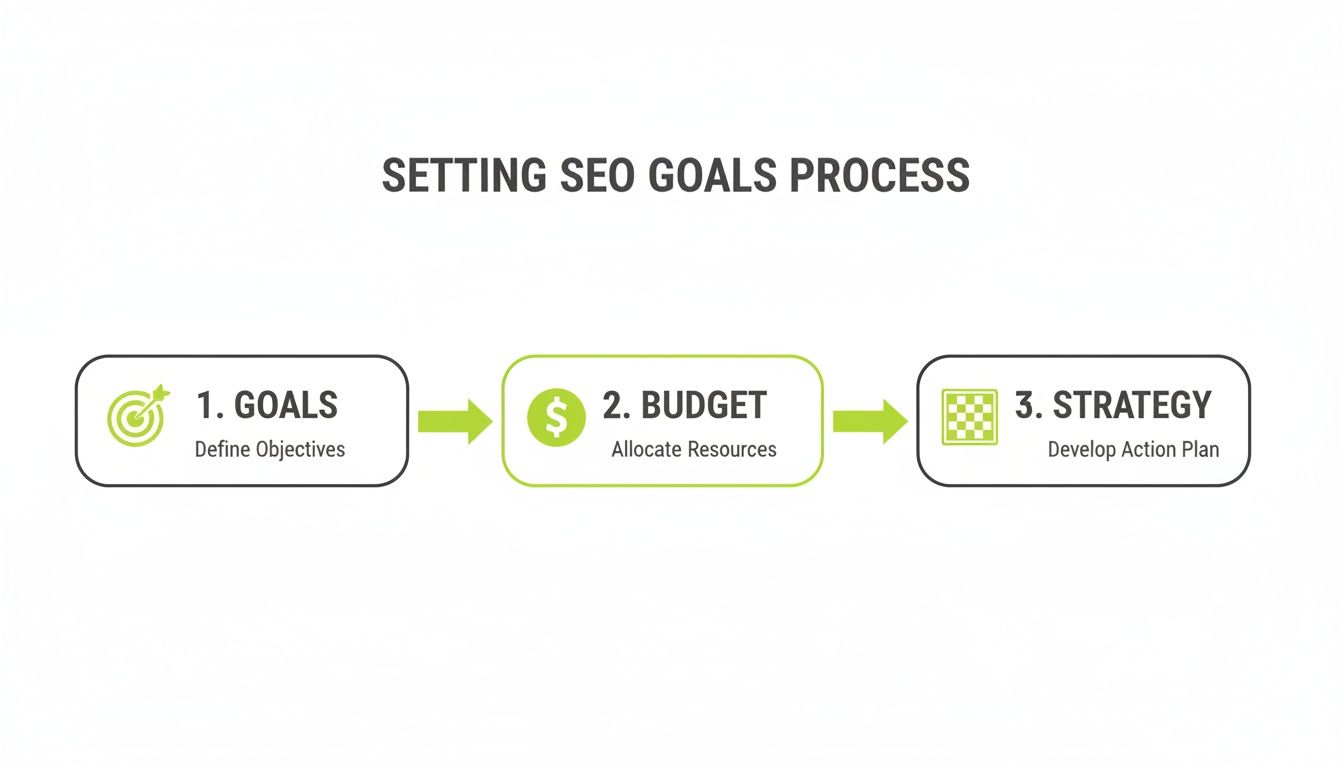
As you can see, a solid engagement flows logically from your core goals to your financial commitment, and only then into a strategic plan.
Integrating SEO Into Your Broader Strategy
SEO doesn't live on an island. It has to work hand-in-glove with your other marketing channels—PPC, social media, email, you name it. How will your SEO content support your next product launch? How can you repurpose the blog posts you're creating for SEO into killer social media content?
Thinking through this integration is key. You're looking for an agency that gets the big picture, one that thinks beyond just keywords and rankings. They should be able to talk about how their work will amplify what you're already doing elsewhere.
If you need a refresher, our guide on how to write a marketing plan can help you map out how all these channels fit together. Taking this step ensures you find an SEO company that's ready to contribute to your long-term, sustainable growth, not just a short-term rankings boost.
How to Vet an Agency's Expertise and Track Record
Once you’ve got a shortlist of potential partners, it's time to look past the slick sales decks and dig in. A polished website is one thing, but it doesn't guarantee results. This is where you separate the real experts from the agencies that just talk a good game. It’s how you’ll find a partner that actually delivers.
The whole point of vetting is validation. You need to ask tough, specific questions and, just as importantly, know what a good answer sounds like. Let's break down how to get a true read on an agency's real-world performance.
Dissecting Case Studies for Real Proof
Every agency will show you their highlight reel, but your job is to look past the surface-level wins. A case study that just says "we increased traffic by 200%" is a classic vanity metric. That number means nothing without context. You have to connect their work to tangible business outcomes.
When they slide a case study across the table, here’s what you should be thinking:
- What was the starting point? A 200% traffic jump from 100 visitors a month is a lot less impressive than a 50% increase from 100,000. Context is everything.
- What specific actions did they take? Look for the "how." Did they overhaul the technical SEO, build out a content hub, or run a targeted digital PR campaign? Vague claims are a huge red flag.
- How did this actually help the business? This is the million-dollar question. Did that traffic spike lead to more qualified leads? More sales? Higher-value customers?
A great case study tells a complete story. It starts with the problem, details the strategy they built to solve it, and—most importantly—proves the business impact with real numbers like revenue growth or a lower cost-per-acquisition.
And don't be afraid to ask for a reference. If an agency is truly confident in their work, they'll have no problem connecting you with a happy client from one of their case studies.
Gauging Their Industry-Specific Experience
While the fundamentals of SEO apply everywhere, industry nuances are a huge deal. An agency that crushes it for fashion e-commerce brands might be completely lost when it comes to the complex compliance rules of the financial services world.
Hiring an agency with experience in your vertical means they already know your audience, your competitors, and the strategies that move the needle. They're not starting from scratch.
Get straight to the point and ask them:
- Have you worked with other companies in the [Your Industry] space before?
- Can you show us the results you achieved for them?
- What do you see as the biggest SEO challenges and opportunities in our industry right now?
Their answer to that last question is incredibly revealing. A true expert will be able to talk fluently about your market landscape, showing they've done a lot more than a quick Google search before your call.
Evaluating Their Technical SEO Knowledge
Technical SEO is the foundation. If it's weak, everything you build on top of it—content, links, everything—is at risk of collapsing. You don't have to be a technical wizard yourself, but you do need to be able to tell if they are.
This is non-negotiable. Getting to the top of Google is make-or-break, as click-through rates (CTR) fall off a cliff after the first few results. The #1 spot routinely gets over 30% of all clicks, but that drops to less than 10% by the time you hit position three. In a market where Google has a 90.83% share, visibility is everything.
Here are a few key areas to probe their technical skills:
- Algorithm Updates: Ask them how they handle major Google updates, like the recent Helpful Content Updates. A good agency will have a proactive, not reactive, approach. They should be talking about focusing on long-term quality and user experience, not just chasing algorithm loopholes.
- Link Building Philosophy: Get them to explain their approach to earning backlinks. Are they focused on creating great content that naturally attracts links from high-authority sites? Or do they start mentioning things like PBNs (private blog networks) or paid link schemes? The first approach is sustainable and safe; the second is a massive red flag that could get your site penalized.
- Site Architecture: Ask how they’d approach your site's structure to improve crawlability for search engines and create a better user experience. A solid answer will touch on things like a logical internal linking strategy, clean URL structures, and a clear content hierarchy. We cover this in more detail in our guide on the importance of SEO site architecture and how it impacts performance.
A skilled agency won't just hit you with a wall of jargon. They'll explain complex ideas in a way that makes sense, proving both their expertise and their ability to be a genuine partner. Doing this homework now is what ensures you end up with an agency whose skills translate into real, lasting results for your business.
Navigating SEO Pricing Models and Contract Terms
The financial side of choosing an SEO company can feel intentionally confusing. Once the proposals start rolling in, you’ll be looking at a mix of pricing structures, from steady monthly retainers to one-off project fees.
Understanding these models is the first step, but the real skill is digging deeper to find the genuine value behind the price tag.
This isn’t just about finding the cheapest option. It’s about finding the right financial fit for your goals and ensuring the contract actually protects your interests. Let's pull back the curtain on the pricing and contract terms you’re most likely to encounter.
Decoding Common SEO Pricing Structures
Most agencies operate on one of a few core pricing models. Each comes with its own set of pros and cons that depend entirely on your needs, your budget, and the scope of the work you need done. Knowing the differences is key to comparing proposals on an apples-to-apples basis.
You'll almost always see one of these three:
- Monthly Retainer: This is the industry standard for ongoing SEO. You pay a fixed fee each month for a continuous scope of work—think content creation, link building, and technical monitoring. This model is built for businesses committed to long-term, sustainable growth.
- Project-Based Fee: This is exactly what it sounds like: a one-time fee for a specific, defined project with clear start and end dates. It works great for things like a website migration, a comprehensive technical SEO audit, or setting up your local SEO from scratch.
- Hourly Consulting: Here, you pay for the agency's time at a set hourly rate. While less common for full-service SEO, it can be incredibly useful for strategic guidance, training your in-house team, or getting an expert opinion on a very specific, limited issue.
Comparing Common SEO Pricing Models
To help you figure out which model aligns best with your business, we’ve put together a quick breakdown of how they stack up against each other.
| Pricing Model | Best For | Pros | Cons |
|---|---|---|---|
| Monthly Retainer | Long-term growth & ongoing strategy | Predictable budgeting, builds momentum, fosters a true partnership. | Requires a longer commitment, results are gradual and not instant. |
| Project-Based Fee | Defined, one-time needs | Clear deliverables and timeline, fixed cost, no long-term tie-in. | Not suitable for ongoing optimization, scope creep can become an issue. |
| Hourly Consulting | Specific expertise & training | High flexibility, pay only for what you need, great for ad-hoc advice. | Can get expensive quickly, lacks a holistic strategic approach, budget can be unpredictable. |
For most businesses that are serious about SEO, a monthly retainer is the way to go. It gives the agency the runway to build and execute a comprehensive strategy that can adapt over time. In search, consistent effort is what drives lasting results.
Critical Contract Clauses You Must Review
The contract is your safety net. Before you sign anything, you have to read the fine print and understand exactly what you’re agreeing to. A fair contract protects both you and the agency by setting crystal-clear expectations from day one.
Pay extra close attention to these key areas:
- Scope of Work (SOW): This is the heart of the contract. It should list, in detail, every single deliverable. If they promised "four blog posts per month," that needs to be in the SOW. Vague promises like "improve rankings" are red flags and simply not enough.
- Termination Clause: What happens if things go south? Look for the notice period required to end the contract. A 30-day notice is standard and fair. Be very wary of agencies that try to lock you into rigid, long-term contracts of 12 months or more with no easy exit.
- Ownership of Assets: This is non-negotiable. The contract must state that you own all the work produced. This includes content, graphics, and any accounts created on your behalf. You are paying for these assets; they should be yours to keep if you part ways.
- Reporting and Communication: The contract should clearly specify how often you’ll get reports and what they will contain. It should also outline the schedule for meetings or calls. Tracking these deliverables is a core part of measuring digital marketing performance metrics.
Never sign a contract that feels one-sided or contains language you don't understand. A reputable SEO company will be transparent and willing to walk you through every clause, ensuring you are comfortable before moving forward. If they rush you or dismiss your questions, that's a major red flag.
What Great Communication and Reporting Look Like
A solid SEO partnership is built on transparency, not just a monthly PDF that lands in your inbox. The way an agency communicates and reports is a direct reflection of their work quality. It’s what separates a true strategic partner from a simple task-doer who just sends data dumps without any real context.
Exceptional communication isn't about constant, pointless check-ins. It's about finding a clear rhythm that keeps both teams on the same page.
This could be a bi-weekly strategy call or a shared Slack channel for quick questions. The goal is to create a seamless flow of information. You should never be left wondering what your agency is working on or why.
When you're figuring out how to choose an SEO company, their communication style is a massive piece of the puzzle. It dictates how insights are shared, how challenges are handled, and ultimately, how successful the collaboration will be.
Moving Beyond Vanity Metrics
The first sign of a great reporting process is an immediate focus on what actually moves the needle for your business. Traffic is nice, but traffic that doesn't convert is just a number on a spreadsheet. A top-tier agency gets this and will quickly pivot the conversation from vanity metrics to business-impact KPIs.
Instead of just celebrating traffic gains, their reports should dig deeper and answer the real business questions:
- Conversion Rates: Are we seeing a meaningful lift in goal completions, like demo requests or product sales, from our organic visitors?
- Lead Quality: Are the leads coming from organic search actually better and more likely to close?
- Organic-Driven Revenue: This is the big one. How much actual revenue can we trace directly back to our SEO efforts?
By zeroing in on these bottom-line metrics, an agency proves they understand their job is to drive growth, not just visitors. To get a better handle on this, our guide on how to use UTM parameters is a great place to start for tracking campaign performance.
The Anatomy of a Valuable SEO Report
A good report doesn't just present data; it tells a story. It has to connect the dots between the work they did, the results you're seeing, and the strategic plan for what's next. Often, the best agencies use some of the top SEO reporting tools for agencies to present this information in a way that’s easy to digest.
Here’s what you should expect to see in a genuinely valuable report:
- Executive Summary: A quick, high-level overview of the month's performance, highlighting the key wins and any challenges that came up.
- Performance vs. Goals: A clear visual breakdown showing how performance is tracking against the specific KPIs you both agreed on from day one.
- Actionable Insights: This is the most critical part. The report shouldn't just state, "Keyword rankings for X went up." It needs to explain why it happened and what that means for the business.
- Strategic Recommendations: Based on the data, what are the next steps? A great partner is always thinking ahead and bringing new opportunities to the table.
A report should spark a conversation, not end one. Think of it as a tool for collaboration and strategic alignment. If you look at a report and don't know what to do next, it has failed.
The SEO services market is absolutely booming, projected to hit $203.83 billion by 2030. With stats showing that 46% of searches have local intent and 99% of consumers read online reviews, an agency's ability to report on local performance is crucial. A great partner will weave these local signals into their reporting, giving you a complete picture of your online presence.
Ultimately, when you choose an SEO company, you're choosing a communication partner. Their skill in translating complex data into clear business insights is just as important as their technical expertise. Look for an agency that doesn't just report the numbers but interprets them with you, turning data into your next strategic advantage.
Red Flags to Watch For When Choosing an SEO Partner
Knowing what to steer clear of is often more important than knowing what to look for, especially when you’re about to make a significant investment. As you size up potential partners, certain warning signs should give you pause. Spotting these red flags early can save you from a partnership that’s destined to waste your time and money.
A questionable agency can do more than just fail to deliver; they can actively damage your website's authority with risky tactics, setting you back months or even years. This is your field guide to spotting those warning signs so you can make a confident, informed choice.

Unrealistic Guarantees and Vague Promises
If an agency ever promises you a guaranteed #1 ranking on Google, that's your cue to end the conversation. No one—and I mean no one—can guarantee specific rankings because no one controls Google’s algorithm. It’s an incredibly complex system with hundreds of factors that are constantly in flux.
A reputable partner will never make such an outrageous claim. Instead, they’ll focus on a transparent process and commit to measurable business outcomes, like increasing qualified leads or driving more organic revenue.
Key Takeaway: An SEO company sells expertise and a proven process, not a guaranteed outcome. Be wary of anyone promising a specific spot on a search results page. Their confidence is a sign of inexperience or dishonesty, not expertise.
A "Black Box" Strategy
Transparency is everything. If an agency gets cagey about their methods or hides behind jargon like "proprietary techniques" to avoid explaining their strategy, consider it a massive red flag. You have a right to know exactly what’s being done to represent your brand online.
A true partner will be an open book about their approach.
- Content Creation: They should walk you through their process for keyword research, topic ideation, and content development.
- Technical SEO: They need to clearly explain how they plan to improve your site's technical health, from site speed to crawlability.
- Link Building: Ask them to describe their link-building philosophy. Ethical agencies focus on earning high-quality links through outreach and great content, not buying them from spammy sources.
Secrecy is often a cover for outdated or risky tactics that could get your site penalized by Google. A confident, skilled agency has nothing to hide and will welcome your questions.
Focusing on Short-Term, Risky Tactics
Some agencies are tempted to use "black hat" SEO tactics to chase quick, impressive-looking results. While these risky shortcuts might deliver a temporary spike in rankings, they almost always lead to a severe penalty from Google down the line.
Common black hat tactics to watch out for include:
- Keyword Stuffing: Cramming a page with so many keywords it becomes unreadable.
- Cloaking: Showing one version of a page to search engines and a different one to users.
- Private Blog Networks (PBNs): Building a network of low-quality websites just for the purpose of linking back to a client's site.
This is why choosing a partner that specializes in serving businesses like yours is a game-changer. In fact, small and medium-sized enterprises (SMEs) accounted for 58.40% of total SEO billings globally in 2025, showing just how much they rely on expert help. With the global SEO services market valued at $74.9 billion in 2025 and projected to hit $148.86 billion by 2030, there are plenty of great agencies focused on ethical, sustainable growth. You can find more details about the growing SEO market on mordorintelligence.com.
When you choose an SEO company, you're entrusting them with one of your most valuable business assets. Steer clear of anyone promising shortcuts and find a partner committed to building your online presence the right way. Your long-term success depends on it.
Frequently Asked Questions About Hiring an SEO Company
Even after all the research, reference checks, and contract reviews, you'll probably still have a few questions rolling around in your head. That’s perfectly normal. You're choosing a partner to help grow your business, so it's smart to make sure every last detail is covered before you sign anything.
We've put together some straightforward answers to the questions that almost always come up in the final stages of picking an SEO company.
How Long Does It Take to See SEO Results?
This is the big one, and the only honest answer is: it depends. SEO is a long-game strategy, not a magic wand. If any company promises you instant page-one rankings, you should run, not walk, in the other direction.
Generally, you can expect to see some early signs of life—think better keyword rankings and a nice uptick in traffic—within 4 to 6 months.
But the results that actually move the needle, like a serious increase in qualified leads or a jump in organic revenue, usually take closer to 6 to 12 months to materialize. Several things can speed up or slow down that timeline:
- Your website's starting point: Its age, authority, and any past SEO work (or lack thereof).
- The competition: How crowded and competitive your industry is.
- Your budget: The resources you can dedicate to the campaign.
Think of it like planting a tree. The first few months are all about preparing the soil and nurturing the seed. The real, visible growth takes time, patience, and consistent effort.
A great agency will be upfront about this. They won't sell you on overnight success. Instead, they’ll give you a realistic roadmap with projected milestones based on where you're starting from.
How Will We Measure the ROI of SEO?
Measuring the return on your SEO investment isn't just important; it's everything. A true partner will sit down with you from day one to define what success actually looks like for your business and track the numbers that matter. Just looking at traffic is a rookie mistake.
You need to connect SEO activities directly to business goals. That means tracking key performance indicators (KPIs) that show a real impact, such as:
- A higher volume of qualified leads from organic search.
- More e-commerce sales and revenue generated organically.
- The cost per acquisition (CPA) from search compared to paid channels.
- The lifetime value (CLV) of customers who found you through search.
By setting up proper conversion tracking from the get-go, your agency can draw a straight line from their work to your revenue. This makes calculating a clear, defensible ROI simple. When you’re choosing a company, make sure they talk more about business metrics than vanity metrics.
What Happens If We Need to Change Agencies?
Hey, sometimes things just don't work out, even with the best intentions. If you find yourself needing to switch agencies, a well-written contract and clear ownership of your digital assets will save you a world of headaches.
Before you sign any agreement, make absolutely sure you have full ownership and admin-level access to everything. This includes your website, Google Analytics, Google Search Console, and any content they create for you. This guarantees a clean break if you need one. A professional agency will always facilitate a smooth transition, happily handing over all the necessary data and files to your new partner.
Ready to partner with a team that delivers real results? Magic Logix combines data, technology, and creativity to build digital marketing strategies that drive measurable growth. Learn how we can help your business thrive by visiting https://www.magiclogix.com.