Successful change management isn't about the technology; it’s about the people. It’s a deliberate, structured approach that helps your employees move from the old way of doing things to the new, ensuring they actually adopt and engage with new systems instead of resisting them. This focus on the human side is what turns a massive tech investment into a genuine competitive advantage.
Why Digital Transformations Stumble and How to Succeed
Let’s be honest: most digital transformations don’t live up to the hype, and the tech is rarely the real problem. The failure point, almost every time, is the human element. Companies get swept up in the excitement of new software but treat the people who have to use it every day as an afterthought. This is the single biggest reason projects go off the rails.
The numbers tell a brutal story. A staggering 70% of projects fail to hit their goals, costing companies trillions every year despite pouring huge sums into these initiatives. This isn't just a small miss; it's a massive drain on budget, time, and morale. When leadership doesn't build a compelling case for why the change is happening or fails to support their teams through the transition, the project is doomed from the start.
The Human Factor in Tech Adoption
Real transformation happens when employees willingly adopt new workflows, not because they’re forced to. Without genuine buy-in, you’re guaranteed to see low adoption rates, pockets of active resistance, and a frustrating slide back to old, comfortable habits.
This is where a focused change management digital transformation strategy becomes your most important tool. It’s about clear communication, practical training, and building a culture where change is seen as an opportunity, not a threat. You can explore our guide on current digital marketing trends to see just how quickly both customer and employee expectations are evolving.
The chart below shows how digital transformation touches every corner of the business, proving its impact goes far beyond just IT.
This framework makes it clear: customer experience, operations, and business models are all tangled together. That's why a holistic, people-first approach is the only way to make meaningful progress in any of these areas.
The secret to success is treating your digital transformation like a marketing campaign for an internal audience. You need to understand their pain points, sell them on the benefits, and make their 'customer' journey as smooth as possible.
Common Missteps to Avoid
I’ve seen leaders make the same predictable mistakes that sabotage their own projects. They think a single company-wide email will get the job done, or that a one-off training session is enough to create experts overnight.
Here are a few of the most frequent pitfalls:
- Poor Communication: Failing to clearly and repeatedly explain the "why" behind the change. This void gets filled with confusion, rumors, and fear.
- Lack of Leadership Buy-In: If executives aren't visibly and consistently championing the project, nobody else will take it seriously. It just becomes the "flavor of the month."
- Ignoring Employee Feedback: A one-way conversation breeds resentment. Feedback is a gift—it helps you spot and fix problems before they derail the entire initiative.
By anticipating these challenges and putting the human side of the equation first, you can turn potential resistance into your greatest asset and ensure your investment delivers real, lasting value.
Crafting Your Transformation Blueprint
A successful transformation isn’t something you can just hope for; it’s built on a solid, actionable plan. This is where you graduate from vague mission statements to defining crystal-clear objectives that tie directly back to business outcomes. Think of this blueprint as the bridge between your grand vision and the concrete steps everyone needs to take, ensuring your efforts are grounded in strategy, not just shiny new tech.
One of the most common reasons these big projects go sideways is a failure to properly automate business processes. Without a clear plan for how people will actually use the new tools, even the most promising technology investments can fall flat.
We’ve all seen it happen. The path to failure is surprisingly common, and it usually looks something like this.
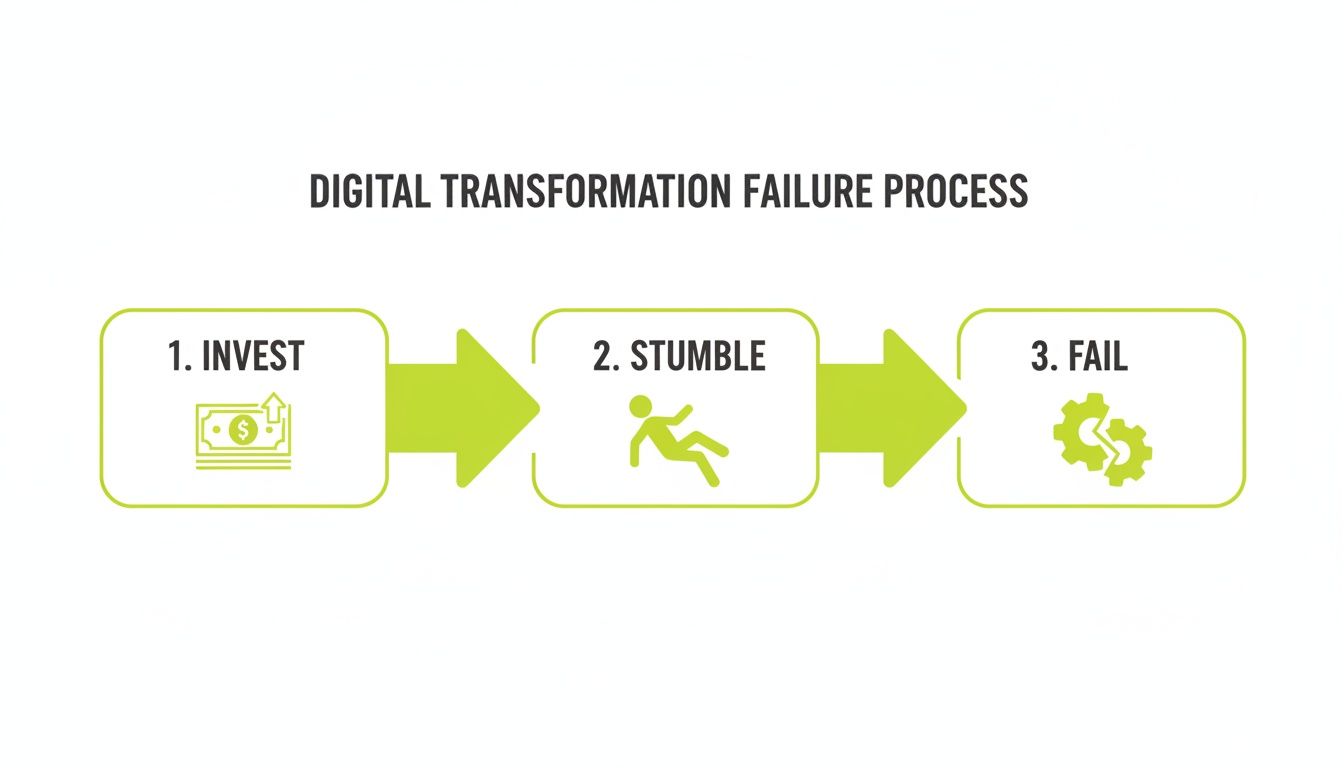
This flowchart nails a critical insight: pouring money into a project without a structured plan for your people and processes is a recipe for disaster. Your blueprint is what breaks this cycle.
Define Crystal Clear Objectives
First things first: you absolutely must define what success looks like in measurable terms. Vague goals like "become more digital" are completely useless. You need to zero in on specific business outcomes that the technology will make possible.
Connect every single transformation goal to a core business metric. For example, instead of a goal like "implement a new CRM," a much stronger objective is, "increase sales team productivity by 15% within six months by streamlining lead management in the new CRM." This simple shift frames the change around a tangible benefit, not just a tool.
Here are a few examples of what strong, clear objectives look like in the real world:
- Reduce customer support ticket resolution time by 25% by launching a new AI-powered knowledge base.
- Increase marketing-qualified leads by 30% by adopting a new marketing automation platform.
- Improve supply chain efficiency by 10% through real-time inventory tracking.
Each of these is specific, measurable, and directly tied to business value. That makes it infinitely easier to get buy-in from leadership and, just as importantly, to track your progress. Getting a handle on concepts like IoT adoption can also provide a solid framework for setting these kinds of tech-focused goals.
Master Stakeholder Mapping
Digital transformation touches everyone, but the impact isn't spread evenly. Stakeholder mapping is your process for identifying every person and group affected by the change, figuring out their level of influence, and trying to anticipate their reaction. This isn't about playing office politics; it's just smart strategic planning.
Start by bucketing your stakeholders into key groups. You’ll want to plot out who has high influence versus low influence, and who is likely to champion the change versus who might resist it.
A classic mistake is focusing all your energy on senior leadership. I've found that your most valuable allies—or your biggest roadblocks—are often the informal influencers on the front lines who have the trust and respect of their peers.
Once you have this map, you can get strategic with your engagement. Your allies need to be empowered and equipped to spread the word. Neutral parties need to be won over with clear, personal benefits. And resistors need to be heard—address their concerns proactively before they become major hurdles.
Establish a Clear Governance Model
When a tough decision needs to be made right now, who makes the final call? A clear governance model is what keeps your project from getting bogged down in endless committee meetings. It spells out roles, responsibilities, and the decision-making chain of command right from the start.
Your governance structure should have a few key players:
- Executive Sponsor: This is a senior leader who champions the project, smashes through roadblocks, and secures the budget. Their active involvement isn't just nice to have; it's non-negotiable.
- Steering Committee: Think of this as a cross-functional group of leaders from different departments. They provide oversight, make sure everything stays aligned with broader business goals, and handle any issues that get escalated.
- Project Team: This is the core group doing the day-to-day work. This team needs to have clear authority to make decisions within their defined scope without having to run every little thing up the flagpole.
This kind of structure creates clear lines of communication and accountability. When everyone knows their role and how decisions get made, the entire transformation moves faster and with a whole lot less friction. This blueprint becomes your roadmap for navigating the tricky, human side of change.
Leading Communication and Engagement That Works
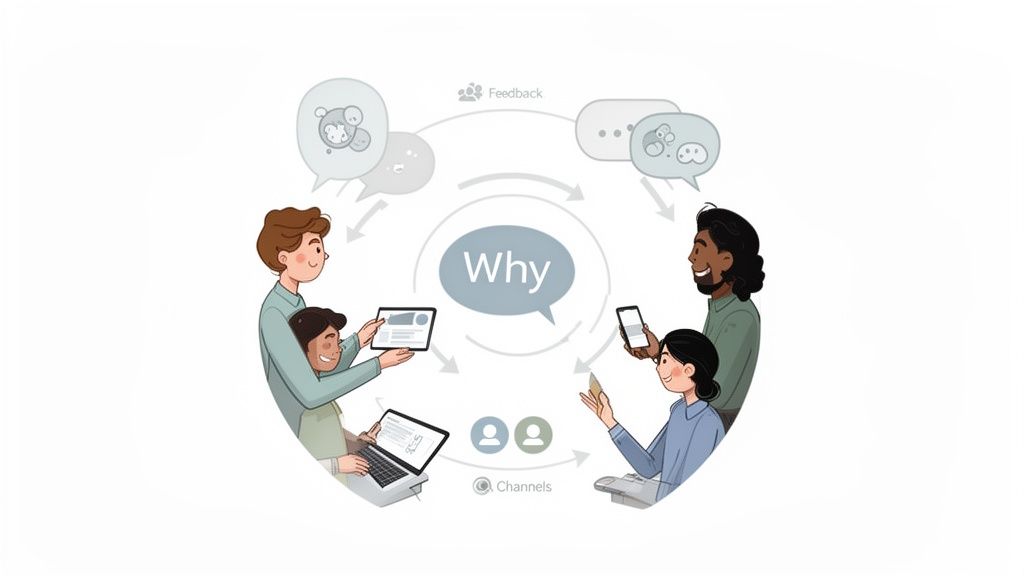
If your team doesn't get the ‘why’ behind the change, you’ve already lost. Technology is the easy part of a digital transformation; genuine communication is where the real work happens. A solid strategy isn't about broadcasting top-down orders. It’s about starting a conversation that builds trust, tackles fear head-on, and makes people feel like they're part of building the future.
This means you have to go way beyond a single all-hands meeting or a few mass emails. Your communication needs to be a sustained, multi-channel campaign that meets people where they are. Think about it: research shows that 73% of customers expect more personalized experiences as technology gets better, and your employees are no different. They want communication that’s relevant to their roles and acknowledges their worries.
Building a Multi-Channel Communication Plan
A one-size-fits-all approach is a recipe for tuning out. Different groups in your organization consume information in unique ways and have completely different things at stake. Your C-suite needs to see the high-level ROI and strategic alignment, while frontline staff need to know how their day-to-day work is going to change.
Your communication plan has to reflect this. A marketing team adopting a new automation platform, for instance, needs a different story than the finance team. The key is to segment your audiences and tailor the message, channel, and frequency for each one.
- For Leadership: Focus on strategic updates, KPI tracking, and risk mitigation. Use channels like executive briefings and concise, data-rich dashboards.
- For Managers: Arm them with talking points, FAQs, and resources to handle their team's questions. Regular, manager-only huddles are golden here.
- For Frontline Employees: Give them hands-on demos, "what's in it for me" messaging, and easy-to-access Q&A sessions. Use channels like team meetings, internal social platforms, and even posters in the breakroom.
Putting this together is a lot like planning a big social media marketing campaign—you have to know your audience, craft the right message, and pick the best channels to get it in front of them.
To keep everything organized, a simple stakeholder communication plan is essential. Use this template to map out who you need to talk to, what they care about, and how you’ll keep them in the loop.
Stakeholder Communication Plan Template
| Stakeholder Group | Key Concerns | Primary Message | Communication Channel | Frequency |
|---|---|---|---|---|
| C-Suite/Executives | ROI, strategic alignment, project timeline, budget | "This transformation will drive a 15% increase in market share by aligning our tech stack with key business goals." | Bi-weekly email brief, monthly steering committee meeting | Bi-weekly/Monthly |
| Department Managers | Team impact, new workflows, training requirements, performance metrics | "We will provide you with all the tools and training needed to lead your team through this successfully. Here is the support plan." | Weekly manager huddles, dedicated Slack channel | Weekly |
| Frontline Staff (e.g., Sales) | Job security, daily task changes, learning curve, personal benefits | "The new CRM will automate manual reporting, giving you 5+ hours back each week to focus on selling." | Team meetings, hands-on workshops, internal newsletter | Daily/Weekly |
| IT Department | System integration, security, data migration, support load | "The new platform integrates seamlessly with our existing systems, and we have a clear plan for phased data migration." | Technical deep-dive sessions, daily stand-ups | Daily |
Having a clear plan like this ensures no one falls through the cracks and that every group receives information that’s actually relevant to them.
Creating Authentic Two-Way Dialogue
The most vital part of communication in change management digital transformation is making it a two-way street. Just blasting out messages without a way for people to respond is how you build resentment and destroy morale. People need to feel heard, and you have to visibly address their concerns.
This requires creating dedicated feedback loops that are more than just a suggestion box. Try setting up open office hours with project leads, running anonymous pulse surveys to check the mood, and empowering "change champions" who can collect honest feedback from their peers.
The goal is to make feedback a core part of the process, not an afterthought. When you proactively ask, "What are your biggest worries about this change?" you disarm resistance and turn potential critics into collaborators.
Crafting a Compelling Narrative
Finally, facts and figures won't inspire anyone to act. You need a compelling story that connects the transformation to a bigger purpose. This story has to paint a clear and exciting picture of the future. Don't just talk about new software; talk about what that software makes possible.
Frame the change around the opportunities it creates:
- For the Customer: How will this make their experience better, faster, or more personal?
- For the Employee: How will this get rid of boring tasks, teach them new skills, or open up career paths?
- For the Company: How will this make us more competitive and secure a healthy future for everyone?
By crafting this narrative and repeating it consistently across all your channels, you shift the conversation from disruption and fear to opportunity and shared success. That’s how you turn anxiety into genuine excitement and get everyone pulling in the same direction.
Driving Adoption Through Smart Training and Support
New software is just a shiny object until people actually use it. This simple truth is where so many change management digital transformation initiatives fall flat. Real adoption is driven by smart, ongoing training and reliable support—not a single, forgettable launch-day workshop. Forgetting this is like building a powerful engine but never teaching anyone how to drive the car.
Investing in technology without a corresponding investment in people is a recipe for wasted potential. The urgency here is real. During the pandemic, global spending on digital transformation hit a staggering $1.85 trillion in a single year. That's a 16% jump fueled by the immediate need for remote work, pushing cloud technology adoption to over 90% among organizations. You can find more insights on this massive digital expansion on Statista. That level of spending really underscores the high stakes of getting adoption right.

Go Beyond One-Size-Fits-All Training
We’ve all sat through those generic, lecture-style training sessions. They're notoriously ineffective. People tune out because the content has nothing to do with their specific roles or daily challenges. To get real traction, your training has to be personalized, practical, and accessible the moment someone needs it.
Instead of dragging everyone into a mandatory four-hour meeting, think about a blended approach that works for different learning styles and busy schedules.
- Role-Specific Workshops: Your sales team needs to master different CRM features than the marketing team. Run short, focused sessions that dive into the tools and workflows that matter to each group's success.
- On-Demand Video Libraries: Create a library of bite-sized tutorial videos, maybe 2-5 minutes long, that users can pull up anytime. This is perfect for "just-in-time" learning when someone forgets a specific step in a new process.
- Interactive Simulations: Let people practice in a safe, simulated environment. It builds confidence and muscle memory without the fear of breaking something in the live system.
This tailored approach transforms training from a passive event into an active, ongoing resource that truly empowers your team.
Empower Internal Champions and Experts
Some of your most powerful adoption drivers are sitting in the cubicles next to you. Identifying and empowering internal champions—those enthusiastic early adopters who have the respect of their peers—is one of the smartest moves you can make. They can translate the project's goals into relatable terms and provide informal, on-the-ground support.
To take this a step further, consider creating a Center of Excellence (CoE). This is a small, dedicated group of internal experts who become the official go-to resource for the new technology.
A Center of Excellence isn't just a fancy help desk. It’s a strategic hub for gathering user feedback, identifying best practices, and continuously improving how the organization uses its new tools. They turn initial adoption into long-term optimization.
The CoE can host weekly "office hours," publish tips and tricks, and work directly with teams to solve unique challenges. By building this expertise in-house, you cut down on your reliance on external consultants and foster a sustainable culture of self-sufficiency.
Build a Sustainable Support System
Launch day is just the beginning. A solid, multi-layered support system is critical for making new habits stick long after the initial excitement wears off. Questions and issues will pop up weeks or even months later, and having a clear support path is what keeps frustration from derailing progress.
Your support ecosystem should have a few key pieces:
- A Clear Ticketing Process: A straightforward way for users to log issues and get timely help, whether from IT or your Center of Excellence.
- A Dedicated Communication Channel: Set up a Slack or Teams channel where users can ask quick questions, share successes, and get help from experts and peers.
- Regular Check-Ins: Project leaders should schedule follow-up sessions with teams to proactively ask what’s working and what isn’t. Don't wait for problems to find you.
- Celebrating Early Wins: Publicly recognize individuals and teams who are crushing it with the new tools. This creates positive reinforcement and shows everyone else what's possible.
When you combine tailored training with a strong network of internal champions and a reliable support structure, you create an environment where adoption isn't just expected—it's actively encouraged and built to last. This is how you make sure your digital transformation actually delivers.
Measuring What Matters and Managing Risk
So, how do you actually know if a transformation is working? If you're just going by gut feeling, you’re essentially gambling with a massive investment. A data-driven mindset is your best defense against project drift, allowing you to prove ROI, make smarter decisions, and keep the whole thing from going off the rails.
This means looking beyond the simple technical metrics like system uptime. Yes, that’s important, but it doesn't tell you if people are actually changing how they work. The real story is found in Key Performance Indicators (KPIs) that connect directly to business impact and human adoption.
Identifying KPIs That Truly Matter
To measure success in a change management digital transformation, you need a balanced scorecard. You've got to track both the behavioral changes you want to see and the business outcomes those changes are supposed to deliver. This is how you tie your people-centric efforts directly to the bottom line.
Think about tracking a mix of leading and lagging indicators:
- User Adoption Rates: What percentage of your team is actively using the new platform daily or weekly? A low number here is your earliest warning sign of resistance or major training gaps.
- Proficiency Scores: Are people using the new tools correctly? You can figure this out with post-training assessments or by analyzing usage patterns for key features. If no one is touching the advanced reporting tools, you know there's a problem.
- Task Completion Times: How long does it take an employee to run a sales report in the new system versus the old one? This is a concrete, undeniable measure of productivity.
- Employee Engagement Surveys: Use quick pulse surveys to ask specific, targeted questions. Things like, "On a scale of 1-10, how confident are you using the new software?" provide invaluable qualitative data. You might also be interested in our guide on how artificial intelligence is reshaping employee roles.
By keeping a close eye on these KPIs, you create a feedback loop. It allows you to tweak your training, communication, and support strategies in near real-time instead of waiting for a six-month review to find out something is broken.
A Straightforward Approach to Risk Mitigation
Every major project has risks. The successful ones are just better at seeing them coming. Proactive risk management isn’t about being negative; it's about being prepared. You need to spot potential roadblocks before they mushroom into full-blown crises.
Get your team in a room and start brainstorming. What could go wrong with the tech? With the people? With the new process?
A common blind spot is underestimating the risk of employee burnout. Teams can only handle so much change at once. If your transformation adds significant short-term workload without a clear path to relief, you risk losing your best people.
Once you’ve listed out the potential landmines, build a simple mitigation plan. This doesn't need to be some hundred-page document nobody will read. A straightforward table is often the most effective tool.
| Risk Category | Potential Risk | Impact (Low/Med/High) | Likelihood (Low/Med/High) | Mitigation Plan |
|---|---|---|---|---|
| People | Key department managers actively resist the new process. | High | Medium | Get them involved in the governance committee; give them a 'Change Champion' role to build a sense of ownership. |
| Technology | The integration between the new CRM and the legacy finance system fails. | High | Low | Conduct thorough integration testing 30 days before launch; have a manual data transfer process ready as a backup. |
| Process | The new workflow is more complicated than the old one, slowing teams down. | Medium | Medium | Run a pilot program with a small group to identify and iron out workflow issues before the full rollout. |
This structured approach transforms risk from a vague source of anxiety into a manageable part of the project plan. It ensures you’re not caught by surprise and have a Plan B ready to go.
Looking at the bigger picture, North America dominates digital transformation spending, capturing 43% of the $590 billion market, thanks to its mature tech ecosystems. Yet, global success rates for these projects hover at a sobering 35%. This is precisely why rigorous measurement and risk management aren't just nice-to-haves—they are absolutely essential for beating the odds. You can find more insights about data transformation challenges on Integrate.io.
Your Top Questions About Digital Transformation Change, Answered
Let’s be honest: navigating the human side of a major technology shift is where the real work happens. Even the best-laid plans run into tricky questions and a bit of uncertainty. Here are some direct answers to the most common concerns we hear from leaders in the middle of a digital transformation.
What’s the Single Biggest Reason Digital Transformations Fail?
It almost always comes down to one thing: neglecting the people.
Organizations get so focused on the tech—the shiny new platform, the impressive features—that they completely forget to prepare their teams for a new way of working. This is a classic mistake. It leads to resistance, dismal adoption rates, and a project that never delivers on its promises.
A successful transformation needs a balanced focus. You need the right technology, sure, but you also need to redesign the processes and, most importantly, bring your people along for the ride.
The real challenge isn't deploying new software. It's getting your team to choose to use it, adapt to it, and truly own the new process. Digital tools just create potential; it's the people who turn that potential into performance.
How Do You Actually Handle Employee Resistance?
First, you have to reframe your thinking. Resistance isn't a problem to be crushed; it's a source of incredibly valuable feedback. When people push back, it’s usually rooted in a fear of the unknown, a feeling of losing control, or a genuine concern that the new way won't be as good as the old one.
The best approach is to get out ahead of it with a two-way dialogue.
- Explain the "Why," Over and Over: Don't just announce the change. Clearly explain the reasons behind it and what’s in it for both the company and the individual. Frame it as a solution to problems they’re already dealing with.
- Involve Them in the Process: Pull key team members into the planning and testing phases. When people feel like they helped build the solution, they become its biggest advocates instead of its biggest critics.
- Deliver Great Training: Confidence is the ultimate antidote to fear. Provide hands-on, role-specific training that shows people they have the skills to succeed in this new environment.
- Find Your Change Champions: In every team, there are influential and respected people. Identify them early and get them on board. Their peer-to-peer encouragement is often far more powerful than any top-down directive.
It’s always better to address these concerns head-on. Letting them simmer in the background is a recipe for disaster.
Can a Small Business Pull This Off Without a Huge Budget?
Absolutely. Effective change management is about your mindset and communication strategy, not about expensive consultants or fancy software. In fact, small businesses can often do this better by leveraging their natural agility.
Your most powerful tool costs nothing: consistent, transparent communication from leadership.
Instead of a formal training program, you can set up peer-to-peer coaching sessions led by the internal experts who pick things up fast. You can also use the collaboration tools you probably already have, like Slack or Microsoft Teams, to create dedicated channels for questions, feedback, and quick tips.
Most importantly, celebrate the small wins publicly. When you see a team successfully adopt a new process, shout it from the rooftops. For a small or mid-sized business, an engaged leader who actively listens and adapts is worth more than any formal change management platform.
What KPIs Should We Be Tracking for Change Management?
You need to focus on metrics that measure both behavior and actual business impact. Tracking the right KPIs is how you prove the value of your efforts and make smart adjustments along the way. A vanity metric like "number of training sessions attended" is useless. You need to know if behavior is actually changing.
Here are a few essential KPIs to get you started:
- User Adoption Rates: This is your headline number. What percentage of your team is actively using the new tools daily or weekly?
- Proficiency and Usage Patterns: Are people using the new features correctly? Or are they sticking to old workarounds? Digging into usage data can show you where people are struggling.
- Task Completion Time: Pick a key process—like generating a sales report or resolving a customer ticket—and measure how long it takes in the new system versus the old one. A drop in time is a direct productivity win.
- Employee Engagement Surveys: Use short, frequent pulse surveys. Ask simple questions like, "On a scale of 1-10, how supported do you feel during this transition?" This gives you crucial qualitative data on team morale.
- Business Outcome Metrics: Always tie it back to the original "why." Are you seeing that projected 15% increase in sales productivity? Has customer service response time dropped by 20%?
The goal is to draw a straight line from your change management efforts to tangible business results. That’s how you demonstrate a clear ROI and keep everyone focused on what really matters.
At Magic Logix, we know that a successful digital transformation is built on data, technology, and creativity—all held together by a deep understanding of the human element. Our expertise in digital marketing and technology solutions can help you navigate the complexities of change and drive real business growth. Learn how we can transform your digital presence by visiting us at https://www.magiclogix.com.